


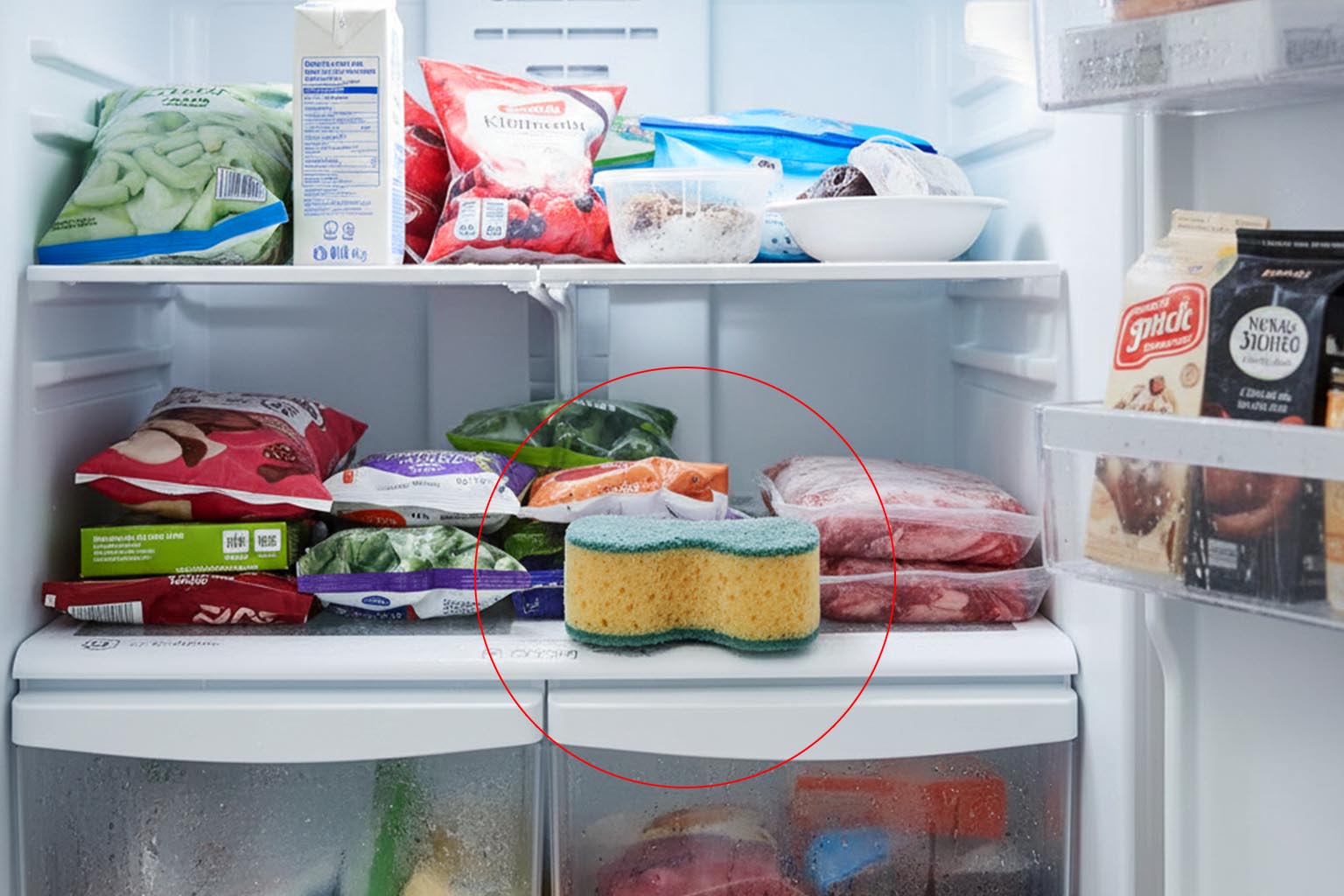
You wouldn’t believe it, but a simple kitchen sponge might just be your kitchen’s secret weapon against a sneaky problem: moisture buildup. Yes, that humble scrubber we often overlook can significantly help with those damp troubles plaguing your fridge or freezer. It turns out, this smart little hack could make your life so much easier in the kitchen. Let’s dive into why a sponge is a must-have beyond the sink.
The Surprising Use of a Kitchen Sponge
Kitchen sponges are mostly known for scrubbing dishes or wiping surfaces, right? But here’s the twist: they can also be incredibly useful inside your refrigerator or freezer. When you place a dry sponge in these chilly spaces, it helps absorb excess moisture which can otherwise lead to the dreaded mold. And honestly, it’s surprising—really surprising—how something so simple can be such a game-changer. According to a study by the Food Safety and Inspection Service, keeping moisture levels in check is crucial for maintaining food freshness and hygiene.
How Does This Sponge Trick Work?
So how does this neat trick actually work? Simply take a fresh, dry kitchen sponge and place it inside your fridge or freezer. Its porous nature allows it to soak up moisture, preventing the formation of condensation, which is often the culprit behind mold and bacteria growth. You’ll find this especially beneficial for produce like fruits and vegetables, keeping them fresher for longer. Plus, it helps in minimizing that pesky condensation that can sometimes build up on your appliance shelves and walls.
For those tech-savvy readers curious about the science behind this, when warm air comes into contact with the cooler temperatures inside a fridge or freezer, moisture condenses, turning into water or ice. The sponge acts as a home base for this moisture, absorbing it and preventing problems before they start.
A Few Best Practices
Now, there are a few common-sense tips to get the most out of this hack. For one, it’s best to check and change the sponge regularly. A soaked sponge can ironically become a source of more moisture, which is the opposite of what we want. Experts suggest swapping out the sponge every three to four days, depending on how much moisture it’s absorbing. Leaving it unchanged for too long might actually damage the fridge linings as it can stick to surfaces when oversaturated.
Also, cleanliness is key. The longer the sponge sits, the more it’s exposed to bacteria and microbes. No one wants their food to be anywhere near a bacteria haven! By staying on top of the sponge swap, you contribute to better hygiene all around.
Real-Life Results and Expert Advice
Some people might shrug and think, “Could a sponge really make a difference?” But yes, it definitely can. And yes, it happens more often than you’d think. With so many household items doubling up their uses, this approach doesn’t just save your groceries—it saves your wallet too.
Watch this fun video for more quirky kitchen hacks that might surprise you!
“Hygiene in kitchen storage is fundamentally about moisture control,” says Laura Baxter, a senior researcher at the National Food Safety Program. “By understanding how moisture affects our appliances and storage habits, consumers can take simple measures to protect their food and reduce waste.”
Embrace the Sponge Secret
Who knew a sponge could be such an ally against kitchen woes? Keeping food fresh, managing moisture, and maintaining good hygiene—it’s all connected, and this simple household tip fits right in.
So next time you’re in your kitchen, feeling the inevitable temptation of clutter or mess, just remember: the humble sponge is waiting to be more than just a sink hero. Why not take this little trick for a spin and see how it revolutionizes your fridge and freezer maintenance? Your groceries—and your budget—might just thank you for it.
And now, let’s hear from you. Have you tried this sponge trick, or do you have other hacks to share? Drop your thoughts and tips in the comments. Let’s keep that kitchen running smoothly!