


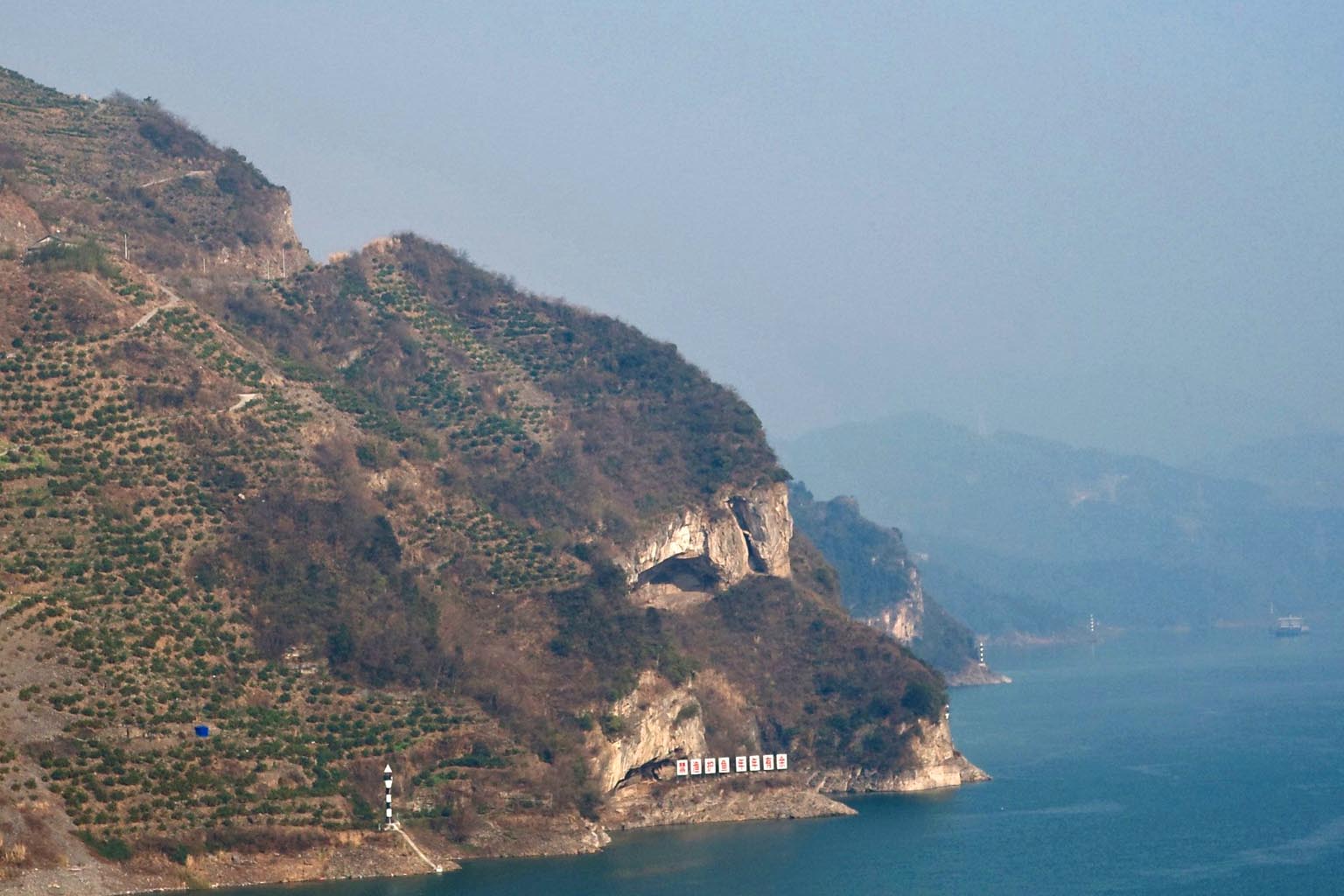
A single photograph has transformed a quiet stretch of the Yangtze River into one of China’s most unlikely tourist destinations. When Shanghai designer Guo Qingshan shared an image of what he dubbed “Puppy Mountain” on social media this Valentine’s Day, he could hardly have anticipated the avalanche of attention that would follow. The photo, showing a mountain formation that bears an uncanny resemblance to a giant dog’s head appearing to drink from the river, struck an immediate chord with viewers across China’s digital landscape.
What makes this phenomenon particularly fascinating isn’t just the viral nature of the image, but how it reveals our collective hunger for wonder in the mundane. Much like how ancient cultural narratives have shaped our understanding of sacred places throughout history, modern digital culture creates new forms of meaning from natural formations. Guo had taken the photo weeks earlier during a January visit to his hometown in Yichang, Hubei province, but only noticed the canine resemblance when reviewing his pictures later. Within ten days of posting, his image had garnered 120,000 likes on Xiaohongshu, while the hashtag #xiaogoushan exploded across Weibo with millions of views, officially cementing the location’s transformation from anonymous geological formation to internet celebrity.
The Anatomy of Viral Geography
The rapid ascent of Puppy Mountain from obscurity to fame demonstrates how social media has fundamentally altered our relationship with landscape and place. Research on social media impact on tourism destinations reveals how digital platforms can create overnight fame for previously unknown locations. Unlike traditional tourist destinations that build their reputation over decades through guidebooks and word-of-mouth recommendations, viral landmarks can emerge overnight, driven by the collective imagination of online communities.
“Social media platforms have fundamentally transformed how tourism destinations gain recognition, with viral content capable of generating massive visitor interest within days rather than decades” – Tourism destination research
The mountain’s appeal lies in its perfect balance of familiarity and novelty. Dog lovers immediately recognize the formation’s resemblance to a resting canine, complete with what appears to be a snout dipping toward the water. This pareidolia – our tendency to perceive meaningful patterns in random stimuli – creates an instant emotional connection that transcends cultural boundaries. Visitors now make pilgrimages to Zigui County specifically to witness this geological coincidence, often bringing their own dogs to create side-by-side comparisons with their mountainous counterpart.
The Economics of Accidental Tourism
The transformation of this remote hiking trail into a tourist destination has created unexpected economic opportunities for the region. Local vendors have quickly adapted, producing merchandise featuring the mountain’s distinctive silhouette, while nearby businesses report increased foot traffic from visitors seeking the perfect vantage point for their own puppy mountain photographs. These unexpected economic opportunities mirror how overlooked resources can suddenly become valuable when viewed through a new lens.
This phenomenon reflects a broader shift in how tourism destinations emerge in the digital age. Studies on tourism destination development show how social media content can rapidly transform unknown locations into major attractions. Rather than relying on traditional marketing campaigns or historical significance, places can achieve fame through the simple act of visual recognition and social sharing. The Yichang region, previously known primarily for its proximity to the Three Gorges Dam, now finds itself managing an entirely different type of visitor – one motivated not by engineered marvels but by nature’s accidental artistry.
The speed of this transformation raises questions about sustainability and infrastructure. Can a quiet hiking trail handle the sudden influx of tourists armed with smartphones and social media ambitions? Local authorities are now grappling with managing crowds that materialized faster than any planning process could have anticipated.
Hidden in Plain Sight
Perhaps the most intriguing aspect of Puppy Mountain’s story is how many locals had unknowingly captured the same formation in previous years without recognizing its viral potential. Yichang resident Shi Tong discovered a 2021 photograph from his personal collection showing the identical dog-like silhouette, complete with the same endearing posture that would later captivate millions. This discovery echoes how ancient cultural narratives can remain hidden until the right perspective reveals their significance.
This retroactive recognition suggests that countless natural wonders may be hiding in plain sight, waiting for the right moment, angle, or cultural context to be “discovered.” The mountain itself hasn’t changed – only our collective ability to see, share, and celebrate its resemblance to humanity’s favorite companion has evolved.
The Temporal Fragility Nobody Discusses
While millions celebrate Puppy Mountain’s adorable appearance, few consider the geological reality underlying this internet sensation. Natural erosion processes that shaped the mountain into its current dog-like form continue to operate, meaning the distinctive silhouette that captured global attention may be temporary on geological timescales.
Rock formations change imperceptibly over years and dramatically over decades. Weather patterns, seasonal freeze-thaw cycles, and gradual weathering could alter the mountain’s profile, potentially erasing the very features that made it famous. Some social media users have already begun documenting subtle changes in the formation’s appearance across different photographs taken over recent years.
This temporal dimension adds a layer of urgency to the Puppy Mountain phenomenon that most viral content lacks. Unlike digital memes that can be preserved indefinitely, this natural wonder exists in constant, if slow, flux. The thousands of visitors making pilgrimages to photograph the dog-shaped peak may be documenting not just a moment of internet fame, but a fleeting geological configuration that future generations might never witness in quite the same way. Many visitors approach the site with a sense of tranquility, hands clasped behind their backs as they contemplate this natural wonder.
“Digital platforms can transform previously unknown locations into major tourist destinations within weeks, fundamentally altering local economies and visitor patterns” – Social media tourism research
The story of Puppy Mountain ultimately reflects our modern relationship with both nature and digital culture – how we seek connection and meaning in an increasingly mediated world. Whether this particular formation retains its canine charm for years or decades to come, it has already served as a reminder that wonder often exists in the most unexpected places, waiting for someone with the right perspective to help the rest of us see it clearly.