


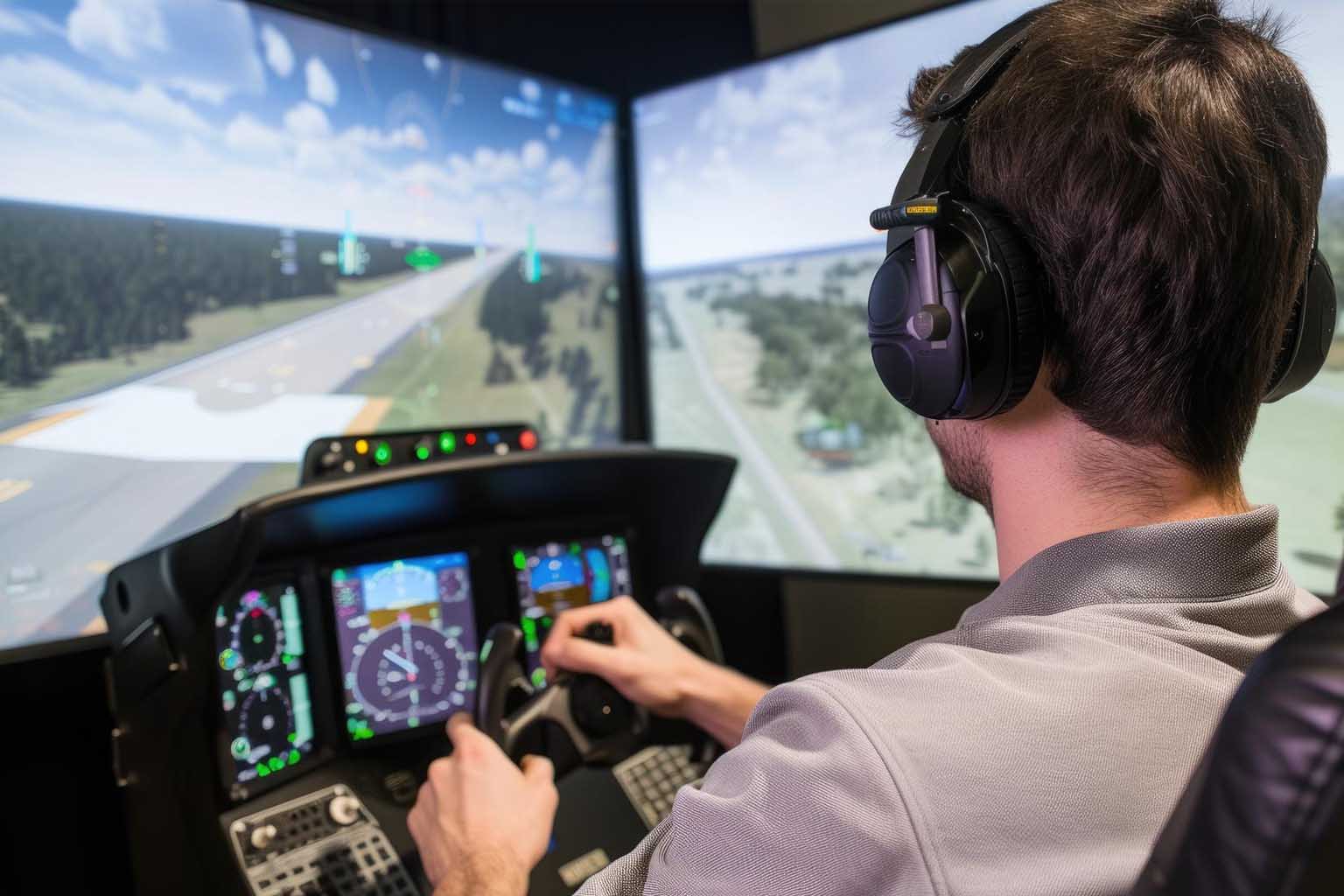
Imagine mastering one of the world’s most sophisticated commercial airplanes without ever stepping into a real cockpit—just by using a video game. This is the story of Valentin, a professional pilot training on the Airbus A350 who turned to Flight Simulator 2024 to sharpen his skills, gaining an unexpected advantage before formal training even began. His experience sheds light on how modern flight simulation is evolving beyond entertainment into a valuable educational tool.
From Enthusiast to Professional: Embracing Flight Simulator 2024
For decades, flight simulators have mainly captured the hearts of aviation enthusiasts and hobbyists. But Valentin’s journey showcases the transformative power of digital training tools. As a young pilot preparing to qualify on the Airbus A350, an aircraft known for its complex systems and cutting-edge technology, Valentin discovered that using the recently released Airbus A350 module by iniBuilds in Flight Simulator 2024 offered him a unique edge.
Though his airline and instructors did not officially endorse the game for training, Valentin’s curiosity and passion pushed him to explore the virtual cockpit weeks before his official simulator sessions began. This allowed him to familiarize himself with the aircraft’s layout and operational systems at his own pace, outside the pressure and time constraints of formal training.
“I started using it as soon as it came out,” Valentin recalls. The game offered nearly lifelike graphics and a detailed cockpit environment, enabling him to interact extensively with the plane’s systems and undertake complex procedures in a risk-free setting.
Why Virtual Cockpits Matter in Real-World Pilot Training
One of the most daunting aspects of transitioning to a new aircraft type is mastering the intricacies of its controls and systems. Valentin emphasizes how first encountering the Airbus A350 inside a real professional simulator or an aircraft can be overwhelming, given the steep learning curve pilots face in rapidly acquiring knowledge and confidence.
Flight Simulator 2024 allowed him to bridge this gap. Valentin spent hours rehearsing various emergency scenarios, like engine shutdowns and system failures, with instant feedback on his drag-and-drop inputs. This sort of repeated practice let him build muscle memory and a fluid understanding of the cockpit layout before facing real simulations.
“It’s an incredible help in many areas,” he says. “I could explore the cockpit, understand the displays, and develop a quicker, more fluid visual circuit.” This way, Valentin entered formal training with a foundational comfort that proved invaluable under pressure.
Watch this detailed walkthrough of the Airbus A350 module in Flight Simulator 2024, demonstrating the game’s deep system interactions and cockpit fidelity.
Realistic But Not Perfect: Recognizing Simulation Limits
Despite its impressive realism, Flight Simulator 2024 is not without flaws. Valentin is candid about the technical glitches he encountered—such as freezes, system inaccuracies, and the absence of certain crucial components found in professional simulators. For instance, the game currently lacks the heads-up display (HUD) present in actual A350 cockpits and sometimes displays conflicting checklist information.
These limitations underscore why the software cannot replace official training devices or real flight experience. Valentin stresses that Flight Simulator remains a complementary tool—excellent for exploration and muscle memory, but unsuitable as a certified professional training simulator. Developers have promised improvements in the future to enhance accuracy and functionality.
The Future of Flight Simulation in Pilot Training
Valentin’s story is part of a larger conversation about how flight simulators could reshape pilot education. While industry standards will always prioritize certified simulators and real flight hours, tools like Flight Simulator 2024 may become invaluable for early familiarization or ongoing skill maintenance, especially in scenarios where access to high-end simulators is limited.
According to a Federal Aviation Administration (FAA) report, virtual reality and flight simulation technologies hold promise for augmenting traditional pilot training by improving procedural knowledge and procedural recall.
Valentin continues to revisit the game regularly, using it to rehearse manual flying techniques and review procedures—skills often less emphasized in the automated environment of large airliners.
“Simulation tools provide pilots with cost-effective, risk-free environments to practice and hone their skills, complementing real-world instruction.”
—FAA Pilot Training Specialist
His experience implies that embracing newer technologies doesn’t replace tradition—it enriches it, offering pilots a way to experiment and prepare at their own pace.
Valentin’s creative use of Flight Simulator 2024 illustrates a broader evolution in aviation training, one that marries the precision of professional flight schools with the accessibility and innovation of virtual platforms. As the boundaries blur, pilots and trainers alike are discovering that video games may offer much more than entertainment—they can be a vital part of the path to mastering the skies.
What do you think about pilots using video games like Flight Simulator 2024 for training? Have you tried flight simulators yourself? Share your thoughts and experiences in the comments below!