


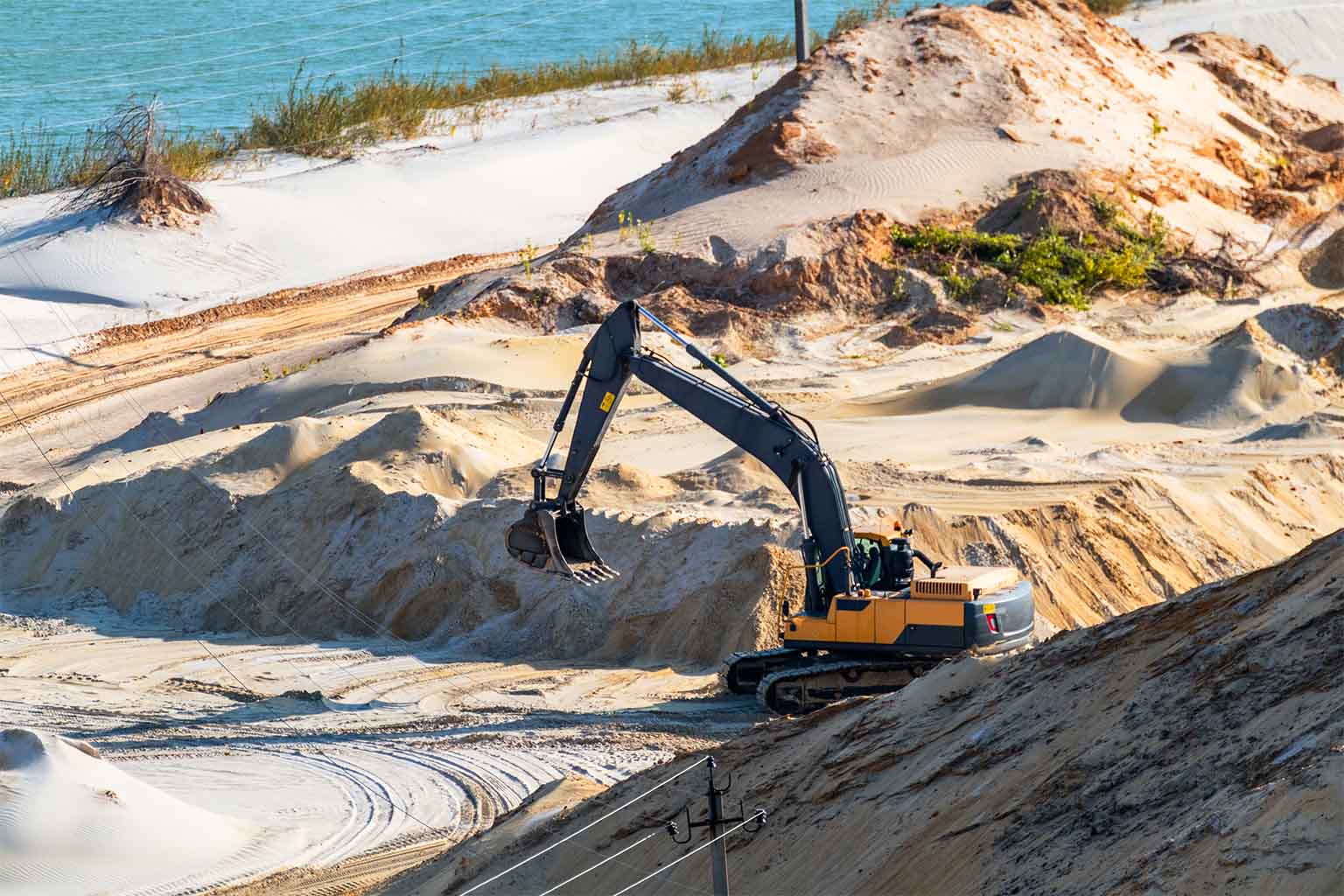
China is on the verge of a major technological breakthrough that could reshape the global supply chain landscape. With a newly discovered deposit of 35 million tons of high-purity quartz valued at €1.4 billion ($1.5 billion), the country is poised to reduce, or possibly eliminate, its dependency on critical U.S. raw materials. This discovery holds immense significance for industries ranging from semiconductors to solar energy, marking a strategic pivot in China’s resource autonomy.
A monumental discovery reshaping tech supply chains
China’s recent identification of a vast high-purity quartz deposit in the Henan and Xinjiang provinces has caught the attention of global markets. Quartz with a silicon dioxide content exceeding 99.995% is essential for manufacturing silicon wafers, foundational components for microchips and solar panels. Until now, China has depended heavily on imports—primarily from the Spruce Pine mine in North Carolina, which supplies about 80% of its high-purity quartz needs.
Securing this mineral locally is a game-changer. Chinese authorities, particularly the Ministry of Natural Resources, have officially recognized this deposit as a “new mineral species,” underscoring its strategic value. By tapping into this resource, China aims to fortify its tech sector and lessen vulnerabilities linked to foreign supply disruptions.
Why this high-purity quartz matters for technology
High-purity quartz is far from an ordinary mineral. Its properties—high resistance to heat and corrosion, low thermal expansion, and significant optical transparency—make it indispensable for advanced manufacturing processes. Quartz of this caliber is critical in producing silicon wafers, which serve as the backbone for semiconductor chips used in everything from smartphones to electric vehicles.
Experts emphasize that this mineral’s quality meets the stringent standards required by cutting-edge tech industries. This means China can now, more than ever, pursue domestic production of microchips and photovoltaic cells. According to a report by the U.S. Geological Survey (USGS), such strategic minerals are central to maintaining technological leadership and national security, highlighting the importance of securing reliable supplies.
“High-purity quartz not only enables the manufacturing of next-generation technology but also plays a pivotal role in sustainable energy solutions,” noted Dr. Lisa Nguyen, a materials science researcher at MIT in 2024.
Racing towards self-sufficiency and innovation
Beyond discovery, China is accelerating efforts to exploit this resource fully. Leading research institutions and private companies have already begun pilot production of quartz exceeding 99.995% purity, with some batches surpassing 99.998%. This leap in quality is vital for meeting the escalating demand for next-gen semiconductors and solar panels, both crucial to China’s growing tech ecosystem and green energy goals.
Moreover, the Chinese government plans to establish a national innovation center focused on high-purity quartz. This center will unite experts in geology, mineral processing, and material science to pioneer advanced purification methods and explore further applications. Huang Xuexiong, director at the Ministry of Natural Resources’ Department of Mineral Resources Protection and Supervision, stated that this mineral’s inclusion on the national strategic minerals list signifies its fundamental role in China’s technological future.
Implications for global tech and energy markets
China’s move to localize quartz production carries significant implications for the global tech industry. In recent years, the country has spent over $1.5 billion annually importing high-purity quartz, a costly and potentially risky expenditure given geopolitical tensions. This discovery and subsequent development could tip the balance in the global supply of key semiconductor materials.
Industry analysts believe such resource independence could facilitate China’s ambition to dominate semiconductor production and solar technology worldwide. As Dr. Nguyen explains, “Access to critical materials like high-purity quartz is a fundamental enabler for technological sovereignty and sustainable growth.”
This newfound quartz reserve solidly places China in the driver’s seat to lead in high-tech manufacturing and renewable energy innovation. It’s a move likely to reverberate across global markets, pressuring competitors to reassess their supply strategies.
—
How do you see China’s burgeoning control over such vital resources influencing the global technology sector? Share your thoughts, experiences, or questions below—your insights enrich this conversation!