


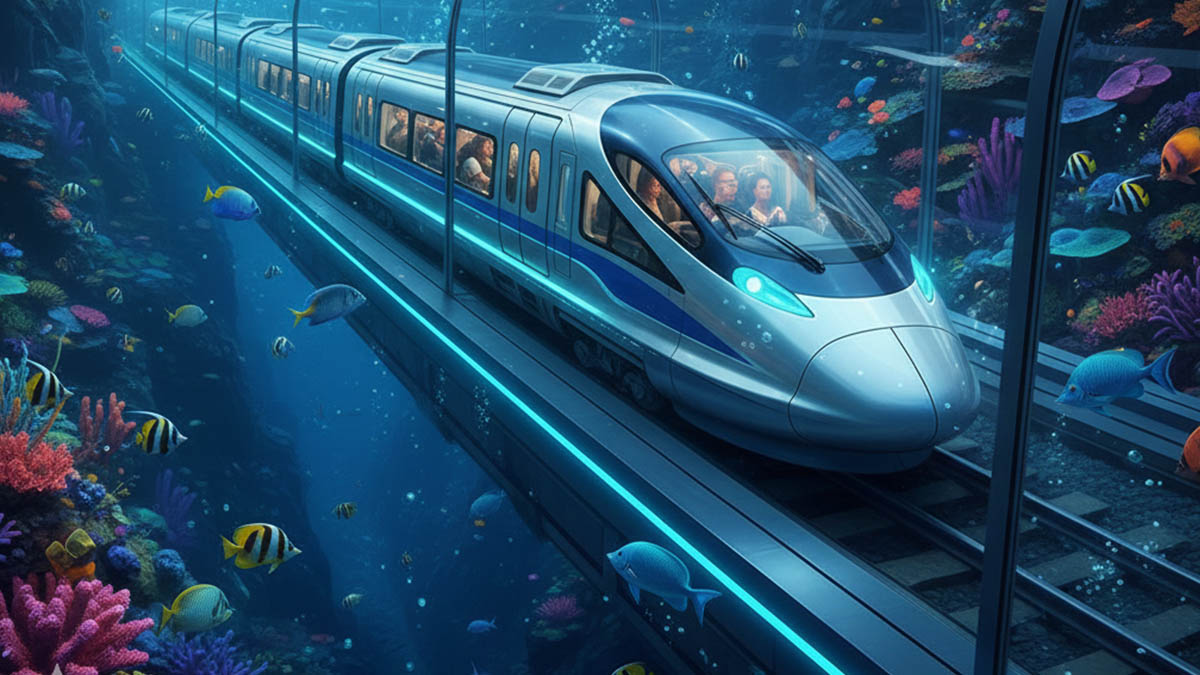
Imagine zooming beneath the ocean, mere minutes ticking by as you bridge two continents in a swift and thrilling submarine train ride. This isn’t science fiction; it’s an audacious plan being laid out by China, promising to revolutionize how we think about travel.
The Revolutionary Undersea Train
China is constructing what’s set to be the world’s longest high-speed underwater train system. A project bursting with promise, this railway will traverse the Bohai Strait, creating an essential link between the Liaodong and Shandong peninsulas. Can you picture it? Over 75 miles of track, submerged, whisking passengers across in just 40 minutes. It’s all part of China’s sweeping national strategy to modernize its transportation network and boost international trade.
A report by Reuters suggests that this undersea passage could help tackle significant transport issues, especially between the bustling cities of Dalian and Yantai. Currently, journeys between these economic hubs can take over six hours by land, skirting along the coastline. A quick 40-minute ride would certainly be a game-changer, allowing for more fluid economic integration and intensified maritime commerce.
What Awaits Underwater?
This ambitious submarine railway will stretch an impressive 123 kilometers (about 76.4 miles) and come with a hefty price tag—a staggering 220 billion yuan or around 36 billion U.S. dollars. It’s not just a single tube, either; the blueprint includes three distinct sections. Two parallel tunnels will cater to high-speed trains. Alongside them, a central passage will ensure maintenance and safety, no small feat when you consider the logistics and challenges of drilling beneath the sea.
Not to be downplayed, these trains are expected to reach speeds of up to 155 mph. Once operational, they will seamlessly connect with China’s northern and eastern high-speed rail networks. According to an expert from the China Railway Design Corporation, “This project symbolizes a new era in underwater travel, setting benchmarks for future endeavors.”
Tackling the Engineering Marathon
What’s the catch? This massive endeavor isn’t without challenges. Constructing the Bohai Strait tunnel demands drilling under restless, seismically active seas. It’s an engineering feat filled with hurdles. Engineers will need to integrate robust systems for ventilation, waterproofing, and emergency evacuations to ensure passenger safety.
In a statement, Chinese officials labeled the venture as a “strategic investment.” They project that, once operational, the tunnel will rake in annual revenues of roughly 20 billion yuan. It’s not just about speed; it’s about infusing the region with enhanced connectivity and stirring economic dynamism.
Looking Ahead: The Construction Timeline
As we stand, the project remains in its planning and feasibility stages. Pushes are underway from the Chinese government to jumpstart its development. If everything goes as planned, we could see this tunnel come to life within the next 10 to 15 years.
It’s a thrilling prospect, don’t you think? These kinds of bold endeavors ignite the imaginations of engineers and dreamers everywhere. They redefine our perceptions of possibility—in transport and beyond.
As we look forward to the progress that this project promises, why not share your thoughts? Could this be the future of global travel, or do you think we’ll see similar transformations elsewhere first? Join the conversation and keep dreaming big—after all, today’s blueprints are tomorrow’s reality.