


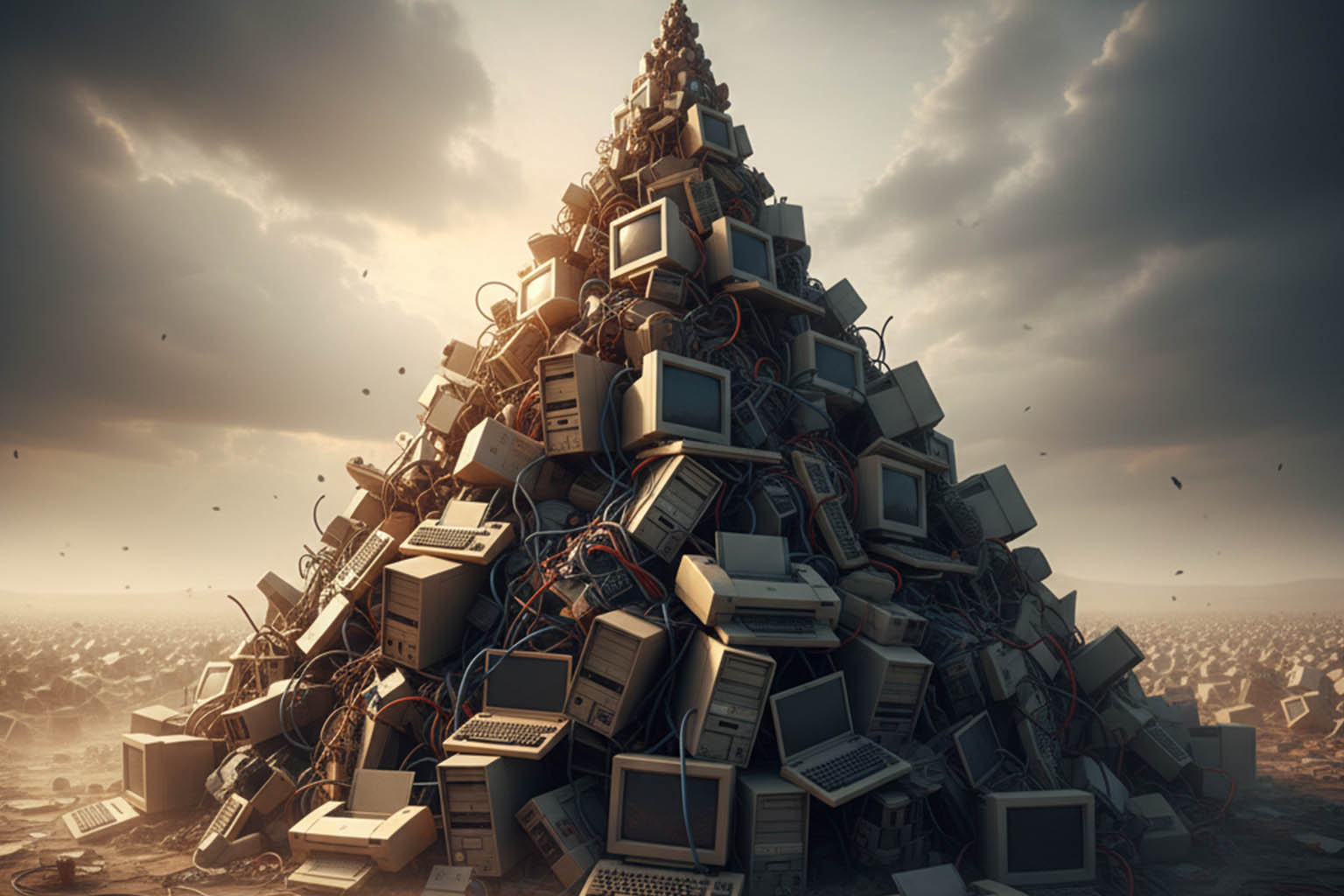
The story of Apple’s Lisa computers reads like a corporate thriller with an environmental twist that still resonates today. In 1989, thousands of innovative machines met their end not through natural obsolescence, but through a deliberate corporate decision that transformed cutting-edge technology into landfill material. This wasn’t just about failed products finding their way to recycling centers—it was about a company actively preventing the resurrection of its own creation.
What makes this tale particularly striking is how it unfolded. Bob Cook, an entrepreneur who specialized in giving second lives to discontinued technology, had successfully negotiated a deal to acquire and refurbish these machines. His company, Sun Remarketing, had already proven the concept worked with other Apple failures. The Lisa Professional modifications were selling, customers were satisfied, and it appeared that one of computing’s most advanced early machines had found redemption. Much like how modern technology reveals hidden historical treasures, such as the 5,000-year-old fortification revealed by LiDAR in Romania, Cook’s work was uncovering the hidden value in Apple’s discarded innovation.
Then Apple intervened with a force that surprised everyone involved, including the very people who had been working to salvage the company’s reputation in the process.
The Lisa’s Revolutionary Legacy Meets Commercial Reality
The Apple Lisa represented a quantum leap in personal computing when it debuted in 1983. Its graphical user interface and mouse-driven navigation system predated the widespread adoption of these now-standard features by years. Yet commercial success remained elusive, largely due to its staggering $9,995 price point—equivalent to nearly $30,000 in today’s purchasing power.
According to project management analysis from Learning People, when sales failed to meet initial expectations, Apple was slow to react to market feedback. Beyond pricing, the Lisa suffered from design compromises that plagued its reliability. Steve Jobs’ insistence on compact engineering led to overheating problems that caused frequent system crashes. While IBM’s PC 5150 dominated the market with proven stability and accessible pricing, the Lisa occupied an uncomfortable middle ground between innovation and practicality.
“The Lisa serves as a classic case study in how even the most forward-thinking innovations can fail without proper market positioning and pricing strategy” – Project management research
The commercial failure created a massive inventory problem for Apple. Thousands of units sat in warehouses, representing millions of dollars in sunk costs and a constant reminder of the project’s shortcomings. This surplus inventory would eventually become the centerpiece of one of tech history’s most puzzling corporate decisions.
Bob Cook’s Rescue Mission Takes Shape
Bob Cook understood the secondary computer market better than most. His company had already demonstrated success with the Apple III computers, another commercial disappointment that found new life through refurbishment and resale. The Lisa presented a similar opportunity, but on a much larger scale.
The initial agreement with Apple seemed straightforward enough. Cook’s team would purchase up to 7,000 Lisa units at discounted rates, invest in necessary repairs and upgrades, then resell them to customers who could appreciate their advanced features at more reasonable prices. Sun Remarketing committed $200,000 to research and development, creating the enhanced Lisa Professional variant.
Early results proved promising. The refurbished machines found buyers, and customer feedback indicated satisfaction with the upgraded systems. For a brief period, it appeared that the Lisa would achieve the market acceptance that had eluded it during its original run. Cook’s team had essentially solved Apple’s inventory problem while creating value for consumers who wanted advanced computing capabilities. This corporate behavior mirrors modern examples of business leaders making bold decisions, such as when a French entrepreneur canceled 15 Tesla cars to take a stand against corporate policies.
The Sudden Reversal and Systematic Destruction
In September 1989, Apple’s corporate machinery shifted into reverse with startling speed. The company demanded immediate return of all remaining Lisa computers from Sun Remarketing, offering no detailed explanation for the sudden change in policy. Cook found himself legally obligated to comply, despite the successful progress of the refurbishment program.
The physical reclamation process was swift and thorough. Apple-contracted trucks arrived at Sun Remarketing’s facilities and loaded every Lisa computer for transport to a landfill in Logan, Utah. There, the machines were systematically crushed and buried, ensuring their permanent removal from circulation. The thoroughness of this operation rivaled the precision of modern investigations, such as the new search efforts for Flight MH370 backed by cutting-edge technology.
This wasn’t merely disposal of broken or obsolete equipment. These were functional computers that had demonstrated market viability in their refurbished form. The deliberate destruction eliminated not just the physical machines, but any possibility of their continued evolution in the secondary market.
The Corporate Psychology Behind Technological Burial
Apple’s decision to reclaim and destroy the Lisa computers reveals fascinating insights into corporate psychology and brand management strategies that extend far beyond simple inventory control. The company’s actions suggest a deep concern about brand dilution and the potential risks of allowing modified versions of their products to exist independently in the marketplace.
The timing of this decision coincides with Apple’s broader strategic shifts during the late 1980s. The company was working to establish clearer product lines and messaging, and the continued presence of refurbished Lisa machines may have conflicted with these efforts. Some industry observers believe that Steve Jobs’ complicated relationship with the Lisa project influenced the decision, particularly given his tendency to eliminate products that didn’t align with his vision. Those who knew Jobs understood that any encounter with Steve Jobs could result in dramatic career or product changes.
This corporate behavior also reflects early manifestations of the closed ecosystem philosophy that would later become central to Apple’s business model. By preventing independent modification and resale of their products, Apple established precedents for the tight control over hardware and software integration that characterizes the company today.
Research from startup failure analysis examines how companies can learn from setbacks like the Apple Lisa. The destruction of the Lisa computers stands as one of the most environmentally questionable decisions in Apple’s corporate history, creating an ironic contrast with the company’s current sustainability initiatives and carbon-neutral product commitments. The buried machines in Logan, Utah represent not just lost technology, but a fascinating case study in how corporate strategy can override both environmental responsibility and market demand when brand control becomes the primary consideration.
“The Apple Lisa case demonstrates how even innovative companies can make decisions that prioritize brand control over environmental responsibility and market opportunities” – Business failure analysis research