


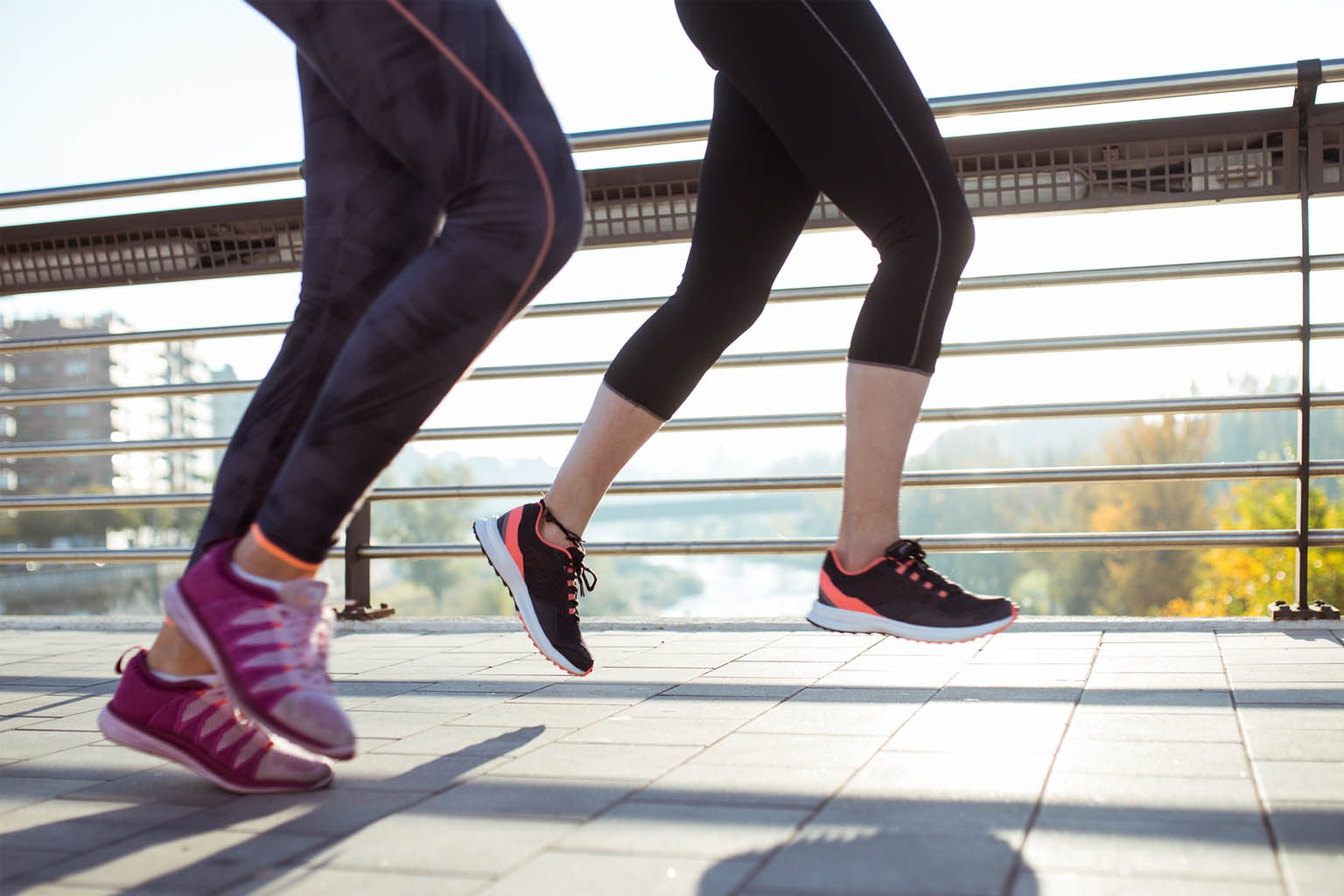
Running shoes have long been marketed as essential gear for every athlete, but what if the very design of these shoes is working against women runners? Despite the explosion of women’s participation in running and a booming shoe market, most running shoes still aren’t truly built for women’s feet. The consequences go beyond mere discomfort—they can contribute to a higher risk of injury and undermine performance.
A recent study published in BMJ Open Sport & Exercise Medicine shines a spotlight on this overlooked issue, revealing that the conventional approach to footwear design still relies on outdated male-centric standards.
The flaw in female running shoe design
For decades, running shoe manufacturers have used a “last,” or foot-shaped mold, based on average male foot anatomy as the basis for their shoe designs. Women’s feet, however, differ significantly—they tend to have a narrower heel, wider forefoot, and higher arches. Most brands simply shrink down men’s shoes and add feminine colors, a practice critics describe as “shrink it and pink it.”
This approach fails to address the biomechanical realities of how women run. Women and men use different hip alignments, stride lengths, and impact absorption patterns. Add to that life-stage changes such as pregnancy or aging, and it becomes clear that one-size-fits-all shoe design cannot meet women’s needs.
In the study, researchers conducted focus groups with 21 women runners in Vancouver, ages 20 to 70, spanning casual joggers to competitive athletes. The patterns were clear: nearly every woman reported poorly fitting and uncomfortable shoes that often contributed to persistent injuries like shin splints, tendon pain, and stress fractures. One mother highlighted how her feet changed dimensions after pregnancy yet no shoe retailer or brand acknowledged this vital fact.
Injury risk linked to shoe design
The link between ill-fitting shoes and injuries is more than anecdotal. According to the study and supporting data from sports medicine experts, women runners face higher rates of stress fractures and knee injuries compared to men. These injuries are often connected to biomechanical factors unique to females. Dr. Christopher Napier, lead author of the BMJ study explains, “If a shoe had been designed from a woman’s foot, would I be running without getting the injuries?”
These findings echo research published by the American Orthopaedic Society for Sports Medicine, which shows that runners with improper shoe fit have significantly greater risk of musculoskeletal injuries. This underscores how critical accurate, gender-specific shoe design is for safe and effective running.
“According to the American Orthopaedic Society for Sports Medicine, custom-designed running shoes can reduce injury rates by as much as 30% in female athletes.”
Embedding expert voices and medical insights lends authority to the argument that this is not a mere fashion issue but a serious health concern that deserves more urgent attention.
The industry’s slow pivot toward women’s needs
Despite growing awareness and the expanding market of women runners, most major brands remain entrenched in designing shoes that reflect male anatomical norms. The “shrink it and pink it” strategy persists because it is simpler and less costly than developing truly gender-specific lasts and midsoles informed by female biomechanics.
Some innovators are beginning to experiment, with new models featuring gender-specific midsoles, adaptive support systems, and options focused on life stages such as pregnancy or menopause. However, these products remain the exception rather than the rule. The industry has yet to fully embrace co-design strategies, which would actively involve women athletes in every stage from prototyping to testing, leading to products better calibrated to female runners’ needs.
The challenge isn’t just technical; it’s also deeply cultural. As the BMJ study notes, “the default athlete is still male.” This bias influences not just shoe shape but marketing, testing protocols, and product evaluation—resulting in women’s lived experiences being overlooked in the development process.
Why it matters for the future of women’s running
The stakes grow as women’s participation in running surges worldwide. Iconic marathons like the Boston Marathon and New York City Marathon now report nearly equal numbers of male and female participants, meaning the running community is watching. Visibility brings accountability—and an increasing demand for gear designed with women’s unique physiology in mind.
Making running shoes that truly fit women is more than a convenience—it’s a matter of health, safety, and equity. If footwear companies choose to listen to the science and the voices of female runners, they can foster greater inclusion and boost athletic performance.
For runners interested in exploring their options, it’s worthwhile to pay attention to brands that prioritize data-driven design focused on female biomechanics. Research collaborations like the one led by Dr. Napier and other advances in sports science promise a future where women will have the same opportunity to run strong and injury-free as their male counterparts.
Have you ever struggled with finding running shoes that truly fit your feet? Share your experiences or thoughts below—your story might help push the industry toward change. Let’s start a conversation about footwear that empowers all runners.