


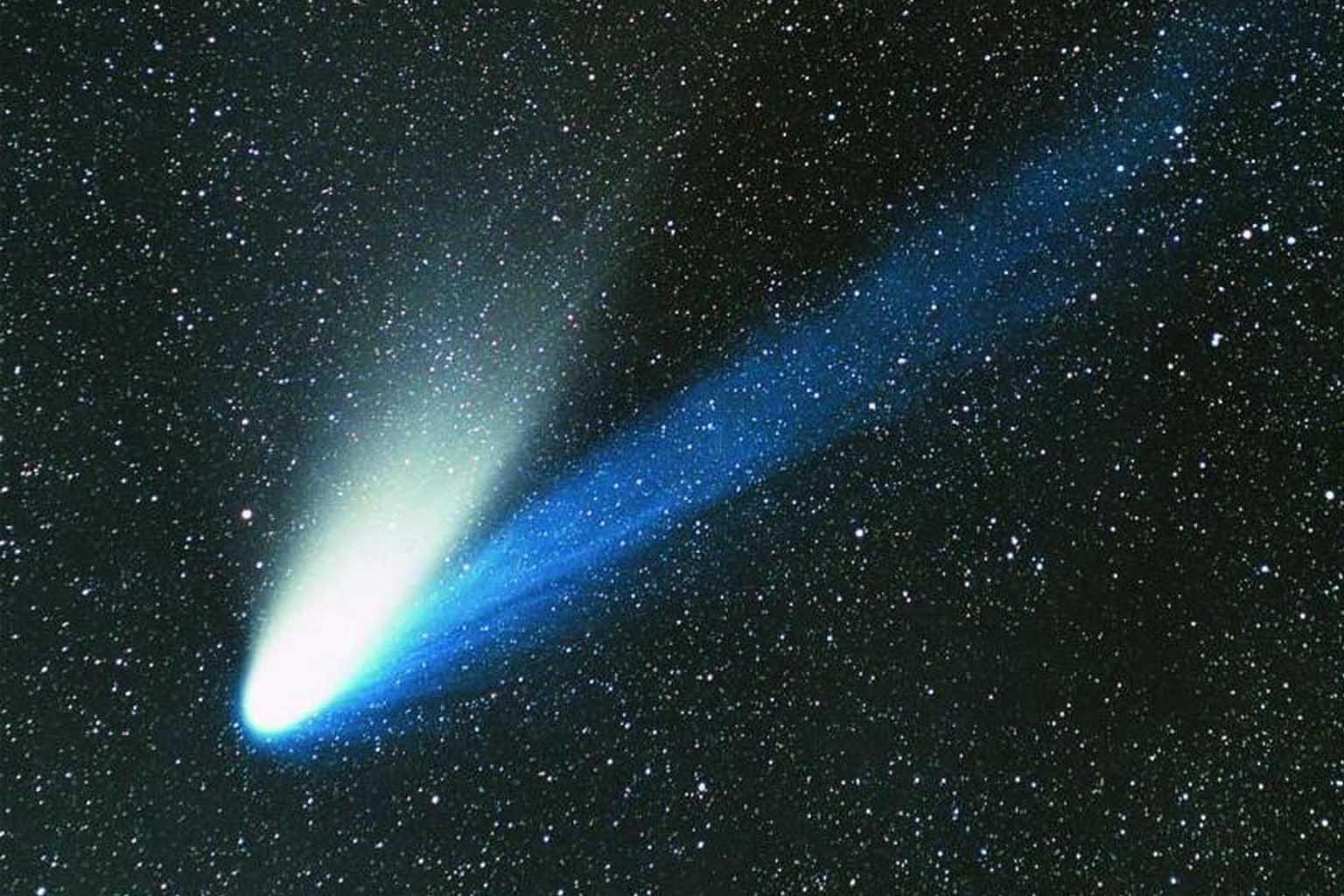
NASA’s most recent stellar chase has the makings of a cosmic news flash—a swift, all-in effort to capture a fleeting traveler from the distant stars. Oh, and it’s not just any traveler. We’re talking about Comet 3I/ATLAS, the third confirmed interstellar object to visit our solar neighborhood. It’s stirred a frenzy among a **dozen spacecraft**, launching a rare observation campaign spanning **from Mars orbit to Sun-watching probes**.
Sure, NASA has spotted more comets than one can count on their fingers. However, 3I/ATLAS? It’s in a league of its own. Unlike the home-grown ones, this comet hails from another star system, carrying with it a **treasure trove of chemical secrets** that might challenge our understanding of planet and comet formation in alien worlds.
Why 3I/ATLAS Has NASA in a Frenzy
To those astronomers huddled inside NASA’s Jet Propulsion Laboratory, the moment the ATLAS telescope in Chile flagged something unusual on July 1 was electrifying. Now, interstellar objects don’t exactly tap on the door. They sail through at breakneck speeds, unpredictable and glowing. Their untouched composition, until smothered by our Sun’s rays, offers scientists a rare peek into **alien chemistry**.
In no time, NASA scrambled its plethora of instruments, each dotting different corners of the solar system. If you’re curious, NASA’s own summary, which you can check out on their official NASA Solar System Exploration portal, vividly details this unprecedented cross-planet observation spectacle.
Scientists aren’t just interested in what 3I/ATLAS is made of but also what it lacks. Does it release particles like our known comets? Does it sport a tail? How does sunlight dance on its surface? And the grand question looms—does it hail from a **planetary system that’s anything like ours**?
Mars Takes the Spotlight
When Comet 3I/ATLAS hovered by Mars earlier this fall, a comfortable 19 million miles away, NASA’s ensemble of Martian witnesses had the best seats. The Mars Reconnaissance Orbiter, usually focusing on Martian geography and weather, directed its gaze to the **ethereal comet**, snapping what might be the finest images we have of an interstellar guest. As if that wasn’t enough, the MAVEN spacecraft got involved, tracking the comet’s ultraviolet emissions and gleaning valuable data on its gaseous trail.
Even the Perseverance rover took a peek. Can you imagine it? Standing on Mars, looking skyward to glimpse a visitor from far beyond our solar abode. These are the kind of **moments mission teams treasure**, a quiet reminder of the vast universe we explore.
Solar Missions in a Cosmic Ballet
Back on duty near Earth, NASA’s Sun-watching fleet had its moment. As 3I/ATLAS gracefully slid behind the Sun, spacecraft like STEREO and SOHO took up the chase. For several weeks, they followed the comet’s path, capturing **movements that Earth-bound telescopes couldn’t spy**.
Then entered PUNCH, NASA’s new solar venture tasked with mapping the solar corona. Its cameras caught a flick of the comet’s tail, weaving through energized particles—a golden opportunity no scientist could pass by. You see, it’s this kind of rare sighting that leaves a mark, even in a field familiar with countless celestial wanderers.
A Momentous Sky Show with Big Telescopes
This whole cosmic drama unfolded starting with NASA’s **ATLAS early-warning system** when the team first spotted 3I/ATLAS. Post the alert, heavyweight observatories entered the fray.
Hubble got its chance in July, and soon, the James Webb Space Telescope offered its perspective in August. Subsequently, SPHEREx, a powerhouse in near-infrared spectroscopy, was appointed to unravel the comet’s icy mysteries. These observations are far from just pretty pictures—they’re glimpses into which molecules braved the journey through space and what their survival says about the **comet’s origins**.
The Final Act: A Fleeting Farewell
As 3I/ATLAS makes its closest Earth approach, at a safe 170 million miles come December 19, there’s no need for alarm. It’s a silent passerby, offering a momentary icy hello before continuing its cosmic journey. By spring 2026, the comet will fade past Jupiter and into the dark expanse once more. But not without leaving clues behind—hints that could help scientists **test theories** regarding how different solar systems sculpt their comets.
Looking back, it’s amazing to consider that before 2017 with ‘Oumuamua’s sudden appearance, no interstellar object had ever been detected. Now? Well, these visitors might just be more frequent guests than we once imagined.
Feel the cosmic curiosity stirring within? Dive deeper into the saga by visiting go.nasa.gov/3I-ATLAS and explore the wealth of logs from every mission participant, including SOHO, STEREO, and the Mars Reconnaissance Orbiter.
Isn’t it incredible how the universe keeps beckoning us to discover, to inquire, to wonder? Stick around and let’s explore what other mysteries the cosmos holds for us.