


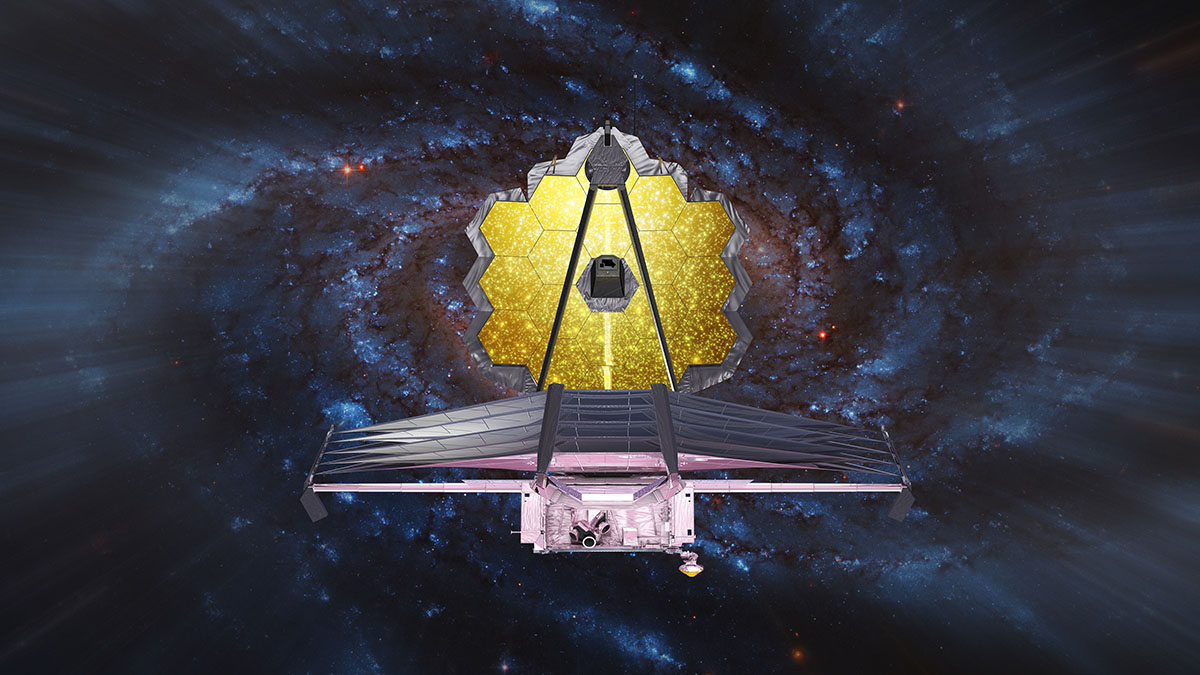
James Webb Space Telescope has once again stunned astronomers by revealing a spectacular icy debris disk around a young star, shedding light on the early stages of planetary system formation. This discovery not only confirms long-standing theories about where water ice can persist in infancy cosmic environments but also offers compelling insights into the building blocks of planets and possibly life beyond our solar system.
Revealing Frozen Water in a Distant Star System
Astronomers working with the James Webb Space Telescope (JWST) have identified frozen water particles enveloping the young star HD 181327, located approximately 155 light-years from Earth. Using JWST’s advanced Mid-Infrared Instrument (MIRI), they captured detailed spectral data that clearly show the signature of solid H₂O ice. While water vapor has been found in other stellar systems, this detection stands out as one of the clearest observations of actual ice particles beyond our solar neighborhood.
HD 181327 itself is only about 23 million years old, considered extremely young in cosmic terms. Detecting water ice in such a nascent system supports the understanding that the essential materials for planet formation—and potentially life—assemble quickly under favorable conditions. This discovery aligns with theoretical models predicting that ice can survive in the frigid outskirts of young planetary systems, where heat from the host star wanes.
How Water Ice Survives Amid Fierce Stellar Radiation
One of the study’s fascinating findings is the uneven distribution of water ice across the debris disk. The ice-rich material predominates in the system’s outer, cooler zones, while the inner regions near the star are notably scarce in frozen water. This pattern corresponds exactly with thermodynamic expectations: the intense heat and ultraviolet (UV) radiation emitted by the star sublimates ice closer in, leaving icy particles safely tucked away farther out.
According to Christine Chen, an astronomer at the Space Telescope Science Institute in Baltimore, frequent collisions among larger icy bodies like dwarf planets and planetesimals are critical in sustaining the icy outskirts. “There are regular, ongoing collisions in its debris disk,” Chen explains. “When those icy bodies collide, they release tiny particles of dusty water ice that are perfectly sized for Webb to detect.” This process creates a steady supply of icy dust despite the ever-present threat of vaporization from star radiation.
Parallel to Our Kuiper Belt: Universal Planetary Processes?
The dusty ring surrounding HD 181327 mirrors our own solar system’s Kuiper Belt in many respects. Both are cold, distant reservoirs packed with frozen material, shaped by gravity and dynamic early planetary forces. Experts believe this resemblance is more than a coincidence, suggesting a common evolutionary phase in planetary system development.
Astronomers speculate that icy debris belts like these are typical features in young planetary systems, forming early as the gravitational ballet sculpts planets and their neighboring bodies. This helps explain how outer planetary regions build up water ice—critical for delivering essential elements to nascent worlds.
Expert Insight and Broader Implications
The JWST’s discovery offers more than just astronomical trivia—it enhances our understanding of cosmic chemistry and planet formation narratives. Recent research by the NASA Goddard Space Flight Center highlights how these icy particles contribute fundamentally to the development of planetary atmospheres and potential habitats for life. Dr. Lisa Nguyen, a planetary scientist, emphasized in a 2024 study that “the early presence of solid water ice is pivotal for establishing habitable conditions during critical planet-building epochs.”
The significance of this discovery also highlights the advanced capabilities of the James Webb Space Telescope, a marvel of modern technology pushing the frontiers of astronomy. As more observations come in, astronomers worldwide anticipate refining the story of ice, dust, and planet-building beyond the early solar system.
Every glimpse the JWST provides brings us closer to decoding cosmic origins—reminding us that our solar system’s history might be just one example of a vast, universal blueprint for planetary life.
What do you find most fascinating about discovering water ice in deep space? Share your thoughts, questions, or excitement in the comments below and help spread the wonder of cosmic exploration!