


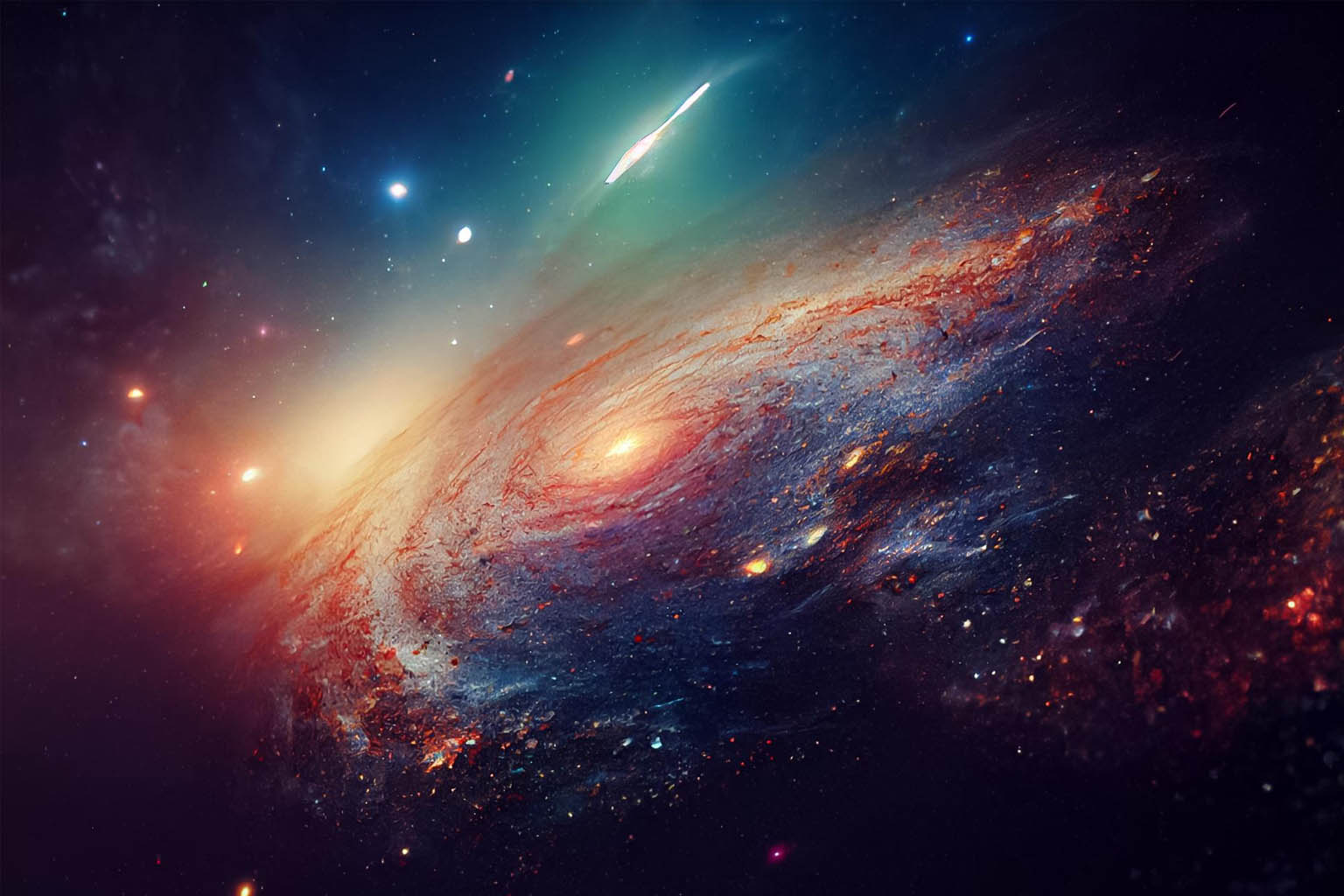
The cosmos rarely offers us a glimpse into the violent past of our celestial neighbors, but when it does, the revelations can fundamentally challenge everything we thought we knew about galactic evolution. Andromeda, our nearest major galactic neighbor at 2.5 million light-years away, has long served as a mirror to understand our own Milky Way. Yet new findings from an unprecedented Hubble Space Telescope survey suggest that this cosmic comparison may have been misleading us all along.
What emerges from over 1,000 Hubble orbits dedicated to mapping Andromeda’s satellite system is not the orderly galactic neighborhood we might expect, but rather a chaotic arrangement that speaks to a turbulent history. Much like how archaeologists use advanced technology to uncover ancient Romanian defenses hidden beneath the landscape, astronomers are now peering through cosmic time to reveal the hidden violence in Andromeda’s past. The implications extend far beyond a single galaxy’s biography—they force us to reconsider whether our models of galactic evolution, largely based on our own Milky Way, truly capture the diversity of cosmic development.
This asymmetrical satellite system, frozen in what appears to be a state of ongoing recovery from ancient cosmic trauma, offers a unique laboratory for understanding how galaxies respond to and recover from major disruptions over billions of years.
The Satellite Paradox That Defies Expectations
The heart of this cosmic mystery lies in a fundamental discrepancy between theory and observation. According to established models of galaxy formation, small satellite galaxies should exhaust their star-forming capabilities relatively early in cosmic history. The gravitational influence of massive parent galaxies like Andromeda should strip away the gas needed for continued stellar birth, leaving these smaller companions as ancient, dormant relics.
Yet Andromeda’s dwarf companions tell a different story entirely. Research indicates that many of these satellites continued forming stars much later than theoretical models predict, maintaining access to gas reservoirs for extended periods. This phenomenon appears to correlate with both the mass of the satellite galaxies and their proximity to Andromeda itself, suggesting a complex interplay of gravitational forces that current simulations fail to capture.
The persistence of star formation in these systems represents more than just an observational curiosity. It challenges our fundamental understanding of how small galaxies evolve within the gravitational sphere of influence of massive neighbors, forcing astronomers to reconsider the mechanisms that govern galactic ecosystems.
Reconstructing a Galactic Collision Frozen in Time
Perhaps the most striking evidence of Andromeda’s violent past lies in the unusual geometric arrangement of its satellite system. Rather than being randomly distributed throughout space, nearly half of these companion galaxies appear confined to a single orbital plane, all moving in the same direction around their massive host.
This ordered chaos points to a specific type of cosmic catastrophe: a major galactic merger that occurred billions of years ago. The suspected culprit may be visible today as M32, Andromeda’s most prominent satellite, which scientists believe could be the stripped core of a once-larger galaxy that collided with Andromeda in the distant past. Just as archaeologists have discovered evidence of prehistoric settlements that reveal ancient disruptions and reorganizations of human communities, this galactic archaeology shows how cosmic collisions reshape entire stellar neighborhoods.
Such an event would have sent shockwaves throughout Andromeda’s gravitational domain, flinging satellite galaxies into new orbits while simultaneously triggering bursts of star formation through gravitational compression. The asymmetrical distribution we observe today represents a galactic system still settling from this ancient upheaval, offering astronomers a rare opportunity to study the long-term consequences of galactic mergers.
Beyond the Milky Way Template
For decades, the Milky Way has served as humanity’s primary reference point for understanding galactic evolution. This perspective, while natural given our vantage point, may have inadvertently limited our conception of how diverse galactic development can be across the universe.
The Andromeda survey reveals that low-mass galaxies in different galactic environments can follow dramatically different evolutionary paths. Where Milky Way satellites largely ceased star formation billions of years ago, Andromeda’s companions maintained this activity for much longer periods. This discovery suggests that galactic ecosystems may be far more varied than previously assumed, much like how recent discoveries of ancient Mesoamerican sites reveal unexpected cultural interactions that challenge our understanding of how civilizations develop in different environments.
The implications extend beyond academic curiosity. If our models of galaxy formation, calibrated primarily against Milky Way observations, fail to predict the behavior of systems like Andromeda, they may also miss crucial aspects of galactic evolution occurring throughout the broader universe. This limitation could affect our understanding of everything from dark matter distribution to the formation of the first galaxies in cosmic history.
The Computational Blind Spot
One of the most perplexing aspects of the Andromeda findings is their absence from computer simulations. Current galactic evolution models consistently fail to reproduce the extended star formation activity observed in Andromeda’s satellite system, creating a significant gap between theoretical predictions and observational reality.
This computational blind spot suggests that our simulations may be missing key physical processes that operate in real galactic environments. The mechanisms that allowed Andromeda’s satellites to maintain gas supplies for extended periods remain unclear, pointing to gaps in our understanding of how gas dynamics operate within complex gravitational systems. Archaeological discoveries of ancient defensive structures similarly reveal that historical processes often involved complexities that our models fail to predict, reminding us that both cosmic and human systems can evolve in unexpected ways.
The disconnect between simulation and observation raises fundamental questions about the completeness of our current theoretical framework. If established models cannot account for the evolutionary history of our nearest major galactic neighbor, what other aspects of cosmic development might we be overlooking in more distant systems?
As we continue to peer deeper into the cosmic past with increasingly sophisticated instruments, the story of Andromeda serves as a reminder that the universe often defies our expectations. The galaxy that once seemed like a distant mirror of our own home now appears as a unique laboratory for understanding the complex, often violent processes that shape galactic evolution across billions of years. What other cosmic neighbors might be harboring similar secrets, waiting to reshape our understanding of how galaxies grow, merge, and evolve in the vast theater of space?