


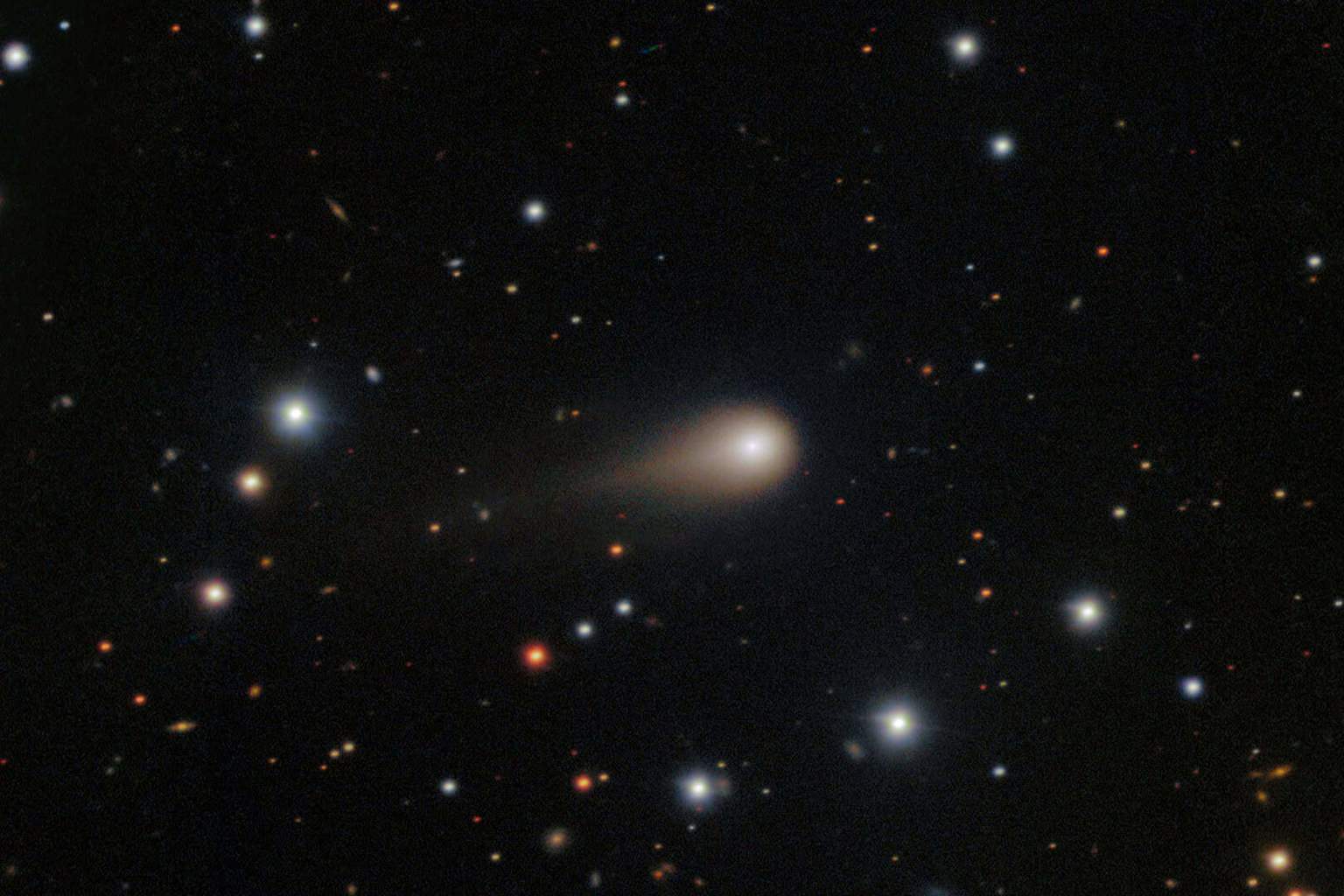
The arrival of the interstellar comet 3I/ATLAS has ignited a wave of excitement among astronomers and space enthusiasts worldwide. This swift cosmic visitor, racing through our Solar System from a distant star beyond the Milky Way, offers more than just a dazzling spectacle—it could hold vital clues to safeguarding Earth against future asteroid threats.
The rapid voyage of 3I/ATLAS through our cosmic neighborhood
Discovered in July 2023, the comet 3I/ATLAS marks the third significant interstellar object ever detected passing through our Solar System. In a remarkable journey, it zipped past Mars’s orbit before reaching its closest approach to the Sun, called perihelion, on October 29. Originating from an unknown star system far beyond our own, this interstellar traveler carries a unique chemical fingerprint that may unlock secrets about planetary formation in distant corners of our galaxy.
According to Space.com, the comet’s trajectory brings it near Earth on December 19, 2023, when it will pass at approximately 1.8 astronomical units (around 168 million miles or 269 million kilometers) from us. Then, in March 2026, it will approach Jupiter at about 0.36 astronomical units (54 million kilometers), where the gas giant’s immense gravity could nudge its path. Afterward, its brightness will steadily diminish as it drifts away, eventually fading from sight.
How 3I/ATLAS helps enhance Earth’s planetary defense
Far from just a fleeting visitor, 3I/ATLAS presents an unprecedented opportunity to sharpen our planetary defense capabilities. The International Asteroid Warning Network (IAWN), a global coalition of astronomers, is orchestrating a focused effort to track and analyze this comet’s path with precision. This campaign isn’t merely about observing a distant comet—it serves as a crucial rehearsal for identifying and predicting trajectories of future celestial objects that might pose impact threats to Earth.
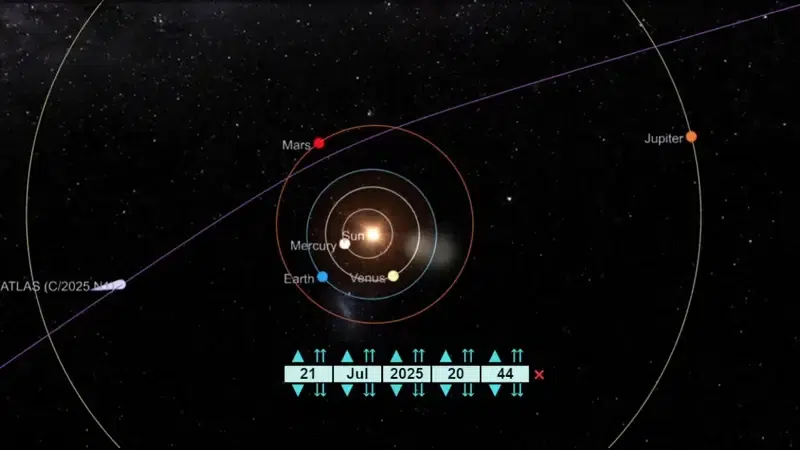
As highlighted by a recent announcement from the Minor Planet Center, a branch of the International Astronomical Union that catalogs and monitors small space bodies: “The campaign targeting comet 3I/ATLAS (C/2025 N1) will test the astronomical community’s capacity to extract precise astrometric measurements.” This meticulous data gathering enhances our readiness to detect and respond to potentially dangerous space rocks in the future.
What 3I/ATLAS reveals about planets beyond our Solar System
One of the comet’s most intriguing traits lies in its chemical composition—its coma, the glowing gas cloud surrounding the nucleus, shows an unusually high concentration of carbon dioxide (CO2). This discovery, made using the cutting-edge James Webb Space Telescope, points to a birthplace in a profoundly cold, distant region around its native star, with planetary formation conditions dramatically different from those that shaped Earth and Mars.
Studying such “pristine” cosmic ingredients is invaluable. They offer scientists a rare glimpse into the building blocks of worlds formed billions of miles away in the galaxy. Dr. Lisa Nguyen, a planetary scientist specializing in exoplanetary systems, noted in a 2024 study published by the Astronomical Journal that objects like 3I/ATLAS “function as unique laboratories for understanding planetary genesis under conditions unlike any in our own Solar System.” This insight aids astronomers and cosmologists in determining whether the formation processes of our Solar neighborhood are typical or exceptional.
The debate and scientific consensus on the nature of 3I/ATLAS
Despite its classification as a comet—supported by its characteristic gas activity and long tail—3I/ATLAS sparked spirited debate after early estimates suggested it had a surprisingly large nucleus, measuring up to 12 miles (20 kilometers) across. Astrophysicist Avi Loeb of Harvard University proposed a controversial hypothesis that the object might be a fragment of alien technology. Though this conjecture has been overwhelmingly rejected by the scientific community, it has stirred public interest and underscores the importance of transparency and open data sharing in space research.
Most experts agree that 3I/ATLAS is a natural celestial body with extraordinary features, not unlike a very peculiar comet. This consensus highlights the necessity of thorough observation and analysis of interstellar visitors to expand our knowledge and bolster Earth’s defenses against future cosmic threats.
The journey of 3I/ATLAS offers far more than a fleeting celestial event—it strengthens our understanding of interstellar objects and enhances our planetary defense toolkit. Tracking such cosmic visitors equips us with better tools to protect our planet while deepening our appreciation of the universe’s far-reaching complexities.
We invite you to share your thoughts: Do you believe objects like 3I/ATLAS are potential threats, or do they serve as invaluable messengers from the cosmos? Leave your comments below or share this story with fellow stargazers eager to explore our dynamic universe!