


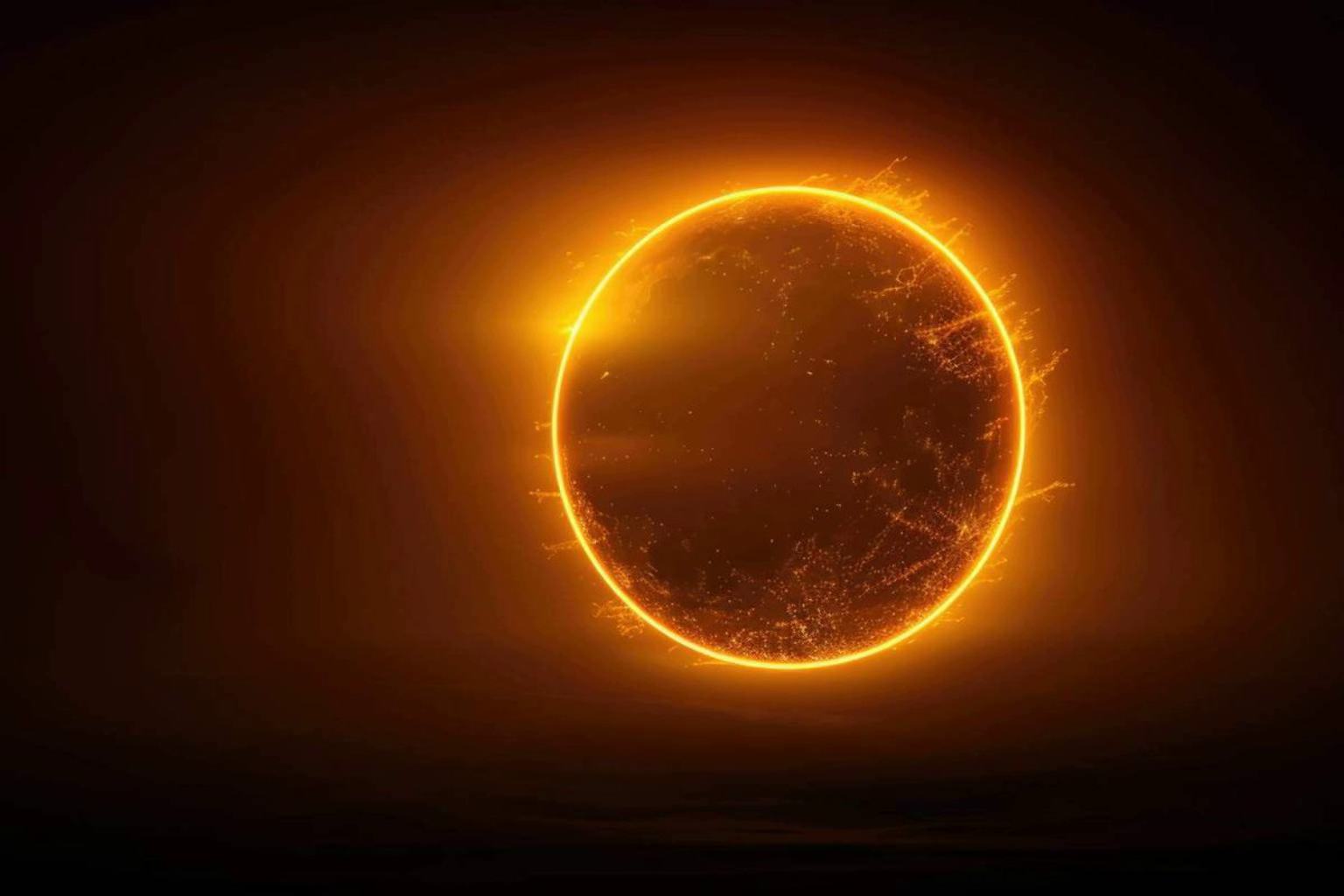
The sky is about to perform one of its most mesmerizing feats: a total solar eclipse that will darken the midday sun for an astonishing 6 minutes and 23 seconds on August 2, 2027. This rare cosmic event won’t happen again for nearly a century, making it a once-in-a-lifetime spectacle that will captivate millions across continents, turning bright day into mysterious twilight.
The unprecedented length of the 2027 total solar eclipse
What makes the 2027 total solar eclipse so extraordinary is its remarkable duration. Typical total solar eclipses last less than three minutes, but this event will more than double that, casting shadows for over six minutes. Experts explain that this impressive length is due to a fortunate alignment of celestial conditions: the Earth will be at aphelion, its farthest distance from the Sun, making the Sun appear smaller in the sky; the Moon will be at perigee, its closest point to Earth, appearing larger; and the Moon’s shadow path will skim near the equator where it moves slower, stretching the eclipse’s duration.
This rare combination allows the Moon’s shadow to linger, offering an unforgettable, prolonged experience of totality. As astrophysicist Dr. Emily Lindstrom notes, “The interplay between orbital positions creates a perfect storm for this extended eclipse. It’s a natural marvel showcasing our solar system’s intricacies.”
Tracing the Moon’s shadow from Gibraltar to the Red Sea
The eclipse’s path of totality begins over the Strait of Gibraltar, sweeping across southern Europe and northern Africa before stretching into the Arabian Peninsula and fading over the Indian Ocean. About 170 miles wide, this shadow corridor cuts across densely populated regions, making the event widely accessible.
Cities in southern Spain like Cádiz and Málaga will enjoy over four minutes of darkness, while Morocco’s Tangier and Tetouan sit directly in the path. Near Benghazi, Libya, skies will darken for nearly five minutes. The grandest viewing spot will be in Egypt’s historic city of Luxor, where the eclipse reaches its peak length of over six minutes.
In the Arabian Peninsula, places such as Jeddah and Mecca in Saudi Arabia stand in the eclipse’s path, with the event concluding over Yemen and Somalia. Even southern Italy and the island of Lampedusa will witness a dramatic partial eclipse nearing total coverage.
More than just a cosmic event: culture, science, and travel converge
This eclipse is not only an astronomical phenomenon but also a celebration of global science, culture, and adventure. It unites people from different backgrounds under a shared sky, sparking a collective sense of wonder. The 2027 event promises to inspire communities worldwide, as it did for me during a partial eclipse years ago, when strangers emerged from their routines, bonded by the awe of the cosmos.
Several key locations along the eclipse path are preparing special events: Luxor plans live broadcasts from the ancient Karnak temples; Cádiz will host educational workshops to ignite young minds’ curiosity; Saudi Arabia offers astrotourism packages near the breathtaking landscapes of Al-Ula. According to the International Aviation Organization, special charter flights will chase the Moon’s shadow, giving passengers a rare aerial perspective of the totality.
Moreover, many African and Arabian countries will highlight their rich cultural heritage, inviting visitors to explore their history and natural wonders in conjunction with the eclipse festivities. The event serves as a platform to promote sustainable tourism and scientific education across these regions.
Tips for experiencing the 2027 eclipse safely and memorably
Experts stress the importance of early planning to secure accommodations and transport, especially in popular viewing spots like Luxor and Jeddah. Eye safety is paramount: certified solar glasses meeting the ISO 12312-2 standard are essential to protect your vision when observing the eclipse phases before and after totality.
Arrive early to find the perfect vantage point. August’s heat demands preparation—bring plenty of water, sunscreen, and a hat. Observers should also cherish the moments leading up to totality, when the atmosphere shifts—the air cools and light dims, creating an almost magical ambiance.
According to NASA’s 2023 report on eclipses, witnessing such a long totality event heightens the emotional and sensory experience, leaving lasting impressions on viewers. NASA report on the 2027 eclipse details this phenomenon and underscores the rarity of an eclipse lasting over six minutes.
“A solar eclipse is one of the few natural events that profoundly connects us, reminding us how small we are in the vast universe,” said Dr. Raj Patel, astronomer at the International Space Science Institute.
As the Moon’s shadow sweeps across eight countries, millions will share in the breathtaking spectacle. The next eclipse of such length won’t grace Earth until 2114, making August 2, 2027, a celestial highlight for generations to come.
Have you ever been awestruck by a solar eclipse? How did that moment of transformation affect you? Share your experiences, thoughts, or plans for the 2027 event in the comments below. Let’s celebrate together the wonder of the cosmos and the unity it inspires!