


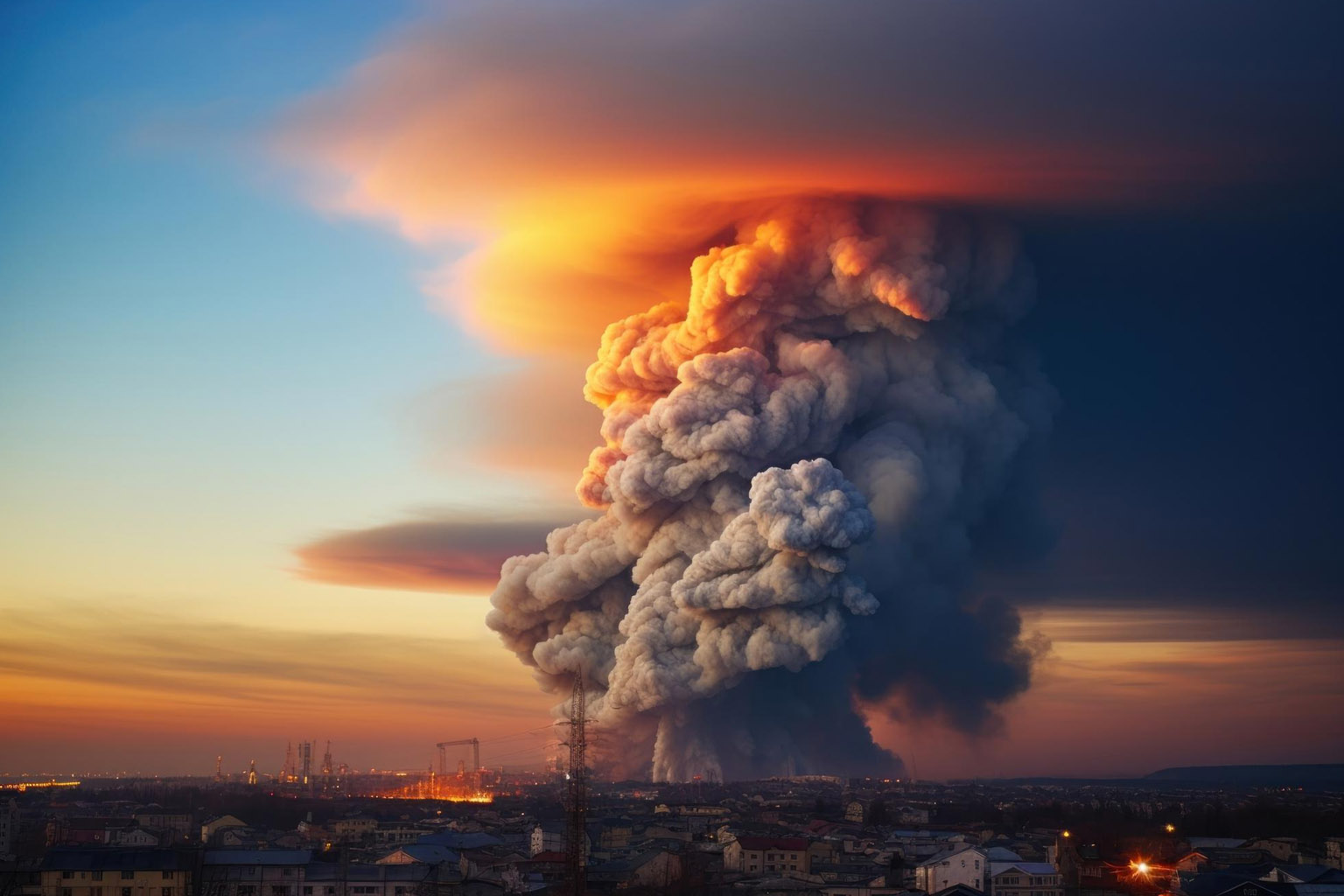
The idea of a nuclear war is enough to send chills down the spine. The sheer devastation seems more like a nightmare than a potential reality. But how close could we actually come to this unthinkable scenario? Let’s explore the impact of Russian nukes on U.S. cities, a terrifying prospect that could alter the course of history.
The SS-18 Satan: A Doomsday Weapon
At the center of this chilling discussion is the notorious SS-18 Satan missile. Famously capable of widespread destruction, it stands as one of Russia’s most powerful intercontinental ballistic missiles. Boasting a formidable 20-megaton warhead — that’s 20,000 kilotons of TNT for those counting — its design maximizes devastation. Just imagining its detonation over a bustling American city conjures images of **chaos on an unimaginable scale.**
According to a report by the Nuclear Threat Initiative, Russia’s nuclear prowess remains daunting with capabilities that constantly challenge global security dynamics.
The Immediate Impact
When a nuke goes off, the destruction unfurls in waves of horror. Let’s take the terrifying *fireball radius* for starters — it’d vaporize everything in its 15.1-square-mile reach, leaving **nothing but scorched earth.** This is no mere exaggeration; buildings, roads — obliterated.
Then comes the deafening blast wave. Buildings morph into lethal projectiles, with shockwaves flattening entire neighborhoods in the blink of an eye. Sorry to say, if you’re around, even outside that direct blast zone, you’re not safe. **Thermal radiation** would result in third-degree burns miles away, while fallout plunges entire regions into lasting peril. Many wouldn’t consider that water sources become toxic and farming land unusable, a catastrophe not just in the immediate sense but with enduring generational impacts too.
Washington, D.C. and New York City: Icons Under Threat
If Washington saw such a strike, what remains of the political nucleus of America? In an instant, over 1.6 million lives would be snuffed out, while almost 6 million would suffer burns and radiation poisoning. **Iconic landmarks vaporizing before our eyes:** White House, Congress, gone.
The thought of an instant economic collapse also isn’t far-fetched, especially if New York faced a nuclear fate. With more than 5.4 million casualties and the skyline reduced to ash, the center of global finance would simply cease to exist. **Can’t even fathom it, can you?** This destruction goes beyond buildings; it’s about disrupting infrastructure and economies worldwide.
A Broader Look: Los Angeles, Chicago, and Houston
Could Hollywood really fade to black? Imagine Los Angeles, teeming with stars and tech innovations — turned to **a smoking wasteland.** With an estimated 3.5 million deaths, critical infrastructure would vanish, making emergency response efforts futile. The extensive reach of radiation plumes exploiting coastal winds spells a dismal outcome for generations.
Turning to Chicago, think of the vibrant Windy City turned infernal. In seconds, over 3 million people gone, reverberating fires traveling to suburbs. The loss isn’t just personal — it strikes at America’s transit and trade arteries.
Houston, meanwhile, stands as a pivotal economic lifeline. Flammable gas lines and skyscrapers **flattened by shockwaves,** while toxic clouds send tremors across Texas. The results? Skyrocketing energy prices, and by proxy, a jittery global economy.
Coping With the Threat
Who could possibly want to live in a post-apocalyptic world? And yet, we must confront these possibilities to prevent them. With over 6,000 warheads at its disposal, Russia’s full-scale *nuclear capability* isn’t just academic; it threatens human civilization as we know it.
The long-term repercussions of global conflict with these weapons are grave. Soot-covered skies might block sunlight, plunging climates into a nuclear winter. Think of not just the loss of life but generations of mutations, birth defects, cancers — humanity’s painful legacy.
is vital. Nuclear energy policies and national security measures must incorporate **safeguards against such catastrophic scenarios.** And the ongoing collaborative disarmament efforts? They’re more critical than ever.
This provocative visualization isn’t merely hypothetical. These discussions of devastating force serve as a stark reminder to preserve our civilization, to continually push the boundaries of peace and diplomacy. So, let’s keep these dialogues open and ever-pressing.
To explore further, check out this chilling simulation by nuclear historian Alex Wellerstein:
How do you feel about these scenarios? Let your voice be heard in discussions around nuclear disarmament and global peace efforts. Together, we can advocate for a world where stories like these remain theoretical musings.