


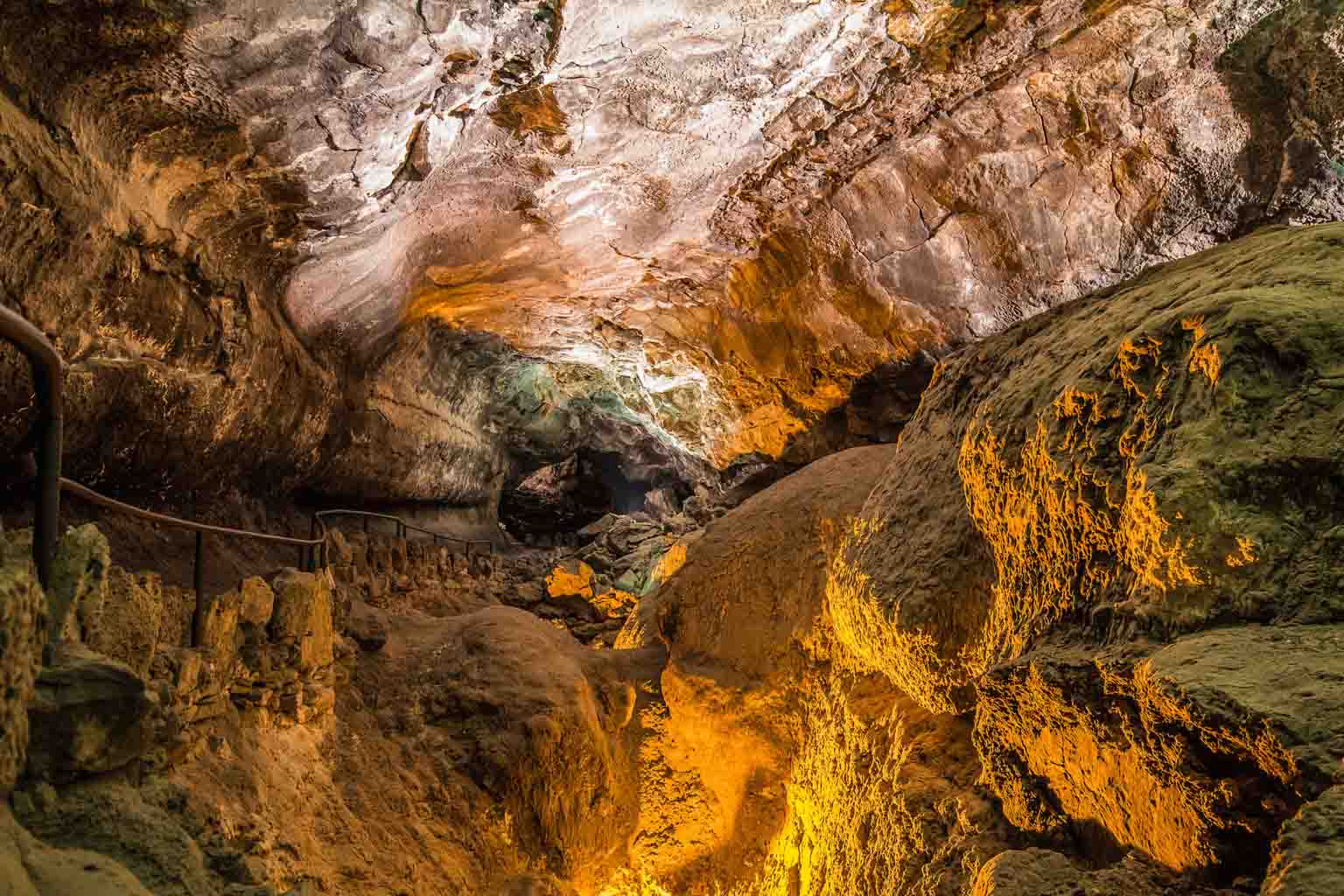
Deep beneath the volcanic island of Lanzarote, where ancient fires carved impossibly long passages through solid rock, one of Earth’s most extraordinary geological formations remains largely hidden from the world above. The La Corona volcanic tube system stretches nearly five miles through the Canary Islands landscape, with a significant portion disappearing entirely beneath the Atlantic Ocean. What makes this 20,000-year-old tunnel system particularly remarkable isn’t just its impressive length, but the way it challenges our understanding of how volcanic formations can persist and evolve over millennia—much like how 20,000-year-old cave etchings continue to reveal ancient secrets about human civilization.
This subterranean marvel was born from the Corona Volcano eruption two decades ago in geological terms, when molten lava carved out a complex network of passages that would eventually become home to unique ecosystems and geological phenomena found nowhere else on Earth. Scientists have spent decades studying its intricate structure, yet the tunnel continues to reveal new secrets about volcanic processes and life’s ability to adapt in extreme environments.
The significance of this underground world extends far beyond academic curiosity. The International Union of Geological Sciences is now considering the La Corona system for World Geological Heritage Site status, a designation that would place it among the planet’s most important natural formations. This recognition reflects not just the tunnel’s scientific value, but its role as a living laboratory for understanding how our planet’s most powerful forces shape the world beneath our feet.
The Architecture of Ancient Fire
The formation process that created the La Corona tunnel system represents a perfect storm of geological conditions. When the Corona Volcano erupted, the outer lava layers cooled rapidly while the interior remained molten, creating a natural pipeline that allowed continued flow for extended periods. This process, known as lava tube formation, typically produces relatively short tunnels. What makes La Corona exceptional is the sustained eruption that carved out an unprecedented 4.7-mile network.
According to research published in Icarus journal, the Corona volcano’s lava tube system demonstrates unique geological characteristics that have implications for understanding similar formations on other planets. The tunnel system divides into three distinct sections, each with unique characteristics shaped by different environmental factors. Cueva de los Verdes showcases the classic lava tube environment, with its cathedral-like chambers and natural acoustics that transform sound in remarkable ways.
“The Corona lava tube system provides crucial insights into the inception and evolution of volcanic cave networks, revealing formation processes that mirror those potentially found on Mars” – Planetary geology research
The transition from terrestrial to marine environments within the same tunnel system creates extraordinary conditions for geological study. Scientists have documented how seawater infiltration has modified the original volcanic structures, creating hybrid environments that exist nowhere else in documented geology.
An Evolutionary Laboratory Underground
Within the Jameos del Agua section, evolution has taken a fascinating turn. The underground lake houses a population of albino, blind crabs that have adapted to complete darkness over thousands of years. These creatures represent one of the most dramatic examples of evolutionary adaptation to extreme cave environments, having lost both pigmentation and vision while developing enhanced sensory capabilities.
The ecological significance extends beyond these unique crabs. Studies have shown that the tunnel system supports multiple endemic species, creating what researchers describe as an underground archipelago of isolated habitats. Each section maintains distinct environmental conditions, from freshwater pools to saltwater intrusions, allowing different evolutionary pressures to shape life in remarkable ways. This discovery of unique ecosystems in extreme environments parallels recent geological findings that continue to reshape our understanding of Earth’s hidden treasures.
The presence of these ecosystems raises important questions about conservation priorities. Unlike surface environments, cave ecosystems recover extremely slowly from disturbances, making the tunnel system particularly vulnerable to human impact. Research suggests that even minor changes in water chemistry or temperature can have cascading effects on these specialized communities.
The Submerged Frontier
The Atlantis Tube represents perhaps the most intriguing aspect of the La Corona system. This fully submerged section extends nearly a mile beneath the Atlantic, creating one of the longest underwater lava tunnels known to science. Unlike the accessible terrestrial portions, this underwater labyrinth remains largely unexplored, with only recent advances in underwater robotics beginning to reveal its secrets.
Research from the University of South Florida has highlighted how the La Corona lava tube system contains massive accumulations of gypsum and other sulfates, providing insights that advance our understanding of similar formations beyond Earth. Preliminary studies suggest that the underwater sections maintain remarkably stable conditions, with consistent temperatures and unique water circulation patterns.
Scientists believe these conditions may harbor undiscovered marine life adapted to the specific chemistry and pressure conditions within the volcanic tube environment. The interaction between seawater and volcanic rock creates chemical conditions that don’t exist in typical marine environments.
The technical challenges of studying underwater lava tubes have limited research until recently. New underwater mapping technologies are beginning to reveal the full extent and complexity of the submerged passages, suggesting the system may be even larger than currently documented.
The Engineering Challenges Nobody Discusses
While most coverage focuses on the La Corona system’s natural wonder, the practical challenges of studying and preserving this environment reveal complex engineering problems that rarely receive attention. The tunnel’s length and depth create unique access challenges that have required innovative solutions from researchers and conservationists.
Maintaining air quality throughout the extensive cave system requires sophisticated ventilation management, particularly in sections open to public access. The natural air circulation patterns, disrupted by human presence and infrastructure development, need constant monitoring to prevent the accumulation of harmful gases or excessive humidity that could damage delicate formations. These challenges mirror the problems of moisture collection in hidden spaces, where environmental conditions can create unexpected complications.
The integration of research facilities within the cave system, such as the Casa de los Volcanes research center, represents a delicate balance between scientific access and environmental protection. Engineers have had to develop lighting systems that minimize impact on cave-adapted species while providing adequate illumination for research and controlled public access. These technical considerations often determine how much of the system can be studied without compromising its natural state.
The underwater sections present even greater challenges, requiring specialized equipment and techniques similar to those used in exploring deep ocean environments where extreme conditions test the limits of human exploration technology.
As the La Corona volcanic tube system moves toward potential World Heritage recognition, it stands as more than just a geological curiosity. It represents a window into processes that shaped our planet long before human civilization, while simultaneously hosting evolutionary experiments that continue today. The tunnel reminds us that some of Earth’s most significant laboratories exist not in our universities, but in the hidden spaces where ancient forces still whisper their secrets to those patient enough to listen.