


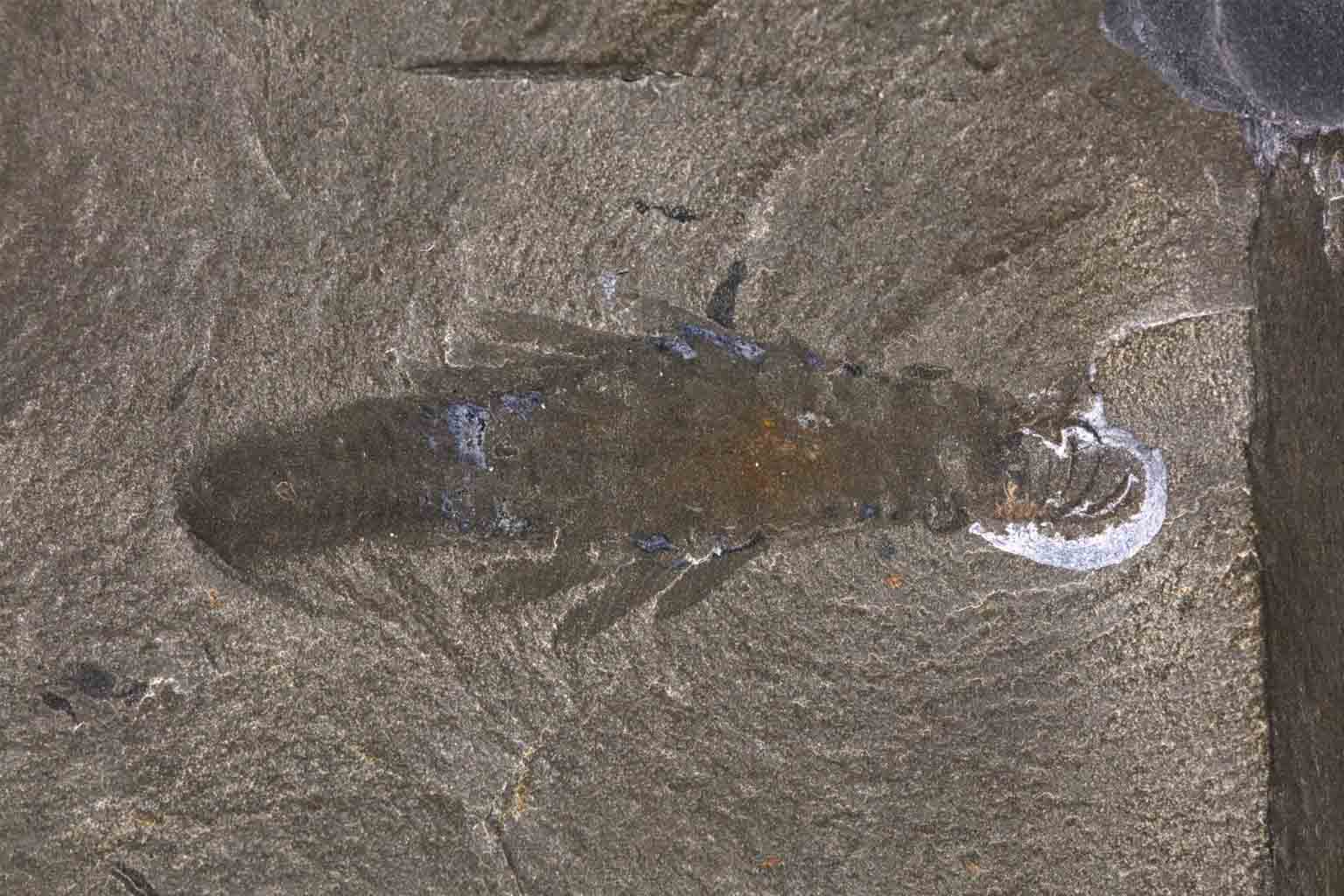
Scientists have uncovered a truly extraordinary creature from 506 million years ago that looks like something out of a sci-fi film. This ancient sea animal, Mosura fentoni, challenges what we thought we knew about the Cambrian ocean’s bizarre life—and its story is rewriting the origins of early animal evolution.
A creature that seems to leap from science fiction
At first glance, Mosura fentoni sounds like a character from a monster movie. It sported three eyes, clawed limbs, and a segmented tail lined with gills—features that would fit right in with fantasy creatures in films or comics. Yet, this “sea moth,” discovered in Canada’s famed Burgess Shale, is completely real and lived approximately 506 million years ago during the Cambrian Period.
Unlike its giant relative Anomalocaris, the notorious apex predator of the Cambrian seas, Mosura was much smaller—about the size of a human finger. Despite its modest size, it possessed paddle-like limbs perfect for swimming and a uniquely adapted tail with 16 segments, each covered with gills. Remarkably, this tail was likely used not for swimming propulsion but as an adaptation to breathe in low-oxygen environments—something unexpected for an ancient predator and an adaptation that speaks to diverse ecological niches in early oceans.
Joe Moysiuk, curator at the Manitoba Museum and lead author of the recent study describing Mosura, told Gizmodo, “As much as we learn about radiodonts, there always seems to be something new and surprising about this group around the corner.” He and his team affectionately nickname Mosura the “sea moth” due to its resemblance to the Japanese kaiju Mothra, blending ancient reality with modern imaginative culture.
Exceptional fossils shed light on ancient biology
The Burgess Shale fossil site is famous worldwide for its exceptional preservation of soft-bodied organisms, often preserving fine anatomical details lost in other fossil sites. The 61 Mosura fossils analyzed reveal remarkable internal features such as preserved nerve tissues, eye structures, and the digestive tract. Some specimens even show patches that experts interpret as parts of an open circulatory system, possibly functioning as a simple heart pumping fluid into body cavities.
This level of preservation is rare, offering crucial insight into how early animals’ physiology was far more complex than previously recognized. These fossils, collected mainly by the Royal Ontario Museum over the past five decades from Yoho and Kootenay National Parks, reveal the anatomy of a creature thriving during the Cambrian Explosion—the period when life on Earth dramatically diversified.
Bridging paleontology and pop culture
Mosura’s striking, otherworldly appearance showcases the close relationship between ancient life and the imagination of science fiction. Moysiuk, who also named other uniquely bizarre Cambrian species such as Titanokorys gainesi and Cambroraster falcatus (the latter inspired by Star Wars’ Millennium Falcon), highlights how science often feeds creativity, while popular culture in turn inspires scientists.
This tie between science and storytelling reminds us that the boundaries between fact and fiction can blur, especially when discoveries reveal animals that seem almost alien by today’s standards. The whimsical nickname “sea moth” likens Mosura to Mothra, a famous kaiju, illustrating how even the most unusual fossils can resonate beyond academia and captivate the public imagination.
Redefining early animal evolution and ecological strategies
Mosura fentoni is more than a curiosity—it’s a game-changer for understanding early animal evolution. Its anatomical adaptations suggest that Cambrian predators had a greater diversity of lifestyles than previously believed. The tail’s gill structures indicate a specialization for coping with low-oxygen environments, a trait that challenges the assumption that early arthropods relied solely on agility and brute force to survive.
According to the 2024 Royal Society Open Science report, the discovery of Mosura’s anatomy reveals evolutionary experimentation with survival strategies long before modern animals evolved. This adds a fresh perspective on how early ecosystems functioned and how adaptation to varied environments was already underway during the Cambrian Explosion.
Mosura’s fascinating traits serve as a vivid reminder of nature’s creativity across deep time, showing that evolution explored a broad range of solutions to environmental challenges, even from Earth’s earliest complex animals. Discoveries like this continue to inspire not only science but also human culture, storytelling, and wonder.
What do you think about a real-life sea creature that looks like it walked straight out of a sci-fi epic? We’d love to hear your thoughts and reflections—share your perspectives, questions, or creative ideas below and keep this incredible story alive!