


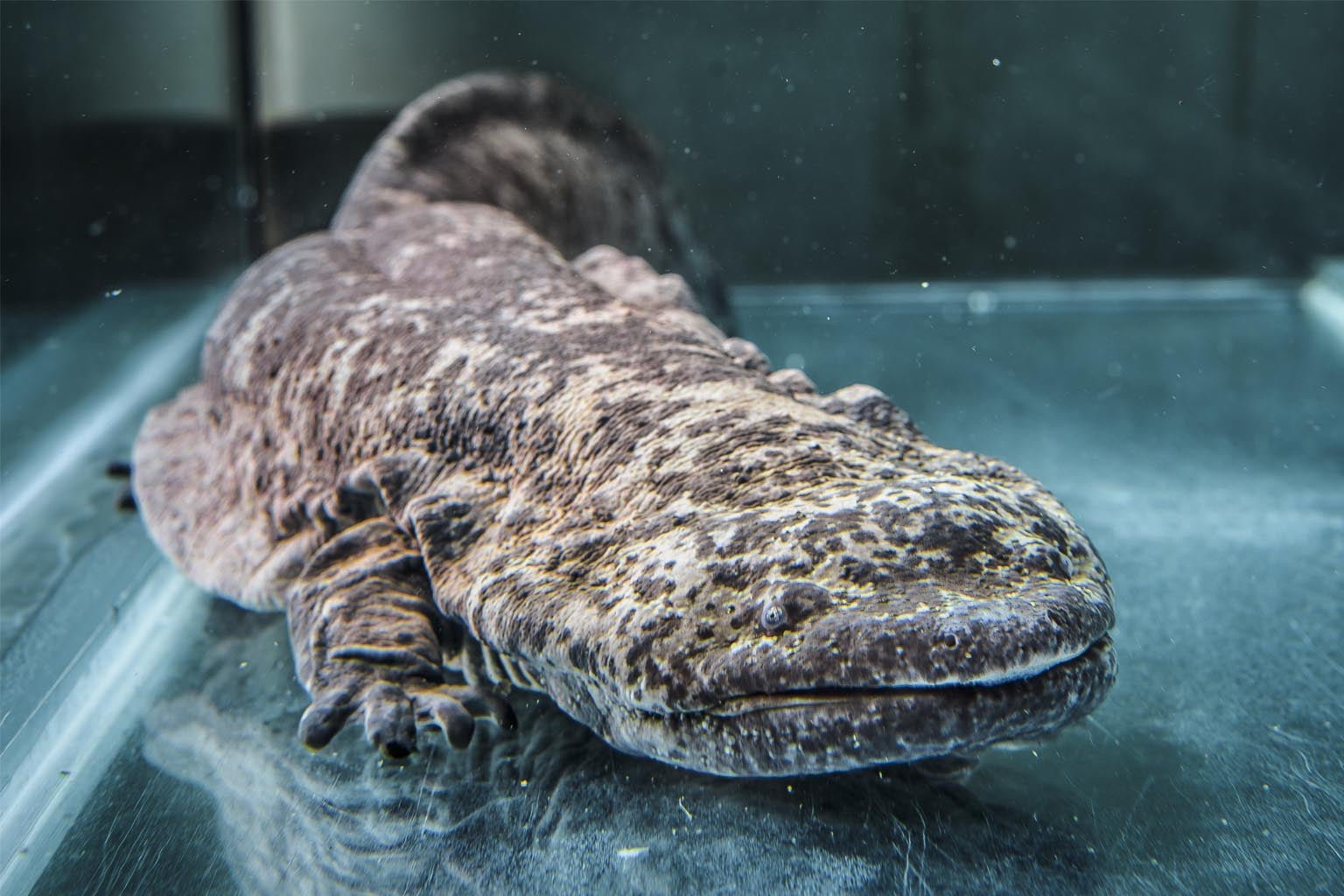
A recent fossil find in Tennessee is stirring excitement among scientists and nature enthusiasts alike. Unearthed at the Gray Fossil Site, this giant salamander fossil is rewriting what we know about prehistoric amphibians in the Appalachian region. With its massive size and extraordinary jaw power, this ancient creature offers fresh insights into the complex ecosystems that existed over five million years ago.
Meet Dynamognathus robertsoni: Appalachia’s giant salamander
The newly discovered Dynamognathus robertsoni stands out for its impressive size, measuring nearly 16 inches—a giant by salamander standards. Found by a team from East Tennessee State University (ETSU), this species is among the largest terrestrial salamanders ever documented. Living in what is now East Tennessee during the late Miocene epoch, this predator challenges previous assumptions about salamander distribution in prehistoric Appalachia.
Before this discovery, scientists believed that large, burrowing salamanders were limited to certain southern areas, such as Alabama, home to today’s rare Red Hills salamander. However, Dynamognathus robertsoni’s presence reveals that the ancient Appalachian ecosystem supported diverse and formidable amphibians much further north than previously thought.
Powerful jaws that tell a vivid story
The genus name Dynamognathus literally means “power jaw,” derived from Greek—“dynamis” for power and “gnathos” for jaw. This name highlights the salamander’s unusually strong bite force, a trait that likely made it a dominant predator in its habitat. Dr. Keila Bredehoeft, a museum specialist involved in the research, explained, “This group of salamanders has unusual cranial anatomy giving them a strong bite force, so the genus name reflects their great size and power compared to living relatives.”
This adaptation hints at complex predator-prey interactions in prehistoric Appalachia’s forests. Such robust jaws suggest a varied diet and ecological niche, shedding light on amphibian diversity and survival strategies millions of years ago.
Climatic shifts shaped Appalachian salamander evolution
Climate played a crucial role in the distribution and evolution of salamander species across Appalachia. Five million years ago, East Tennessee enjoyed a warmer climate that allowed species like Dynamognathus robertsoni to thrive. However, as the Earth cooled through the Pleistocene ice ages, larger burrowing salamanders likely retreated to warmer southern refuges, such as Alabama.
Dr. Joshua Samuels, a co-author of the study, noted, “The warmer climate in Tennessee 5 million years ago, followed by cooling during ice ages, may have restricted large, burrowing salamanders to lower latitudes, where the Red Hills salamander lives today.” Today, Appalachia remains a hotspot for salamander biodiversity, harboring over 50 species, mostly from the lungless family Plethodontidae.
According to a 2020 Scientific Reports study, amphibians are especially vulnerable to environmental changes, making fossil evidence like this vital to understand how these creatures have adapted—or struggled—through shifting climates. This discovery not only fills a crucial gap in the fossil record but also informs conservation strategies for current amphibian populations facing climate threats.
ETSU and the Gray Fossil Site: a hub for uncovering Appalachia’s past
The Gray Fossil Site is renowned as one of the most significant paleontological locations in the southeastern United States. The ongoing work by ETSU researchers, students, and volunteers continues to reveal new species and ecological mysteries from the Miocene era.
Dr. Joe Bidwell, dean of ETSU’s College of Arts and Sciences, emphasized the broader impact of their work: “Our researchers are not only uncovering ancient life, they are modeling the kind of collaboration and curiosity that define ETSU. This exciting find underscores our university’s vital role in preserving and exploring Appalachia’s deep natural history.”
The discovery of Dynamognathus robertsoni is a striking reminder of the rich and dynamic prehistoric world beneath our feet—and how much remains to be explored.
“Finding something that looks like a Red Hills salamander here in East Tennessee was a bit of a surprise.” — Davis Gunnin, lead author of the study
This encouraging statement points to future discoveries that could reshape our understanding of amphibian evolution and environmental change.
As amphibian expert Dr. Lisa Nguyen noted in a 2024 study, “Powerful jaw adaptations such as those seen in Dynamognathus are crucial evolutionary traits that influence predator success and ecosystem stability.” This resonates strongly with paleontological findings from the Gray Fossil Site, connecting modern scientific theory with fossil evidence.
Discoveries like this ignite curiosity about the ancient life that shaped today’s biodiversity hotspots. What stories might other fossils hold about life, adaptation, and survival millions of years ago?
We invite you to share your thoughts and questions—let’s keep the conversation about Appalachia’s incredible natural history alive and thriving!