


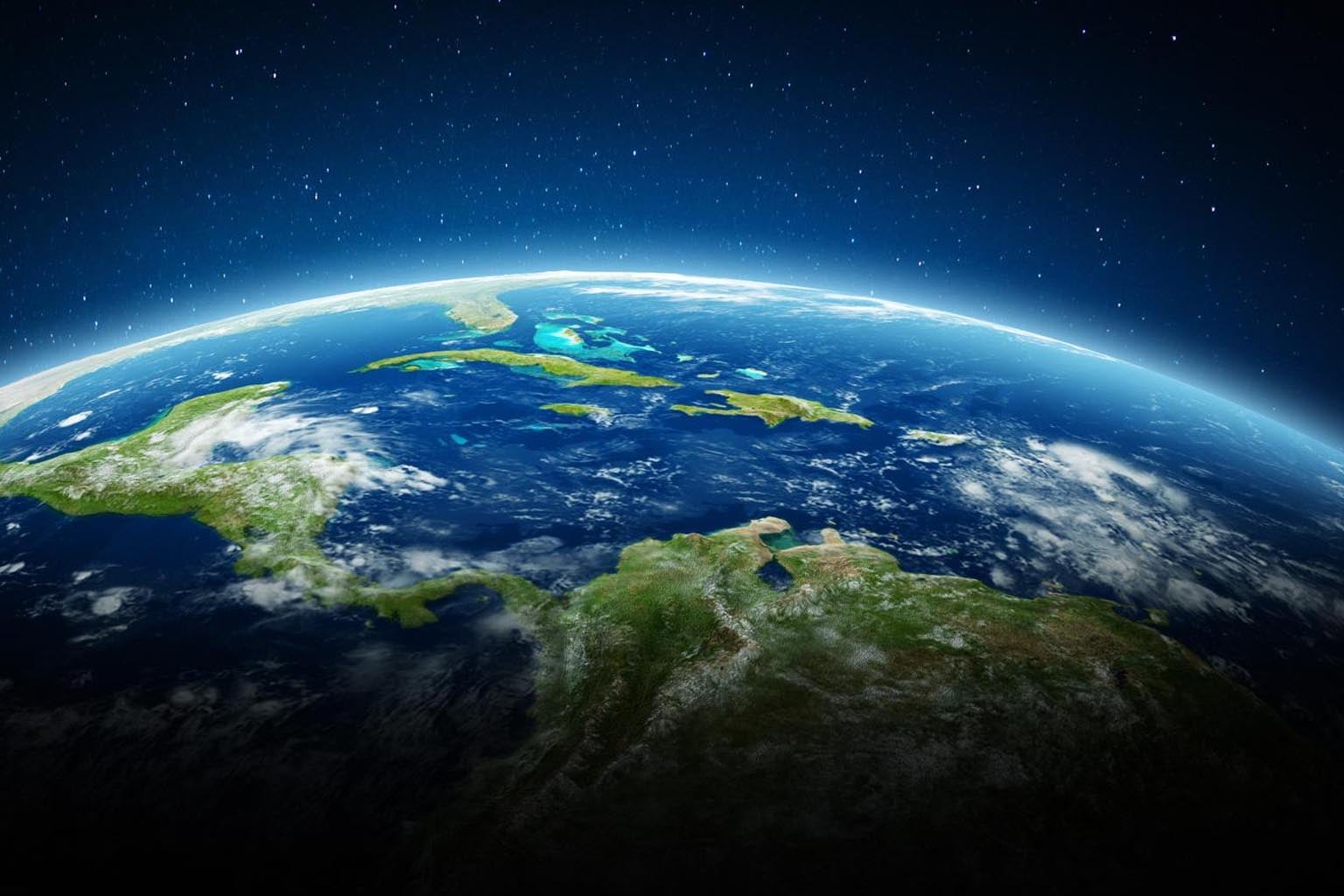
The thrill of discovery never fades, does it? Imagine unearthing a tiny relic from the deep past of our planet—one that takes us back to nearly the dawn of Earth’s history. In the rugged outcrops of Jack Hills, Western Australia, scientists have stumbled upon what they deem the oldest known fragment of Earth’s crust: a minuscule zircon crystal aged at an unbelievable 4.4 billion years. This ancient piece is rewriting our understanding of the early Earth, revealing clues about when our planet may have first become capable of supporting water—and, potentially, life.
A Remarkable Discovery in Australia
The allure of Jack Hills is undeniable. Amid the vastness and isolation, this place has been a geological treasure trove, now revealing a zircon crystal dating back to a staggering 4.4 billion years. This discovery, outlined in a seminal study published in Nature, offers hard evidence that Earth’s molten surface cooled much earlier than previously assumed. It suggests a timeline where life-supporting conditions may have arrived sooner than we dared to imagine.
The zircon, though merely a speck to the naked eye, holds colossal significance. Formed just 160 million years after the birth of the Solar System, it predates even the formation of the Moon. Imagine: a time capsule nestled in the stone, whispering secrets of an ancient world.
A Crystal That Beats the Odds
What’s so special about zircons, you ask? These minerals have an incredible ability to withstand extreme geological conditions—surviving for billions of years, no less. According to a bold study led by Professor John Valley of the University of Wisconsin-Madison, this particular zircon was likely birthed after Earth’s fiery magma oceans had cooled. This implies the presence of a solid crust and possibly liquid water by 4.3 billion years ago.
“This confirms our view of how the Earth cooled and became habitable,” Valley mentioned. “It may also help us understand how other habitable planets would form.” The broader implications are evident: Earth could have supported liquid water—and perhaps even the prerequisites for life—far earlier than previously believed.
Rethinking the Fiery Hadean Eon
The story of early Earth—a tale of overwhelming turmoil and lava oceans—needs a rewrite. For decades, we viewed the Hadean Eon as an era of chaos, a hellish planet plagued by volcanoes, meteoric impacts, and boiling magma seas. The term “Hadean” itself, derived from “Hades,” evokes images of a fiery inferno.
Yet, this zircon finds itself challenging that narrative. The geochemical evidence contained within suggests that the planet’s violent infancy might have been relatively short-lived, with the crust forming and stabilizing within 200 to 300 million years post-formation. Moreover, the presence of liquid water—perhaps even oceans—could have existed in those early moments.
This timeline intriguingly overlaps with the Moon-forming event—a colossal collision with a Mars-sized body known as Theia, which many thought had reset the Earth’s geological clock. But the zircon’s age and composition tell a different story: a story of rapid stabilization and water retention following the impact.
Implications for Life and Beyond
These revelations open doors to an intriguing possibility—could life have emerged earlier than we previously suspected? If Earth was capable of harboring liquid water as far back as 4.3 billion years ago, then microbial life might have had a head start we never considered. This crystal’s story doesn’t just influence our understanding of ancient Earth; it also reshapes how we evaluate the habitability of planets far beyond our cosmic neighborhood.
This perspective, fascinatingly enough, hints at how life-supporting environments could arise swiftly in a planet’s history, even amidst turbulent beginnings. And in thinking about this, one can’t help but wonder about the countless exoplanets scattered across the galaxy. They might, against all odds, support life far earlier than we traditionally expect.
And so, we find ourselves drawn into the profound wonder of scientific discovery—where a minuscule mineral becomes a beacon of possibilities. It’s a reminder of how the past can shape our future explorations, encouraging us to look both inward and beyond.
Feeling inspired by Earth’s ancient journey? Share this story and start a conversation about how small discoveries can lead to big insights. The universe still holds many secrets — are you ready to find out what else it might reveal?