


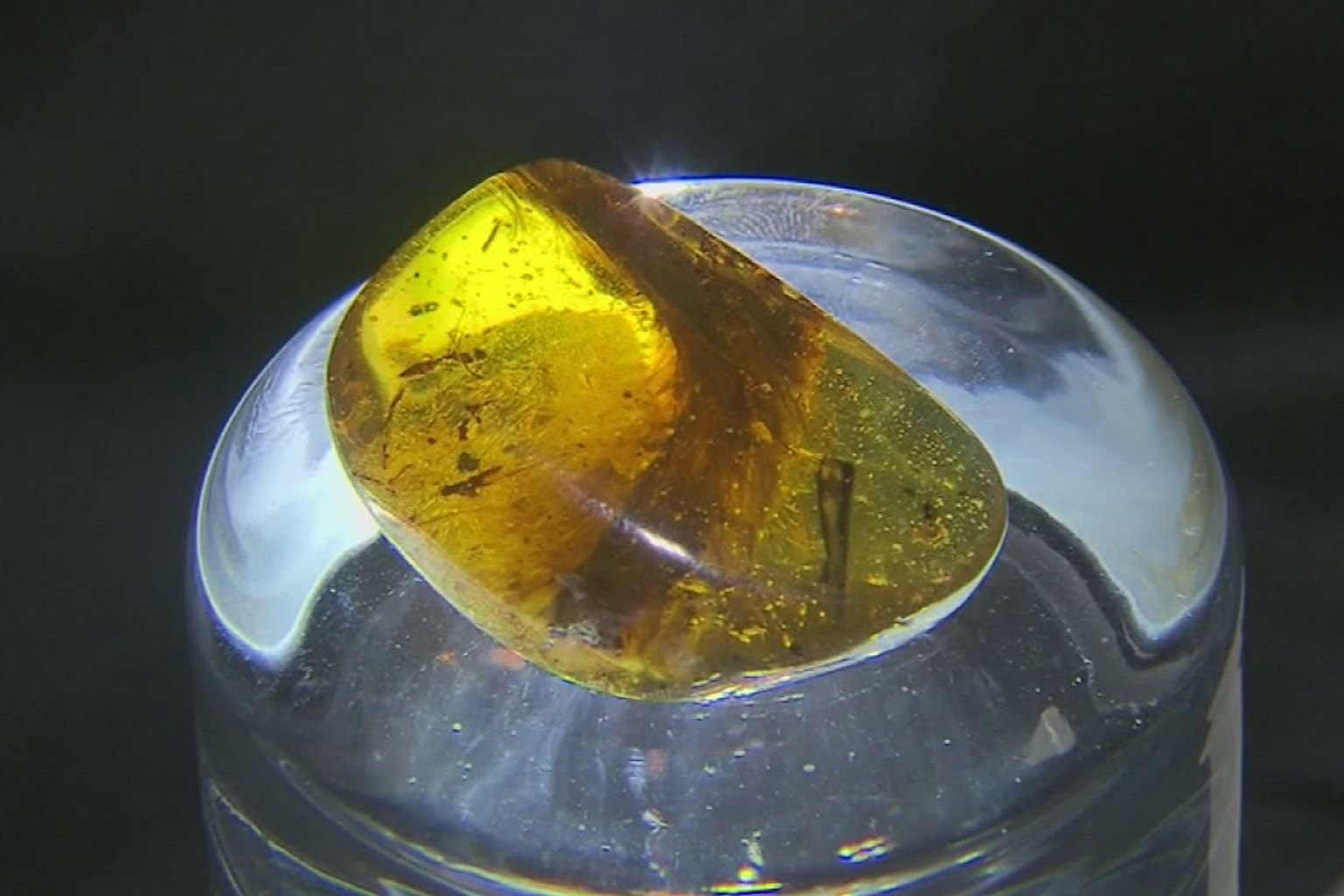
Scientists have uncovered an extraordinary glimpse into prehistoric life—a juvenile dinosaur tail exquisitely preserved in amber for nearly 100 million years. This rare find not only stunningly captures the delicate feathers of a coelurosaur dinosaur but also rewrites our understanding of feather evolution and dinosaur biology with microscopic precision.
A Remarkable Amber Discovery Sheds Light on Dinosaur Feathers
In an unprecedented paleontological breakthrough, researchers discovered a 99-million-year-old dinosaur tail trapped in amber from Myanmar’s Kachin State. Initially mistaken for plant material, this fossil eventually revealed eight vertebrae enveloped in three-dimensionally preserved feathers—an astonishing preservation that provides an intimate look at dinosaur integument rarely seen before.
Paleontologist Lida Xing identified the specimen after it was purchased as a piece of amber containing plant remains. Subsequent CT scans and microscopic analyses highlighted the vertebrae surrounded by fine, delicate feathers, confirming the fossil’s dinosaurian origin. Ryan McKellar, a co-author of the study published in Current Biology in 2016, explained, “The new material preserves a tail consisting of eight vertebrae from a juvenile; these are surrounded by feathers that are preserved in 3D and with microscopic detail.” These feathers are captured in fantastic detail, revealing insights into feather structure that directly ties to the evolution of modern birds’ plumage.
Distinctive Anatomy Confirms the Tail Belongs to a Feathered Dinosaur
One of the most compelling aspects of this fossil is its anatomical characteristics, which distinguish it clearly from modern bird tails. Unlike birds, whose tails end in a fused pygostyle (a rod-like structure supporting tail feathers), this dinosaur tail remained long and flexible, with rows of feather keels running down each side.
The tail’s form places it firmly within the coelurosaur dinosaur clade—a group that includes renowned theropods such as Velociraptor and Tyrannosaurus. The preservation extends beyond bone to soft tissue and skin, revealing juvenile dinosaur biology in unprecedented detail. Notably, the feathers surrounding the tail lacked the fully developed central shaft common in bird feathers today, suggesting a stage in feather evolution before modern flight feathers emerged.
Why This Amber Fossil Is a Game-Changer in Paleontology
Finding dinosaur remains inside amber is incredibly rare, and this discovery marks the first time dinosaur material has been found in such a context. Amber traditionally preserves insects, plant matter, and small invertebrates, so capturing a dinosaur tail complete with bones, skin, and feather structures is a monumental occurrence.
Ryan McKellar emphasized the significance to BBC News, saying, “This is the first time we’ve found dinosaur material preserved in amber.” The specimen provides direct evidence of dinosaur integument and feather coloration, including traces of chestnut-brown feathers on top and pale undersides, enhancing our knowledge of dinosaur appearance and behavior. Even microscopic traces of ferrous iron around the bones suggest remnants of hemoglobin, adding biological detail rarely preserved in fossils.
This snapshot frozen in tree resin offers researchers a tangible link between non-avian dinosaurs and their feathered descendants, shedding light on how feathers evolved from simple structures to complex organs capable of flight.
Context and Scientific Impact of the Discovery
This groundbreaking research is part of a growing body of evidence that connects modern birds to their dinosaur ancestors. The study, led by experts including Lida Xing and Ryan McKellar, was published in the reputable journal Current Biology and funded by institutions invested in deepening knowledge of prehistoric life.
According to a Natural History Museum report, this discovery offers “unprecedented insights into the evolution of feathers and the biology of juvenile dinosaurs,” providing a direct window into a world long gone yet alive in these rare snapshots. Paleontologists believe specimens like this are invaluable for understanding how stage-by-stage adaptation led to the feathers we see in birds today.
“The preservation of soft tissue and feathers in such exquisite detail… provides a critical perspective on the transition from dinosaurs to birds,” noted Dr. Michael Pittman, an evolutionary biologist specializing in dinosaur integument.
Unlocking the Secrets of the Cretaceous Era, One Feather at a Time
The Burmese amber deposits—the source of this specimen—have become a treasure trove for scientists eager to glimpse life during the Cretaceous period, approximately 99 million years ago. This tail could represent a juvenile coelurosaur that perished after becoming trapped in resin, a rare preservation moment that brings a tactile connection to the mysterious creatures roaming ancient forests.
As a senior web editor well-versed in science reporting, I am continually amazed by how discoveries like these challenge and expand our knowledge about the prehistoric past. The fine detail on the feathers reveals biological processes once only theorized. It highlights the incredible patience and precision involved in fossil analysis, reminding us that scientific breakthroughs often stem from curiosity about the smallest details.
If this feathered dinosaur tail trapped in amber fascinates you, share your thoughts below or pass this story along. What do you think this discovery tells us about the evolution of feathers and the connection between dinosaurs and today’s birds? Your insights enrich the conversation about our planet’s incredible natural history.