


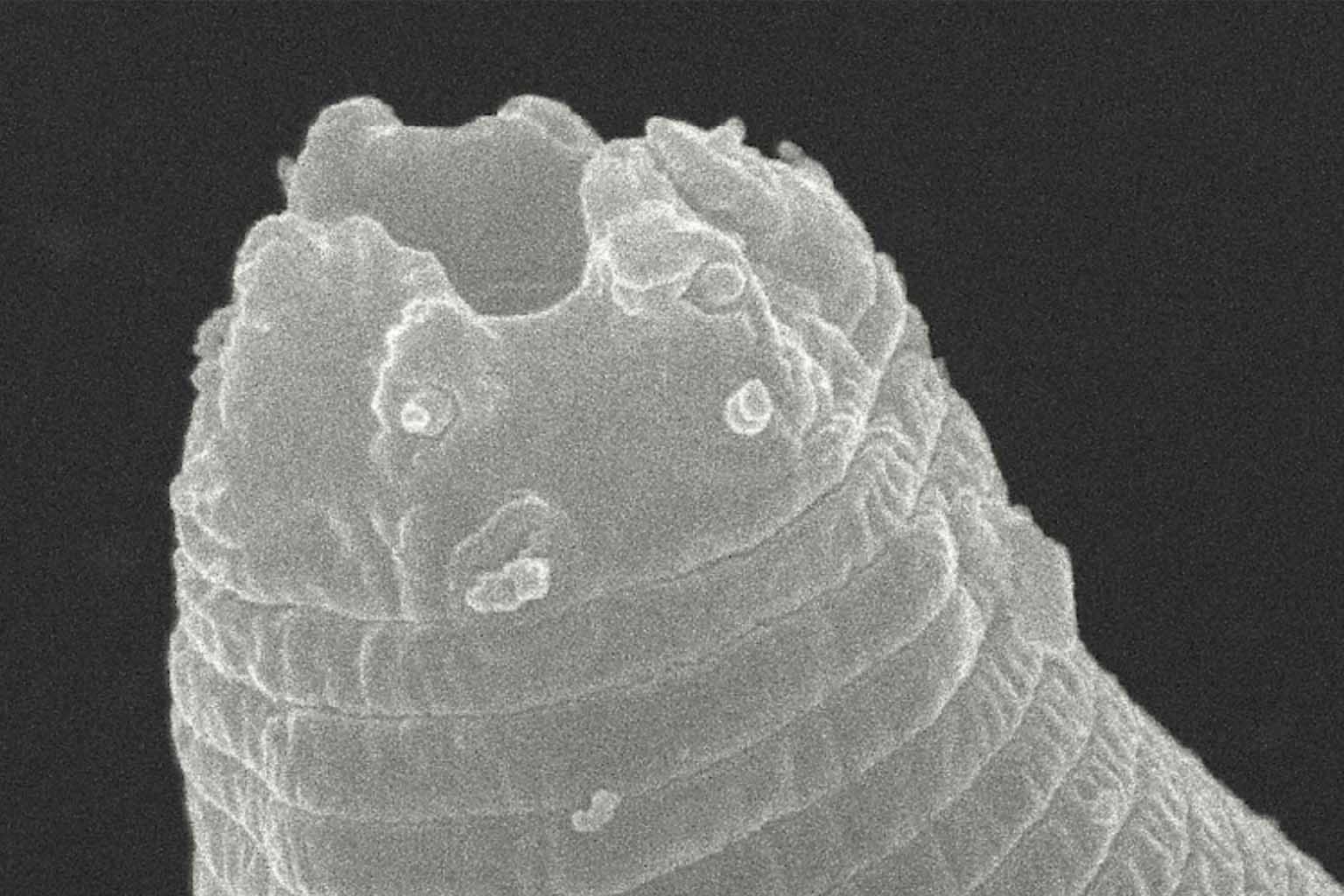
The permafrost of Siberia has always been nature’s deep freezer, preserving mammoth carcasses and ancient plant matter for millennia. But when scientists pulled a microscopic worm from 40 yards beneath the surface and watched it wiggle back to life after 46,000 years in suspended animation, they realized they had stumbled upon something far more extraordinary than fossilized remains. This wasn’t just preservation—this was resurrection.
The tiny nematode, now classified as Panagrolaimus kolymaensis, had survived longer in a frozen state than any known organism. While other creatures can endure extreme conditions for weeks or even years, nothing had ever demonstrated the ability to pause life itself for tens of thousands of years and then simply resume where it left off, complete with the capacity to reproduce.
This discovery forces us to reconsider fundamental assumptions about the limits of life and death, while opening doors to applications that could reshape medicine, space exploration, and our understanding of biological resilience. As skilled technicians continue to develop new preservation technologies, this ancient worm’s survival mechanisms could inspire revolutionary advances in multiple fields.
The Mechanics of Extreme Survival
What makes this worm’s survival possible lies in a biological phenomenon called cryptobiosis—literally meaning “hidden life.” During this state, all measurable metabolic processes stop. The organism doesn’t age, doesn’t consume energy, and exists in a limbo between life and death that can apparently last for geological timescales.
Research conducted by Dr. Philipp Schiffer’s team at the University of Cologne revealed that the worm produces specialized protective proteins that act as cellular bodyguards during the freezing process. These molecules prevent ice crystals from forming inside cells, which would normally cause fatal damage to cellular structures. Think of them as biological antifreeze that works at the molecular level.
The permafrost itself played a crucial role. At the depth where the worm was found, temperatures remained consistently below freezing, and the environment was largely sterile. This created perfect conditions for cryptobiosis—stable, cold, and free from the bacteria and environmental changes that might disrupt the process.
Genetic Time Capsule
Beyond its survival story, this worm represents a genetic snapshot from the Ice Age. Research published in Sci.News confirms that DNA analysis shows it belongs to a previously unknown species, yet shares enough similarities with modern nematodes to suggest these survival mechanisms have deep evolutionary roots. The genetic material remained remarkably intact, offering scientists a direct window into how life adapted to extreme conditions 46,000 years ago.
“Precise radiocarbon dating indicates that Panagrolaimus kolymaensis remained in cryptobiosis for approximately 46,000 years, making it the longest-lived organism ever documented” – Scientific research findings
The implications extend beyond individual survival. If entire populations of these worms existed in similar states throughout the permafrost, we might be looking at preserved ecosystems waiting to be discovered. Each sample could contain unique adaptations developed during different climate periods, creating a biological archive of Earth’s environmental history.
Studies from ScienceDaily indicate that the worm’s genome contains genes for stress resistance that are more advanced than those found in related modern species. This suggests that ancient organisms may have possessed survival capabilities that have been lost over time, rather than gained through evolution.
Medical Applications on the Horizon
The medical implications of understanding cryptobiosis could be transformative. Current organ preservation techniques keep organs viable for hours or days at best, creating constant races against time for transplant procedures. If scientists could replicate the worm’s suspended animation mechanisms in human tissues, organ shortages might become a thing of the past.
Cancer research could also benefit significantly. Many experimental treatments require preserving cell cultures for extended periods while maintaining their original properties. The worm’s preservation techniques could enable researchers to store cancer cells, healthy tissues, and experimental compounds for much longer periods without degradation.
Perhaps most intriguingly, the discovery offers new approaches to treating conditions where cellular metabolism needs to be slowed. Stroke victims, for instance, might benefit from techniques that could pause cellular damage while medical interventions take effect.
The Space Exploration Connection
For space agencies planning missions to Mars and beyond, this worm offers a biological proof-of-concept for long-duration suspended animation. While human hibernation remains science fiction, understanding how complex organisms can shut down and restart their biological systems provides crucial insights for developing life support technologies.
The worm’s ability to survive in extreme cold, low oxygen, and high radiation environments mirrors many of the challenges astronauts would face on interplanetary journeys. Research teams are now investigating whether similar protective mechanisms could be engineered into human cells or used to preserve food and biological materials during space missions lasting decades. This research parallels historical scientific research conducted in extreme Arctic conditions during previous decades.
The Unforeseen Consequences
What makes this discovery particularly fascinating is how it challenges our understanding of biological time limits. Most scientific models assume that even dormant biological systems accumulate damage over time through background radiation and molecular decay. This worm’s success suggests those assumptions may be incomplete.
The psychological implications are equally profound. If simple organisms can essentially achieve biological immortality through suspended animation, it forces us to reconsider fundamental questions about aging, consciousness, and the nature of life itself. The boundary between life and death becomes far more nuanced when an organism can cross it repeatedly without consequence.
“The nematode shares adaptive mechanisms for cryptobiotic survival with modern species, suggesting these preservation capabilities have ancient evolutionary origins” – Genome analysis research
There are also environmental considerations that researchers are just beginning to explore. As climate change thaws more permafrost, countless organisms like this worm may be awakened from their ancient slumber. While most pose no threat, introducing 46,000-year-old life forms into modern ecosystems could have unpredictable effects on current biological communities. This phenomenon creates new species barrier challenges that scientists must carefully study.
The discovery also adds to our growing understanding of how life can be preserved across vast timescales. Just as researchers have found prehistoric life preserved in amber for millions of years, this permafrost preservation demonstrates that multiple natural mechanisms can maintain biological integrity far longer than previously thought possible.
The true significance of this microscopic survivor may not be fully understood for years. As researchers continue to decode its biological secrets, we’re left wondering what other forms of life might be waiting in the frozen depths, and what their resurrection might teach us about the remarkable resilience and adaptability that defines life itself.