


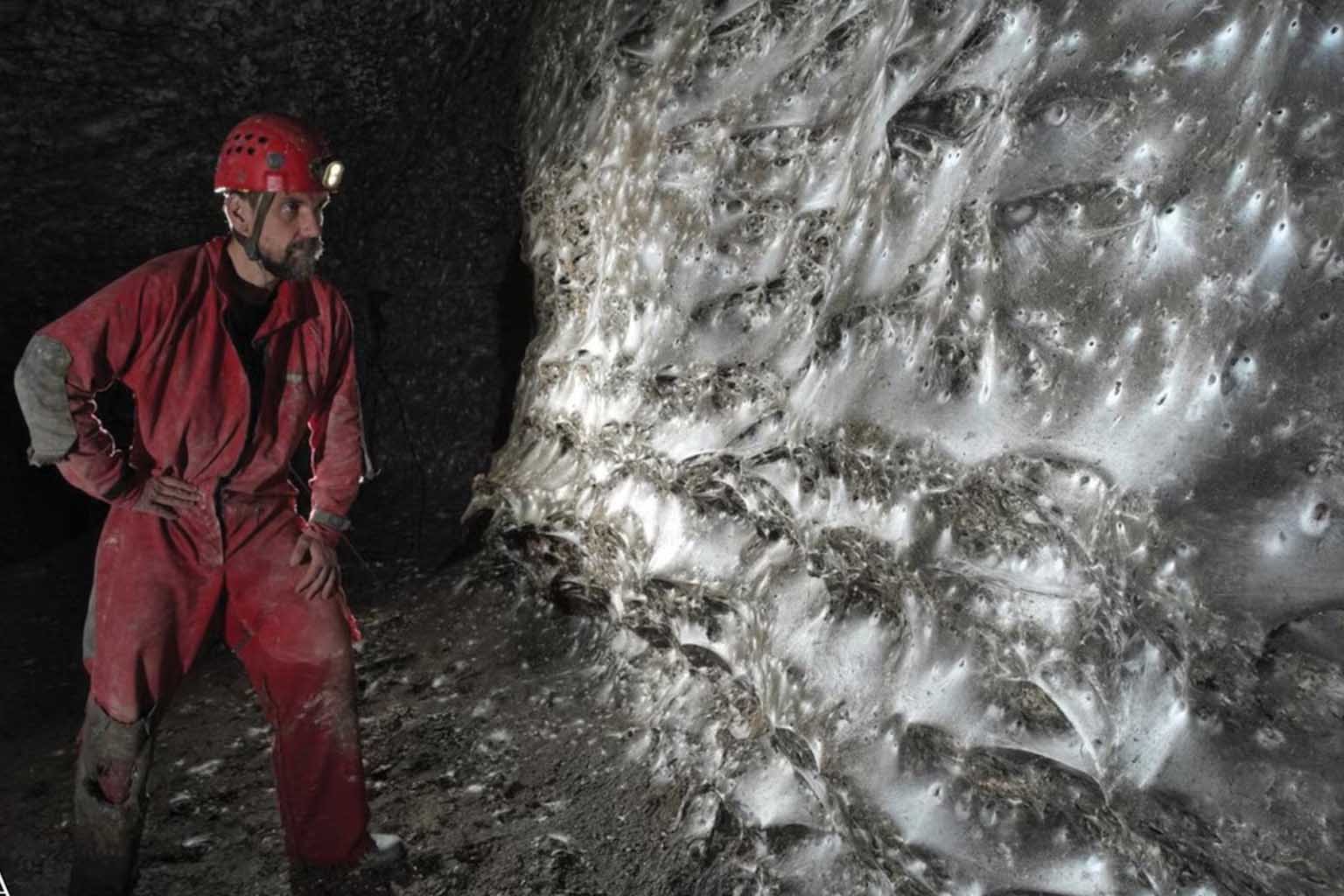
Scientists have uncovered an astonishing natural wonder: the world’s largest spider web, sprawling across 1,142 square feet inside a cave on the border of Greece and Albania. But this discovery is far more than just a record-breaker—it reveals a hidden, thriving ecosystem sustained by energy sources unlike anything you’d expect.
A web like no other
Deep in the Siarova Cave, whose entrance lies in Greece while its lowest levels stretch into Albania, researchers stumbled upon an immense spider web covering an area of 106 square meters. This tangled masterpiece is home to over 100,000 spiders, including 69,000 house spiders and more than 42,000 individuals of the species Prinerigone vagans. Remarkably, this is the first documented instance of these two species living together in such a massive, cooperative colony. The cave also shelters several other spider species, such as the cave spider Metellina merianae, though these exist separately from the web’s dominant duo.
What’s truly fascinating is not just the web’s size or occupants, but the origins of their food. Without sunlight, how can such a large number of spiders survive underground? The answer lies in the cave’s unique chemoautotrophic ecosystem.
Life fueled by chemistry, not sunlight
Most ecosystems rely on photosynthesis—plants converting sunlight into energy. But the Siarova Cave tells a different story. Here, life thrives on energy harvested from chemical reactions. Beneath the web, a biofilm of bacteria oxidizes hydrogen sulfide, a toxic gas, turning it into a white sulfur-coated film spread across cave walls and water surfaces. This bacterial biofilm functions much like plants do elsewhere, forming the very base of the food chain in the cave’s pitch-dark environment.
Larvae of flies from the family Chironomidae feed on this biofilm, and when they mature into winged adults, they don’t leave the cave. Instead, they become the primary meal for the spider colony. This complex food web operates without any sunlight, relying on bacterial biochemical processes as its foundation.
Scientific analysis supports this unusual setup. Experts led by István Urák from Sapientia University in Transylvania measured stable isotopes of carbon-13 and nitrogen-15 across different species in the cave. The carbon isotope ratios in spiders closely matched those in the bacterial biofilm, confirming that the spiders’ energy source traces back to the chemoautotrophic bacteria. Moreover, nitrogen isotope levels rose progressively through the food chain, illustrating the cascade of energy from bacteria to flies to spiders. This stable isotope evidence strongly suggests that the cave supports a self-contained ecosystem independent from sunlight-based energy sources.
Below is a brief explanation from Dr. Urák, emphasizing the importance of these findings:
“Discovering a food chain operated by chemoautotrophic bacteria in a cave environment is there to remind us how diverse life’s strategies can be. The entire system remains closed off from sunlight, yet sustains a complex community of invertebrates, showing how life adapts to extreme and secluded habitats.” — István Urák, Sapientia University
Recycling nutrients in a closed system
This cave system isn’t just fueled by a one-way river of energy. Microorganisms break down remains of spiders, insects, and biofilms, recycling essential nutrients like sulfur, nitrogen, and carbon. This recycling supports a stable local nutrient cycle, reinforcing the ecosystem’s independence from the outside world’s environmental fluctuations.
Such nutrient cycling is a hallmark of many natural ecosystems but witnessing it in a cave sealed off from solar energy inputs stands out in ecological studies. It reveals nature’s resilience and diversity in finding ways to sustain life, even in the most unlikely places.
Conservation concerns and future research
The intriguing ecosystem in the Siarova Cave warrants careful protection. The research team led by Urák advocates for measures including restricted access, continuous water quality monitoring, and pollution control to safeguard this unique environment. Disturbing the fragile balance here could threaten the survival of this rare web of life.
In addition to preserving the site, ongoing research could deepen our understanding of how chemoautotrophic ecosystems function in isolated geological pockets. These findings might also inform astrobiology—since similar processes might support life in extreme environments on other planets.
As a senior science writer specializing in biodiversity stories, I find this discovery a reminder of nature’s astonishing creativity and resilience. It’s a vivid example of life flourishing far from sunlight, sustained by a chemical dance hidden in the dark.
What’s your take on this captivating ecosystem? Have you ever explored caves or come across unusual webs? Share your thoughts and stories in the comments! If you enjoyed this deep dive into subterranean life, pass it along to curious friends who love uncovering Earth’s hidden marvels.