


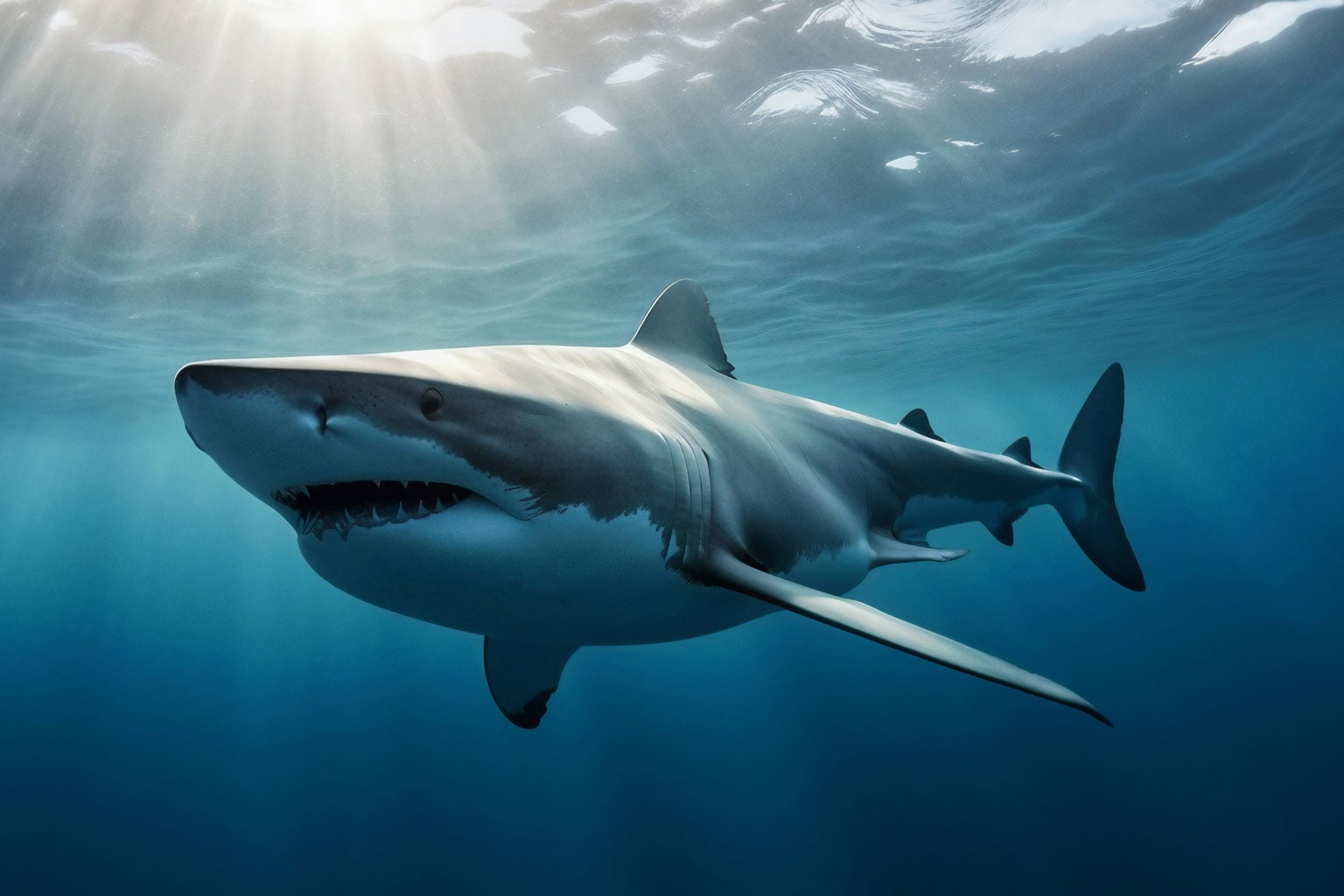
The oceans, vast and mysterious, often hold surprises that boggle the human mind. One such astonishing discovery was made off the U.S. coast, turning heads and *piquing the curiosity* of marine biologists everywhere. Meet “Contender,” not just any shark, but a remarkable giant—a record-breaking presence in the Atlantic. The moment scientists laid eyes on him, they knew they were witnessing something truly extraordinary.
The Unbelievable Size of Contender
Spanning an **impressive 4.2 meters** (or 13.8 feet), and tipping the scales at 750 kilograms (1,653 pounds), Contender is officially the largest male great white shark recorded in the North-West Atlantic. Now, if you think about it, that’s a lot of shark! This discovery was made by the diligent folks at OCEARCH, an organization dedicated to studying these majestic predators, about 70 kilometers from the coastal margin between Georgia and Florida. And honestly, it’s surprising—really surprising—that a male shark could grow to such a length, as these sharks typically start showing their age and size at around 26 years old when they reach 11.5 feet.
According to OCEARCH’s Chief Veterinarian, Harley Newton, “The great white males reach maturity around the age of 26 and at around 3.5 meters. So, of course, we were very excited to see such a specimen nearing the 4.3-meter mark.”
Why Contender Stands Out
One might wonder—what makes this shark so special in the watery world it inhabits? For one, male great white sharks usually pale in comparison to their female counterparts, who can grow to a staggering **20 feet**. While Contender doesn’t quite reach the record heights of female sharks, his size challenges prior beliefs about male shark growth. This could unlock new potential for understanding these apex predators and their life cycles.
“Contender” offers marine biologists a golden ticket—an unexpected opportunity to delve deep into the growth patterns and behavioral mysteries of great white sharks. By tracking his movements, scientists hope to unearth secrets about these elusive giants of the ocean.
Tracking the Mysterious Traveler
With a high-tech SPOT tracking tag attached, Contender is contributing valuable insights to the scientific community. This little device does wonders, recording his position when he surfaces, and capturing data about water temperatures and depths. Since receiving his tracking tag, Contender has embarked on quite the adventure—already traversing an **impressive 470 kilometers**. The last known location was near Merritt Island, Florida, providing a *fascinating glimpse* into his migratory paths.
Such tracking data is incredibly valuable, offering glimpses into feeding habits, migration routes, and possibly even the preferred habitats of great white sharks. This data could play a **crucial role** in conservation efforts, highlighting the challenges that these creatures face in their vast, often dangerous, environments.
Implications for Shark Conservation
But why does this all matter, you ask? Well, great white sharks are an endangered species, embroiled in a constant struggle against overfishing, habitat destruction, and climate change. Each snippet of knowledge from this data-rich journey helps piece together the puzzle of their existence. The findings from Contender’s travels not only expand our scientific understanding but also **fuel efforts to protect** these magnificent creatures.
Newton reflected, “The fact that these animals are so difficult to study likely reflects that they spend so much time offshore, away from the areas where most research takes place.” This underscores why tracking and studying these deep-sea wanderers matters so much, offering a rare peek behind the veil of their secretive lives.
Ultimately, Contender isn’t just a shark; he’s an emissary, a bridge between our world and the uncharted waters that lie beneath. Through him, we learn more about the ocean’s rhythms, its mysteries, and, perhaps, a little more about ourselves.
If you’re intrigued by these ocean giants and want to play a part in safeguarding their futures, keep an eye on OCEARCH updates. Their findings could reshape what we know about our world, one tagged shark at a time. Dive into the conversation and explore, because who knows what wonder the waves will serve up next?