


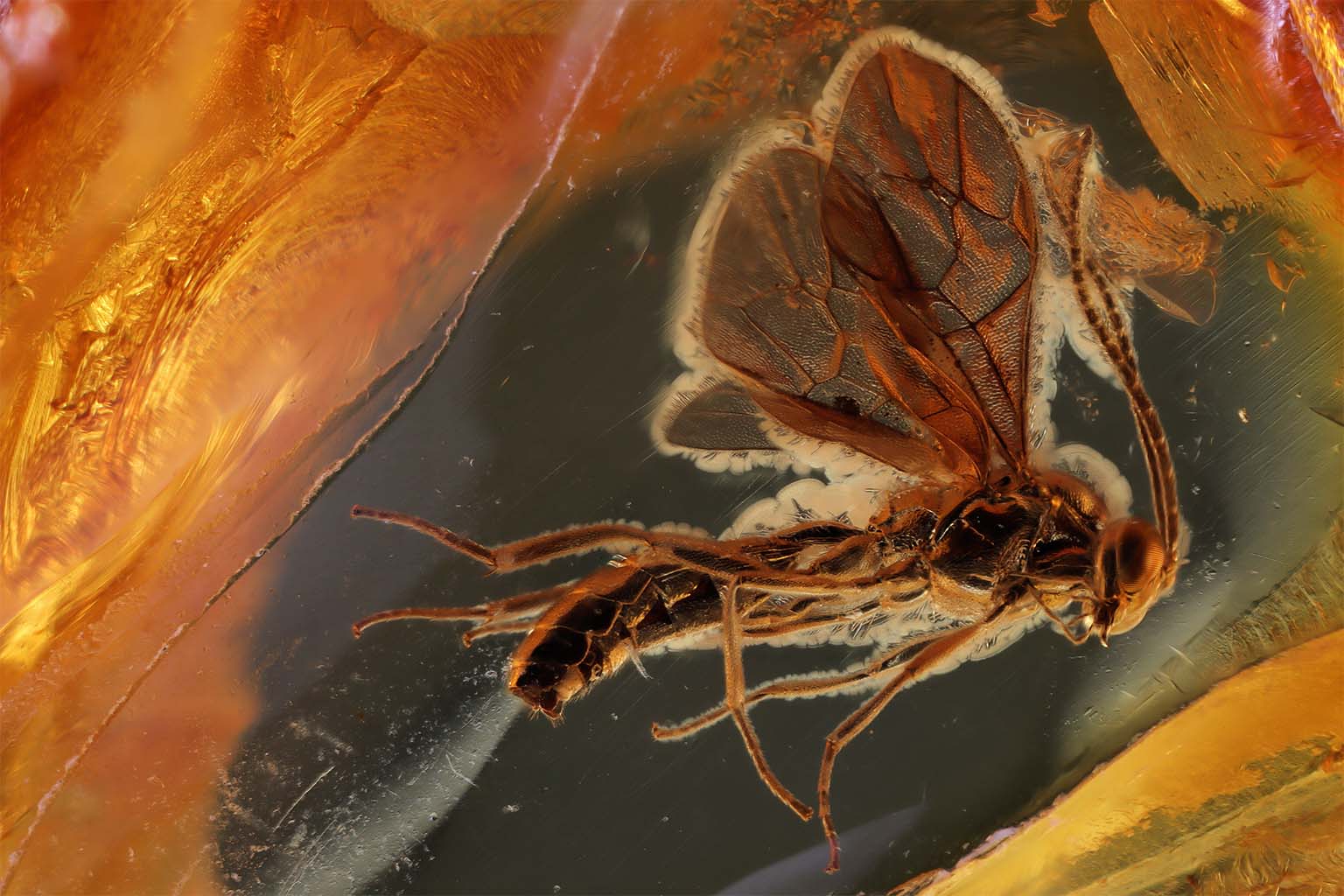
Unlocking a dramatic moment frozen in time, a 100-million-year-old amber fossil reveals an ancient spider in the midst of a fierce attack on a wasp. This extraordinary find offers a rare and vivid snapshot of prehistoric life, shedding unprecedented light on predator-prey interactions in the Cretaceous period.
Discovered deep in Myanmar’s Hukawng Valley, this amber specimen encapsulates not just the spider and its trapped prey, but also unveils intriguing clues about spider behavior that challenge long-standing assumptions. As a senior web editor with a passion for discoveries that bridge history and science, I’m thrilled to guide you through this fascinating encounter preserved in golden resin.
Amber fossil reveals a frozen moment of predation
The amber fossil isn’t simply a piece of ancient tree resin—it’s a time capsule that preserves the delicate balance of life from millions of years ago. In this spectacular case, the fossil captured the split second when a juvenile spider was poised to deliver a fatal strike on a wasp caught in its web. What makes this discovery remarkable is the impeccable detail: the spider’s web silk strands, the position of the wasp, and even the tiny features of both species remain intact.
Tree resin rapidly flowed over the creatures, immobilizing both and capturing the drama of an unfinished hunt—the spider’s attack was halted abruptly, offering a one-of-a-kind glimpse into an ancient ecosystem. Unlike fragmented fossils, this amber preserves the entire scene, allowing paleontologists to reconstruct behavior rather than just anatomy.
This exceptional preservation underscores the unrivaled value of amber in paleontological research. According to a 2023 study by the Smithsonian Institution on fossilized arthropods, amber fossils consistently provide more comprehensive ecological data than traditional rock fossils, opening windows into ancient life’s complexity.
New insights into spider social behavior
Even more intriguing is the presence of a male spider sharing the same web with the juvenile attacker. This phenomenon is highly unusual because most spiders are solitary, interacting mainly during mating or sometimes even consuming each other afterward. Yet, this fossil offers what experts consider the oldest evidence of potential social interaction among spiders.
Dr. George Poinar Jr., a leading entomologist and amber fossil specialist, explained that the discovery challenges previously held notions about the solitary nature of most spiders in the Cretaceous period. “The cohabitation of these two spiders hints at complex social or territorial behaviors that may have evolved far earlier than believed,” he remarked.
This finding opens new doors for scientists studying evolutionary biology and social behavior in arachnids, suggesting early spiders may have developed adaptive strategies for survival beyond competition—perhaps cooperation or shared hunting grounds.
Awasp’s tragic encounter and evolutionary irony
The wasp trapped in the web was no ordinary victim. It belonged to a species known for parasitizing spider eggs and larvae, turning the fossil into a striking case of role reversal. The parasitic wasp’s usual survival strategy was thwarted as it became prey instead. Prof. Poinar vividly described this as the wasp’s “worst nightmare”—caught inside a web just as the predator approached.
The irony here deepens our understanding of ancient ecosystems, where predator and parasite dynamics could flip unexpectedly. The intertwining of survival tactics between arachnids and parasitic insects paints a complex picture of evolutionary arms races that shaped species behavior millions of years ago.
Why this discovery matters in the big picture
Spiders have roamed Earth for over 200 million years, but fossilized webs date back only about 130 million years. This amber fossil, therefore, represents the first documented evidence of an active spider attack preserved in the fossil record—a phenomenon never before observed with such clarity.
Spiders’ role as ancient predators is vital to understanding how ecosystems functioned and evolved. The fossil also offers clues about spider silk’s durability and the effectiveness of web hunting strategies in ancient times. These insights can feed into current biological research, even inspiring innovations in materials science, where spider silk is studied for its unique properties.
To enrich this understanding visually, here’s a related documentary clip on spider silk and ancient arachnids that explores how these creatures shaped ecosystems long before humans walked the earth.
By preserving such an exceptional piece of the past, this finding decisively boosts our knowledge of evolution, ecology, and behavior in a prehistoric context.
Have you ever been fascinated by ancient creatures frozen in time like this spider and wasp? Share your thoughts or questions below, and let’s dive deeper into the wonders of natural history together. Your curiosity drives the exploration of Earth’s incredible past!