


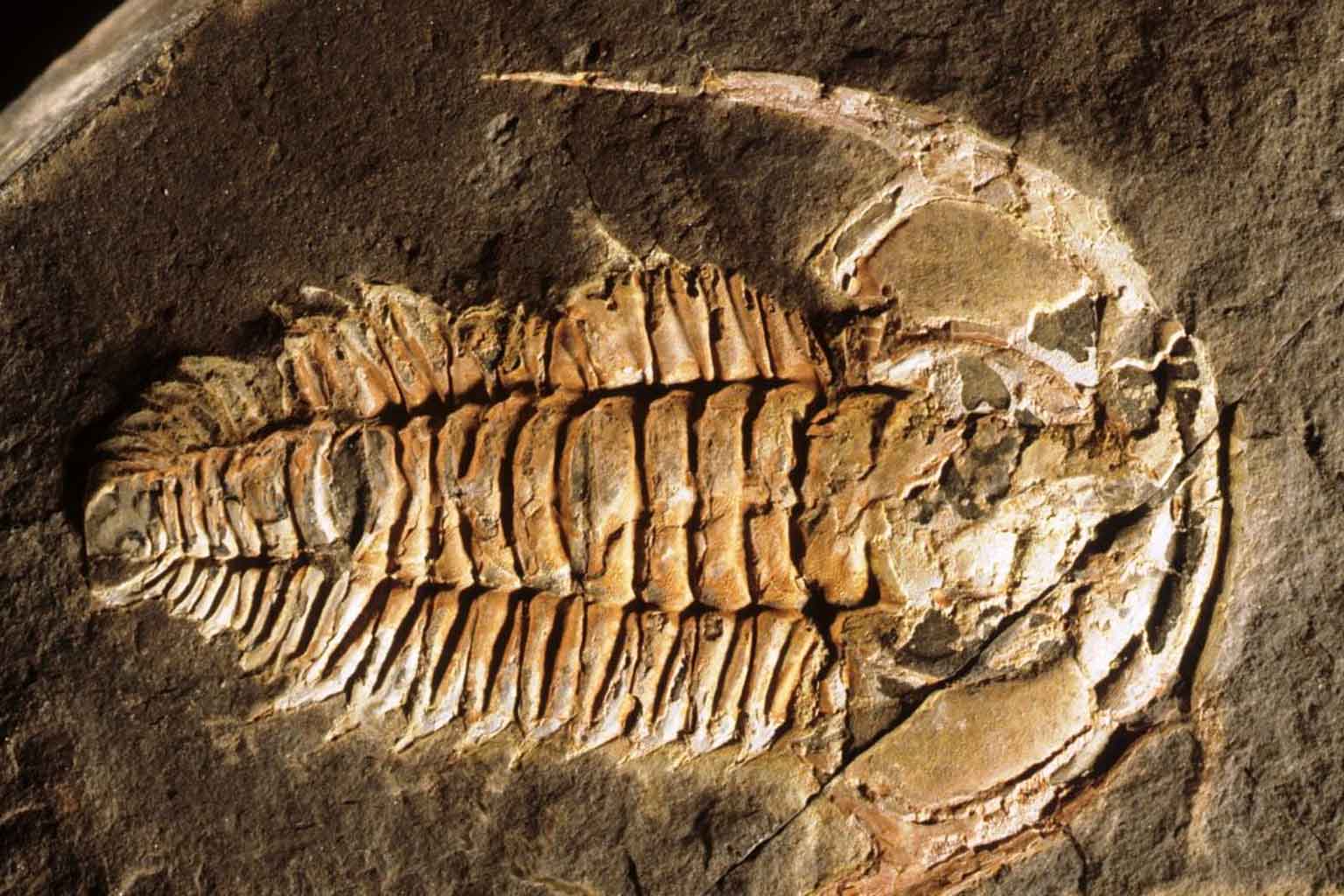
The age-old mineralized bones were heavy in the hands of the researchers, radiating a unique kind of historical charm that only antiquities can muster. What secrets did they harbor, these remnants of a life that existed 500 million years ago? In a stunning reveal, paleontologists have deciphered the enigma of this ancient fossil’s identity, casting new light on the very roots of complex life on Earth. Could it really be true that a fossil so old holds the key to unraveling the mysteries of the Cambrian explosion?
The Misleading Features of the Fossil
The 500-million-year-old fossil was initially pegged as a primitive mollusk. Its spine-adorned silhouette and other seemingly indicative features pointed unerringly in that direction. But, as we often discover, appearances can be deceiving. According to a study published in the journal *Science*, the finger was pointed at the wrong culprit. Turns out, Shishania aculeata, as it is scientifically known, wasn’t a mollusk at all. Instead, it fits in with an entirely different gang — the chancelloriids.
So, how did it all go wrong? Well, it’s a tale as old as time in paleontology: fossilization distortions. They’re tricky little things, skewing characteristics enough to fool even the best. What was assumed to be a mollusk-like “foot” was little more than the result of fossil preservation peculiarities—no mollusk here, just a taphonomic illusion.
The Deceptive Origins of Shishania Aculeata
The research unearthed the true origins of Shishania aculeata, revealing a history much richer than initially imagined. The fossil seemed to check all the boxes for a primitive mollusk ancestor with its spiny features and ostensibly defined body structure. Yet, as scientists delved deeper and examined it through a magnifying lens of modern technology, the realization struck: these ancient bones were masters of deception.
One might ask, why does it seem that fossils like Shishania aculeata wear these disguises? The answer isn’t straightforward. Fossilized remains are the prehistoric canvas on which nature paints — and sometimes the brushstrokes get muddled. The layers of sediment can warp appearances, preserving illusions rather than truths.
The Complex Relationship with Chancelloriids
Here’s where it gets fascinating. As the research expanded, the resemblance to chancelloriids became too striking to ignore. These creatures, not unlike Shishania, also bore defensive spines and were fortified against the mysterious aquatic hazards of the Cambrian sea floor. It turns out the fossils were not just mismatched but rather aligned uniquely within evolutionary biology.
Prior to this discovery, chancelloriids were something of a mystery, enigmatically floating through the annals of paleontological study. Now, by reclassifying Shishania aculeata alongside them, we unearth new clues about this peculiar group of creatures. Their body plan is newly understood to be a more intricate piece of evolutionary advancement, offering hints of connections to more complex organisms.
Shifting Paradigms in Paleontology
The consequences of this discovery ripple far beyond mere classification. It offers a fresh perspective on the Cambrian explosion—a period famed for its dizzying array of evolutionary breakthroughs. Suddenly, we have a clearer picture of how chancelloriids anchored themselves in history, anchoring, too, a new understanding of how complex life unfolded.
It’s a riveting moment for paleontology. Perhaps it gives one pause to realize that such ancient life forms continue to surprise us, even teaching us lessons long after they’ve vanished beneath layers of Earth. According to Durham University’s Martin Smith, “the mystery started to unfurl once we found chancelloriids preserved in a very similar way in the same rock unit,” underscoring just how much there is still to learn.
Such revelations remind us of the interconnectedness of life, even at this dizzying span of 500 million years. It beckons the question: What else lies at the bottom of this paleontological Pandora’s box, waiting to baffle and beguile us further? Keep your eyes peeled for more astonishing mysteries from the ancient world — who knows what secrets the rocks will yield next.
Feel curious about the wonders of the past? Dive deeper into our fascinating planet’s history and uncover more extraordinary stories. Have any thoughts about this surprising discovery? Share them with fellow curious minds; after all, the dialogue is what brings these ancient tales alive again.