


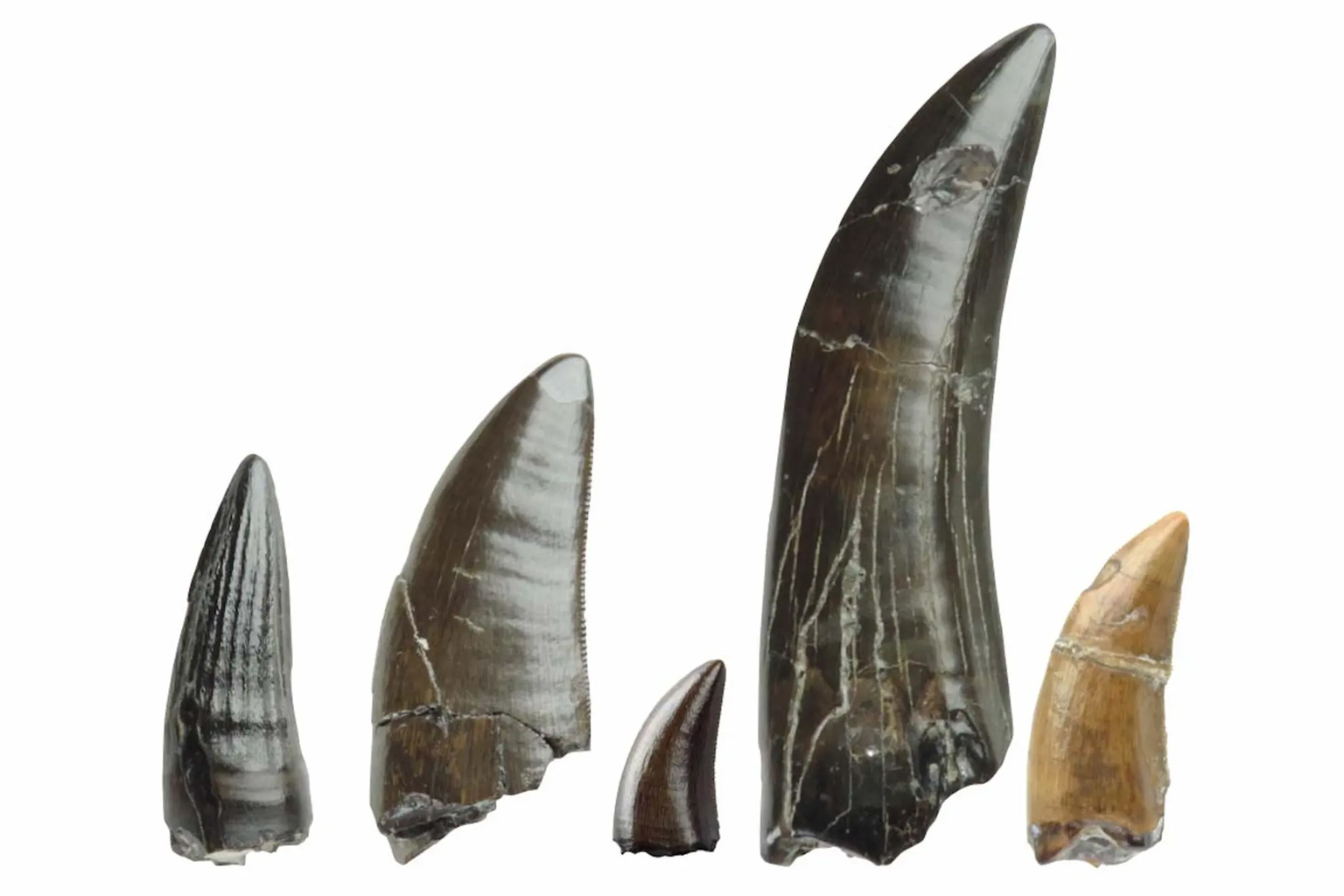
Paleontologists have stumbled upon a remarkable treasure beneath China’s Songliao Basin — 11 rare dinosaur teeth that have the potential to reshape our entire understanding of Late Cretaceous dinosaur distribution. These fossilized teeth are not just fragments of prehistoric creatures; they are vital clues unlocking secrets of ancient ecosystems and dinosaur diversity that have long eluded scientists.
The Songliao Basin: An Underexplored Window into Ancient Life
The Songliao Basin, one of East Asia’s largest Late Mesozoic sedimentary basins, holds a unique continuous sequence of Late Cretaceous continental rock layers. As a result, it offers an extraordinary opportunity to study climate shifts, paleoenvironmental evolution, and the ecosystems that flourished roughly 70 million years ago. Despite this, fossil evidence of dinosaurs in this region has remained spotty.
Dr. Wenhao Wu, a leading paleontologist on the project, explains that dinosaur fossils previously found in this basin came predominantly from the lower Upper Cretaceous Quantou Formation (Cenomanian stage). In contrast, the upper strata, where these new teeth were discovered, lacked sufficient fossil representation. “This gap in the fossil record means much remains hidden,” Dr. Wu notes. Interestingly, neighboring regions such as Mongolia and North America boast rich Upper Cretaceous dinosaur deposits, emphasizing that Songliao’s fossil trove is still largely untapped.
Unveiling Dinosaur Diversity from Isolated Teeth
Pinpointing dinosaur species based solely on teeth is notoriously challenging. Unlike mammals, whose tooth structures display complex variations that enable species-level identification, dinosaur teeth tend to be more uniform across related groups. Dr. Wu remarks, “Among vertebrates, dinosaurs have simpler tooth morphologies, and closely related species often have very similar teeth, complicating precise identification.”
Therefore, while exact species names remain elusive, the team confidently assigned these teeth to broader groups including tyrannosaurids, dromaeosaurines, velociraptorines, hadrosauroids, and titanosaurs. These categorizations help paleontologists map dinosaur geographic ranges and evolutionary relationships during the Late Cretaceous.
Extending the Territory of Carnivorous Theropods in East Asia
Among the 11 discovered teeth, four belonged to carnivorous theropods. Two were typical tyrannosaurid teeth with robust, chisel-like edges adapted for crushing. The other two match the tooth types of smaller but fierce dromaeosaurids—a group that includes raptor-like dinosaurs. Remarkably, one dromaeosaurid tooth was unearthed over 300 miles northeast of any previously known dromaeosaurid finds in China. Adding to the significance, the velociraptorine tooth represents the very first of its kind found in the Nenjiang Formation.
Such discoveries indicate that these predatory dinosaurs roamed a far wider range than once imagined. This paints a more intricate picture of predator-prey dynamics and dinosaur ecosystem complexity in Late Cretaceous East Asia.
Herbivores Redefining Dinosaur Distribution: Titanosaurs and Hadrosauroids
The majority of the fossil teeth belonged to herbivorous dinosaurs, shedding new light on plant-eater distribution in the region. Three teeth were attributed to titanosaurs, marking the first time this sauropod group has been found in the Nenjiang Formation. This discovery extends their known northern boundary during the Campanian period, noteworthy because titanosaurs typically favored warmer, low-altitude habitats. Songliao’s higher elevation makes their presence even more fascinating.
The remaining five herbivore teeth were from hadrosauroids, a group famous for complex evolutionary changes in their dental structures. These teeth displayed slightly off-center ridges and minimal accessory ridges, indicating they belonged to non-hadrosaurid hadrosauroids. Previously, such specimens had not been documented in this basin. Their identification enriches our understanding of how early hadrosauroids spread across ancient Laurasia and even parts of Gondwana.
According to a recent study published in Acta Geologica Sinica, these findings collectively fill crucial gaps in the fossil record, refining the map of dinosaur diversity and evolution during a pivotal moment in Earth’s history.
What These Fossils Mean for Paleontology and Beyond
This discovery underscores the exceptional value of the Songliao Basin for advancing paleontological research. By mapping new dinosaur ranges and revealing previously unseen diversity, these findings inspire further exploration in the region. Dr. Wu emphasizes the importance of continued fieldwork, noting, “Every fragment helps us build a clearer picture of the ancient world—unlocking the mysteries of dinosaur ecosystems and their responses to past environmental changes.”
Experts also see potential applications beyond pure science. Understanding dinosaurs’ geographic spread and adaptation patterns provides parallels useful in studying modern biodiversity and climate change impacts. This illustrates how deep-time fossil records inform present-day ecological challenges.
If you found this dive into dinosaur discoveries captivating, share your thoughts below or pass the story along to fellow fossil enthusiasts! How do you think these newfound teeth might alter what we think we know about prehistoric life in East Asia? Your opinions and questions are welcome.