


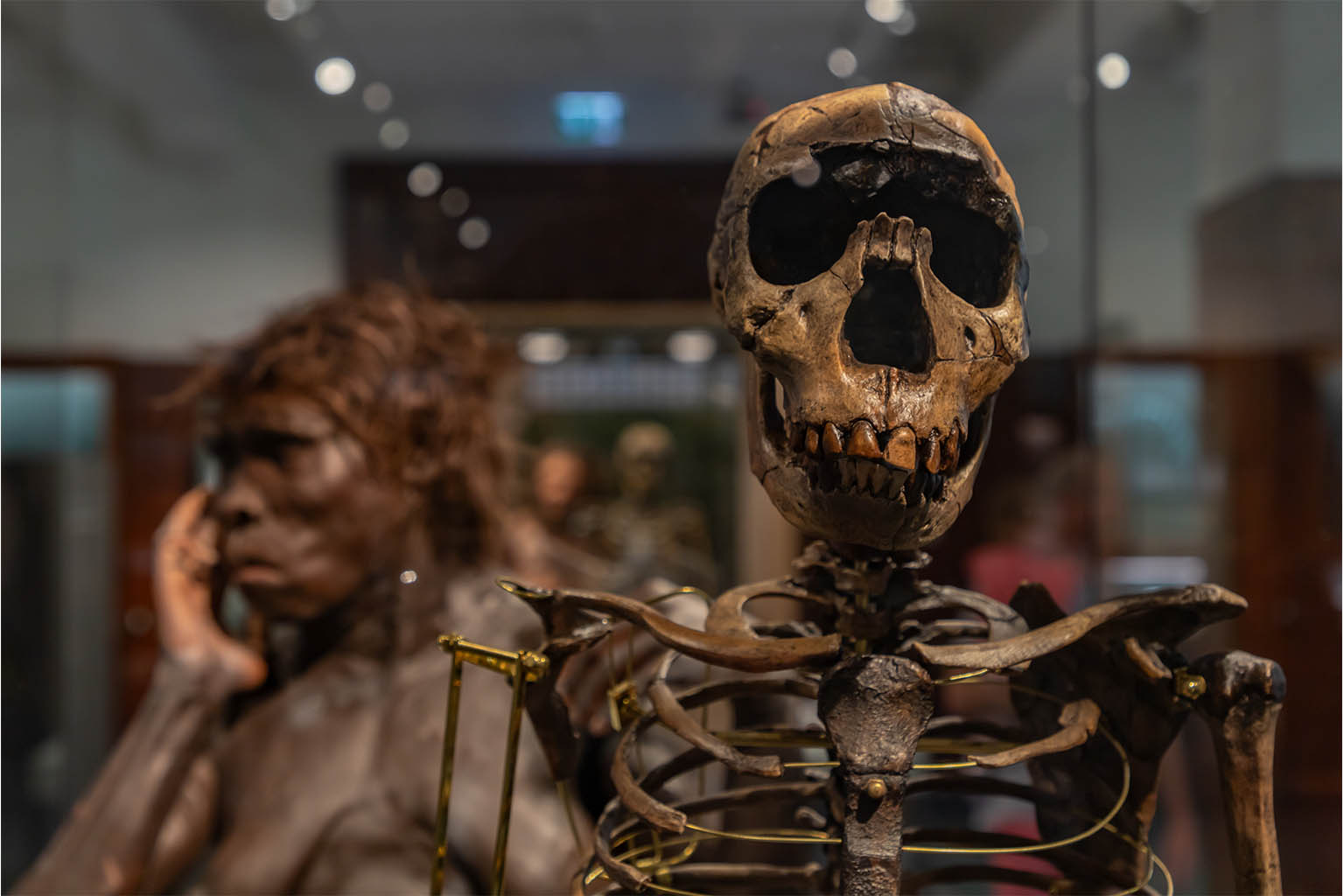
Intriguing discoveries often start with something small, like a lingering question or an overlooked detail. Imagine a lonely jawbone, nearly forgotten and silent, stashed away with countless other relics. But this unassuming fossil, dredged up from the ocean depths near Taiwan, has suddenly captivated scientists. Why? Because it has unraveled the presence of a long-lost human species, capturing the world’s imagination with its story.
A Fossil That Defied Time
Long before today’s revelation, over a decade ago, fishermen plying the waters 25 kilometers off Taiwan’s western coast hauled up a rather unusual catch. A jawbone, unprecedentedly thick and rugged, piqued academic interest. At first glance, it bore the unmistakable trademarks of a hominin, but beyond that? The fossil’s identity remained elusive. Despite multiple attempts to extract ancient DNA—and trust me, the stakes were high—those efforts fell short, leaving many in the field scratching their heads. Enter paleoproteomics, a revolutionary technique that’s become a game-changer.
Led by scientists from Japan’s Graduate University for Advanced Studies and the University of Copenhagen, researchers applied this advanced method to the fossil, humorously known as Penghu 1. By isolating and sequencing an astounding 22 proteins, they stumbled upon a revelation: not only was the jawbone a Denisovan relic, but it also belonged to a male. This finding was huge, throwing open the doors to new narratives about our ancestors.
Denisovans: The Mythical Travelers
Until this surprising find, Denisovan fossils were as rare as hens’ teeth. First discovered from DNA in a solitary finger bone in Siberia’s Denisova Cave back in 2010, only a handful of these fossils have ever been confirmed, with most being mere fragments. Yet, their genetic imprint is alive and well today, with traces woven into the fabric of modern human populations from Asia to Oceania—proof of ancient intermingling with Homo sapiens. Though ever elusive, the latest discovery paints a larger picture of Denisovan distribution, prompting a significant rewrite of their history in humanity’s narrative.
“The identification of Penghu 1 as a Denisovan mandible confirms the inference from modern human genomic studies that Denisovans were widely distributed in eastern Asia,” the scientific authors of the study noted. It’s staggering to think of their vast reach, which is now believed to extend far beyond previous Siberian and Tibetan sites. Hard to believe, isn’t it?
The Tale in the Structure
More than just its geographic location, what makes Penghu 1 an intellectual gem is its pronounced physical characteristics. Its robustness and profoundly large molars set it apart—even from Neanderthal counterparts. But why? The answers possibly lie in adaptation. As scholars propose, ancient Eurasian landscapes were home to two distinct hominin lineages: Neanderthals with slender builds and smaller teeth, and Denisovans with more robust, pronounced features. Consider the implications: different body structures embodying evolutionary divisions across the ages.
An Enigmatic Timeline
Though the jawbone is a treasure trove of insights, its exact age remains something of an enigma. Estimates float between 10,000 and 190,000 years—a range as wide as the timeline of Denisovan presence in Asia. The age of Penghu 1 sparks thrilling questions: Was it a testament to early southward migrations, the vestige of a sustained southern population, or a marker of a previously unknown coastal adaptative group? The mystery deepens.
Early this year, a report from Nature highlighted these possibilities, pointing out the vast implications they might have on our understanding of regional evolutionary history.
For anyone captivated by the dances and interplays of our ancient past, Penghu 1 isn’t just a fossil. It’s a testament to human tenacity—one that challenges scholars and captivates the curious. And as science continues to piece together the puzzle of our collective ancestry, who knows which relic of the past will be next to speak? Share your thoughts, or dive into your own exploration of human history. After all, the story’s never done being written.