


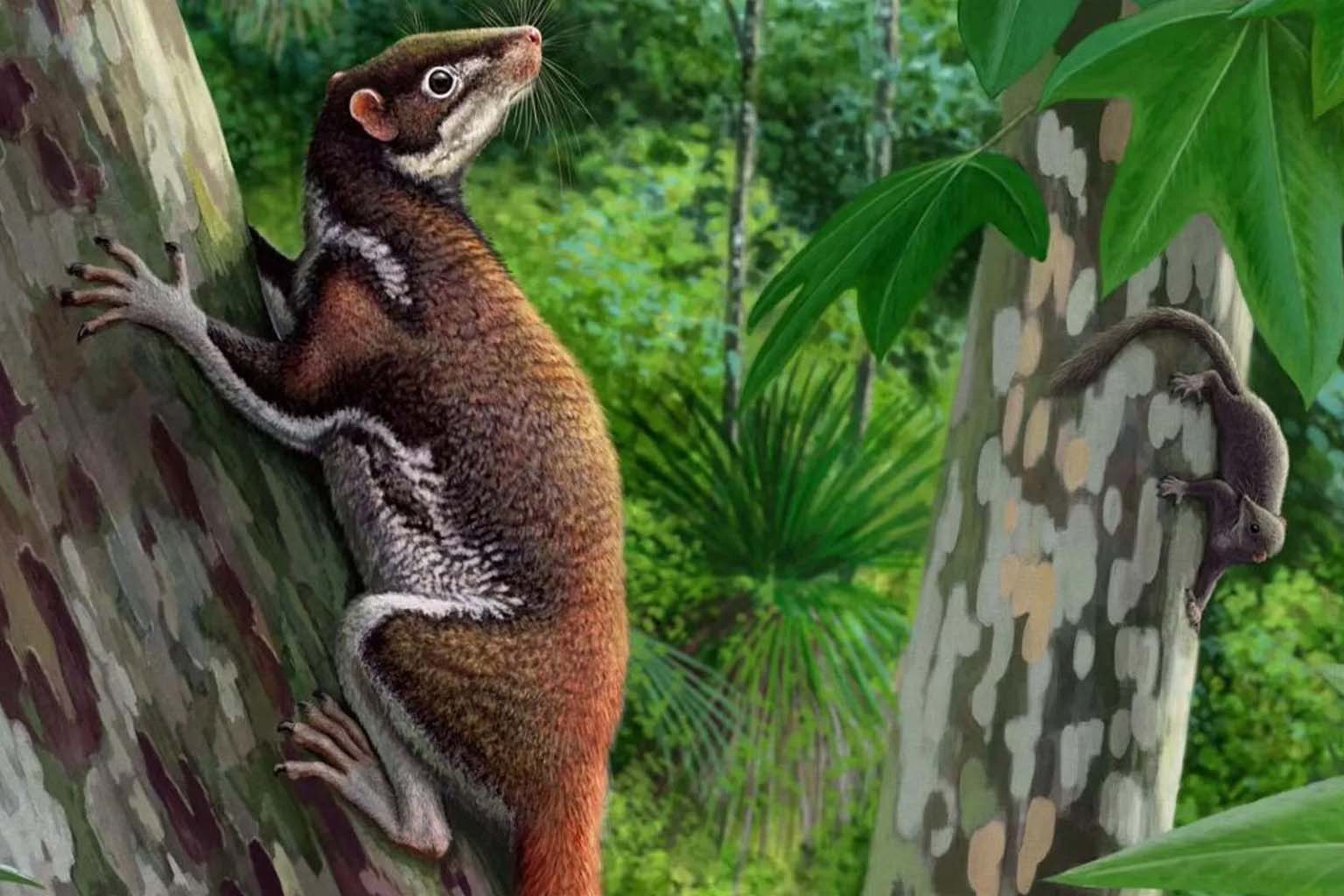
The discovery of an exquisitely preserved Mixodectes pungens fossil is creating quite a stir among scientists, providing fresh insights into the evolution of mammals after the age of dinosaurs. Unearthed in New Mexico and dating back around 62 million years, this fossil offers a rare opportunity to peek into how certain mammals adapted to new life challenges. Imagine, if you will, the world around 62 million years ago — it was a time of mammalian experimentation, and this find might just be a critical piece of that ancient puzzle.
The Mixodectes Fossil: A Window into the Past
Hidden away in the West Flank of Torreon Wash, the fossil was discovered in the Nacimiento Formation of the San Juan Basin, New Mexico. So, what makes it so special? As it turns out, it’s the oldest and most complete skeleton of a mixodectid — a group of relatively unknown mammals. Radiometric dating pegs the fossil at an impressive 62.4 million years old, give or take a smidge. The significance of having such an intact skeletal specimen can’t be overstated. It includes a partial skull, an axial skeleton, and even some forelimbs and hind limbs. This is not just another fossilized fragment; it’s a genuine time capsule into early mammalian life.
Life Among the Trees
Mixodectes pungens was evidently an arboreal creature. Picture it carefully maneuvering through the trees with its mobile shoulders, rotational elbows, and a tail almost tailor-made for gripping and climbing. This climbing prowess closely resembles that of some modern-day primates, which is, honestly, quite fascinating. The fossil’s dental structure, notably the molars, suggests a diet rich in leaves, though not exclusively. The presence of two upper incisors further clues us in on its taxonomical alignment closer to primates than to other mammals.
“This fossil offers unprecedented insights into how placental mammals diversified after the dinosaurs,” explained Stephen Chester, an associate professor at Brooklyn College. With its carefully crafted adaptations, Mixodectes pungens stands as a testament to the evolutionary creativity that flourished in the Paleocene.
Big for Its Time, Yet Unique
For an early arboreal mammal, Mixodectes was surprisingly large. Estimated body weights range from about 2.8 to 3 pounds, although confidence intervals suggest it could have varied from as light as 375 grams to nearly 5 kilograms. This was no small feat for its time. Its sheer size, coupled with its leaf-based diet, set it apart from its contemporaries like Torrejonia wilsoni, which favored fruit. This distinction points towards ecological niche differentiation — a sort of “you do you, I’ll do me” kind of arrangement that reduced direct competition between species sharing the same habitat.
According to a Scientific Reports article, “such fossils reshape our understanding of evolutionary relationships,” highlighting the importance of Mixodectes in the broader context of mammalian evolution.
Unraveling Evolutionary Threads
Two distinct phylogenetic analyses reposition Mixodectes among the primatomorphan clade, which notably includes primates and colugos. Depending on the data and methodologies used, Mixodectes is believed to be either a stem primate or a stem primatomorphan, showing close ties to Microsyops annectens. Eric Sargis from Yale University noted that a fossil of this completeness provides unmatched revelations about these ancient mammals and their evolutionary pathways.
The Paleocene epoch was, quite literally, a hotbed for diversification. Following the mass extinction event that wiped out the dinosaurs, mammals, including Mixodectes, diversified rapidly. It’s thought to have been part of an early arboreal radiation within Euarchonta, showing traits that hint at a resemblance with later primates. According to a Discover Magazine report, “the diversity seen in this period underlines independent evolution rather than shared ancestry with colugos.”
The story doesn’t end there. Mixodectes’s tale is one of survival, adaptability, and evolution, sharing trees with its cousins who would eventually give rise to some of today’s most intelligent mammals.
Why This Matters
Mixodectes pungens is more than just an intriguing chapter in the book of evolution. Its carefully preserved adaptations, particular diet, and prime placement in the evolutionary tree of life lend credence to ongoing theories about mammalian evolution post-dinosaurs. It paints a vivid picture of how mammals not only survived but thrived in a transformed world, paving the path that eventually led to primates and, ultimately, to us humans.
Stephen Chester succinctly summarized, “This fossil is crucial for understanding how placental mammals diversified after the extinction of dinosaurs.” As we dive into this rich past, it provides a clearer portrait of the morphological and ecological innovations that preceded the primates’ rise.
Curious about ancient life and our shared history with such fascinating creatures? Dive deeper into paleontological mysteries, as they have plenty more to reveal. Who knows what other surprises lie beneath the earth, waiting to enrich our understanding of life’s grand tapestry?