


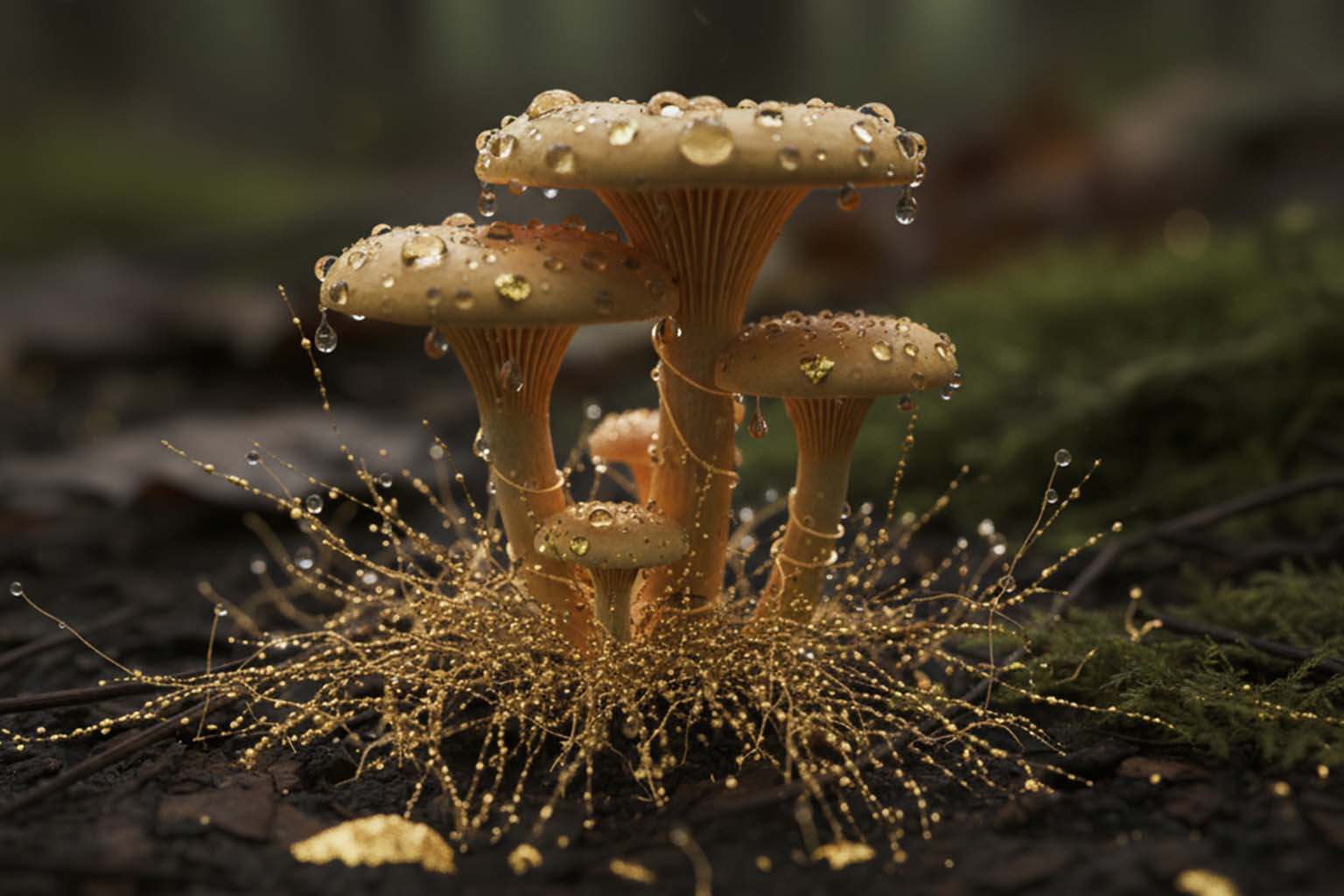
In 2019, a remarkable discovery in Australia unveiled a fungus with the astonishing ability to metabolize gold. This groundbreaking finding is not only revolutionizing the way we understand gold extraction on Earth but is also sparking bold ideas about mining in space. Could this tiny organism be the key to unlocking more sustainable and cost-effective methods of mining both here and beyond?
A Fungus That Turns Gold into Life
At the heart of this discovery is Fusarium oxysporum, a species of fungus known primarily for decomposing organic matter. However, research led by Dr. Tsing Bohu from Australia’s CSIRO revealed something extraordinary: certain strains of this fungus can actually process and incorporate gold into their structures. Gold is an incredibly chemically inert metal, meaning it rarely reacts with other substances, so this finding challenges long-standing scientific assumptions.
“This interaction with gold is both unusual and surprising,” Dr. Bohu explained in interviews following the 2019 study. The ability of this fungus to metabolize gold opens exciting possibilities not only for environmentally friendly gold extraction but also for the search for new gold deposits by using these fungi as biological indicators.
Transforming Gold Mining Practices in Australia
Australia, the world’s second-largest gold producer, faces growing challenges as traditional mining methods become more invasive and less sustainable. The discovery that Fusarium oxysporum can naturally accumulate gold suggests a new approach — leveraging fungi to locate hidden deposits more gently.
Regions such as Kalgoorlie, Western Australia, could benefit greatly from this biological innovation. Just as eucalyptus trees and termite mounds have historically signaled the presence of gold underground, these fungi might one day lead prospectors to untapped reserves. This method could reduce the need for aggressive excavation, offering significant gains in environmental conservation.
Experts believe that integrating biogeochemical techniques like this could revolutionize mining standards, helping to preserve fragile ecosystems while maintaining efficient gold production. According to a 2023 report from the Australian Centre for Economic Research, sustainable mining solutions like these are vital as pressure mounts to reduce ecological damage from resource extraction (source).
Mining Gold Beyond Earth: The Space Connection
Even more exciting is the potential application of this discovery in space exploration. As private companies and government agencies eye asteroid mining as a new frontier for resource acquisition, they face the challenge of developing lightweight, cost-effective extraction methods that don’t rely on bulky machinery.
Enter “metabolic mineralurgy”—a concept proposing the use of genetically modified fungi to extract precious metals directly from space rocks. Sending fungi like Fusarium oxysporum to space could allow for natural bio-mining on asteroids and other celestial bodies, drastically simplifying operations while reducing costs and environmental risks.
NASA and various space research organizations are beginning to explore bioengineering solutions for in-situ resource utilization, elevating fungi as promising candidates given their adaptability and metal-processing capacities. In fact, Dr. Lisa Nguyen from the Space Bioengineering Institute discussed this in a 2024 conference, highlighting the resilience of fungi in harsh environments and their potential for extraterrestrial applications.
Biological and Ecological Benefits of Gold-Metabolizing Fungi
Beyond their mining potential, gold-coated fungi display fascinating biological traits. Researchers observed that these fungi grow faster and reach larger sizes than their non-gold-associated counterparts. This suggests that gold might provide a biological advantage, perhaps enhancing their metabolism or cellular functions.
Additionally, gold-rich fungi support a more diverse range of other fungal species, contributing to a richer, more complex ecosystem in the soil. This ecological interplay could have far-reaching implications for biodiversity and natural soil health.
This emerging knowledge disrupts conventional thinking about how precious metals interact with living organisms. It also shines a new light on fungi’s role in natural recycling and ecosystem sustainability. Continued research could lead to transformative advances in sustainable mining, agriculture, and even ecological restoration.
—
This story of a humble fungus reshaping our approach to one of Earth’s most precious metals is both inspiring and promising. The integration of biological innovation into mining holds potential not just for economic gain but for protecting our planet and expanding humanity’s reach into space.
We would love to hear what you think about using fungi to mine gold on Earth and beyond. Share your thoughts, questions, or experiences in the comments below and join the conversation about this exciting frontier!