


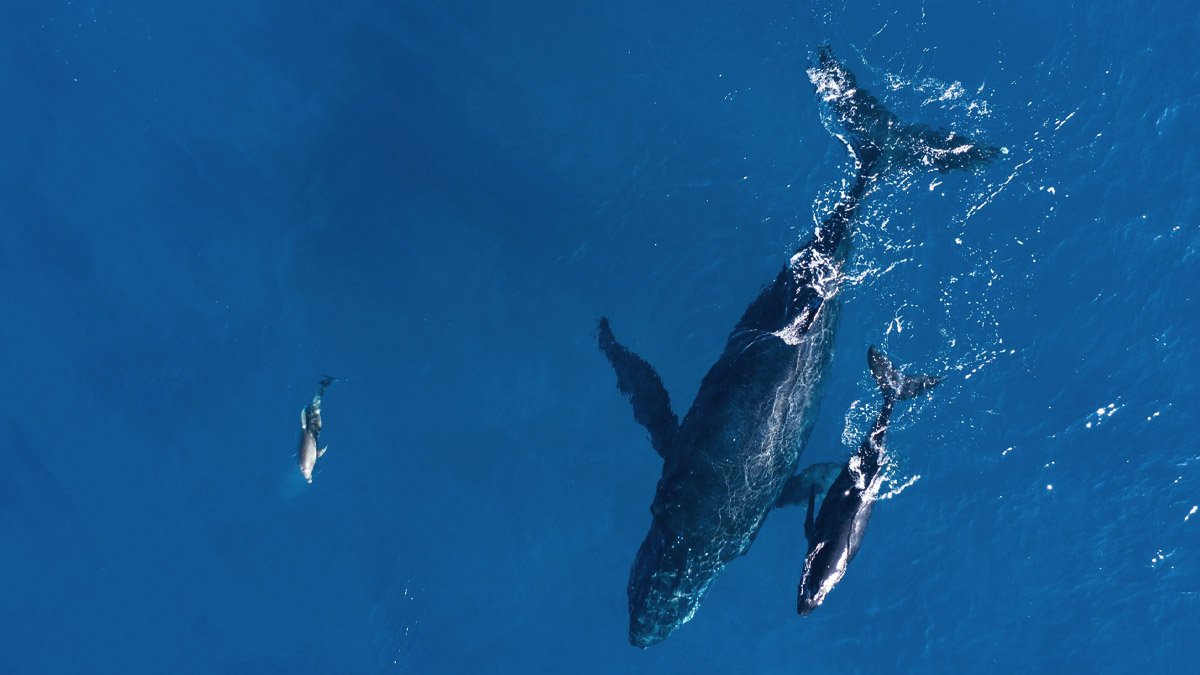
Every year, humpback whales embark on one of the most fascinating migrations on Earth — traveling thousands of miles from the chilly, nutrient-rich Southern Ocean to the warm tropical waters off northeastern Australia. For decades, scientists believed this journey was all about giving birth in safe, tranquil breeding grounds. But a growing body of evidence is now challenging that idea, revealing a complex picture of humpback whale calving that defies previous assumptions.
New Insights Into Humpback Whale Calving Patterns
Recent research led by the University of New South Wales (UNSW) has upended traditional views by documenting over 200 humpback whale calf sightings far south of the known breeding grounds. These calves were observed in places like southeastern Australia, New Zealand, and even as far south as Port Arthur, Tasmania — nearly 900 miles away from the tropical calving zones scientists once thought were essential for birthing.
“Hundreds of humpback calves were born well outside the established breeding grounds,” said Tracey Rogers, the senior author of the study and a well-respected biology professor at UNSW. This discovery suggests that the *purpose of the migration* might be broader than first believed. Rather than waiting for the final destination to give birth, many whales may calve along what’s known colloquially as the *“humpback highway.”*
What’s more, these mid-journey births mean vulnerable newborns, not yet strong swimmers, face the daunting challenge of swimming long distances very early in life — a reality that raises new questions about the risks and survival strategies for calves.
A Serendipitous Sighting Sparks Deeper Exploration
The breakthrough came in July 2023 when Jane McPhee-Frew, a Ph.D. candidate at UNSW and lead author of the study, spotted a tiny, newborn calf resting closely with its mother off southeastern Australia. “The calf was tiny, obviously brand new,” McPhee-Frew recalled. This unexpected encounter prompted a wider investigation into calving behaviors outside traditional warmer breeding zones.
Collecting data from scientists, citizen observers, and beach strandings, the team painted a surprising picture: calving isn’t confined to tropical waters alone. Instead, the migration journey may involve *multiple calving sites*, with the warmer final destination serving more as a nursery where calves grow and strengthen rather than as a mandatory birth location.
According to McPhee-Frew, “The findings suggest that birth can occur earlier along the route, and that the tropical destination might offer safer conditions for calves to learn and develop.”
Risks Along the Migration Route
While the idea of mid-migration births opens new scientific horizons, it also casts a spotlight on the dangers these young whales face. Newborn calves have *large, unwieldy fins* they need time to grow into, and their fragile swimming ability means they often rest on their mothers’ backs during long journeys.
Tracey Rogers explained, “Calves born mid-migration face heightened risks navigating busy waters — including frequent ship traffic, fishing nets, pollution, and other hazards.” Indeed, some calves have been observed with physical injuries, underscoring the perilous nature of premature calving in busy marine corridors.
This information reveals a delicate balance between the benefits of flexible calving locations and the vulnerability of newborns exposed to such hazards at an early stage.
Population Recovery Reveals Hidden Behaviors
The researchers believe that mid-migration calving is not a new behavior but rather one that had been obscured by the sharp decline in humpback populations due to commercial whaling across the 19th and 20th centuries. As populations rebound—estimated now between 30,000 and 50,000 individuals along the East Australian coast—scientists can observe increasingly diverse behaviors that reflect humpbacks’ natural history.
Jane McPhee-Frew noted, “It’s very likely this pattern has always existed, but the low number of whales obscured it from view.” Increasing whale numbers have allowed researchers to document these previously overlooked aspects of their biology.
In fact, this resurgence showcases how *effective conservation policies* combined with robust scientific research can help species recover and restore the full range of their natural behaviors.
Expert Perspectives and Further Research
These findings echo similar observations in other humpback whale populations around the world, complicating the simplistic view of migration purely as a journey to tropical breeding grounds.
For a fascinating visual exploration into humpback whale migration and calf development, watch this detailed
. The video highlights the long, perilous journeys and communal bonds that characterize these majestic creatures.Ultimately, this evolving knowledge invites us to rethink the humpback whale migration—not just as a fixed, destination-based process but as a dynamic journey where birth, survival, and growth happen along the entire route.
If this story deepened your understanding of humpback whales or sparked your curiosity about marine conservation, please share your thoughts below or with friends who care about ocean life. Your insights and comments help keep the conversation alive and enrich our collective awareness of nature’s incredible mysteries.