


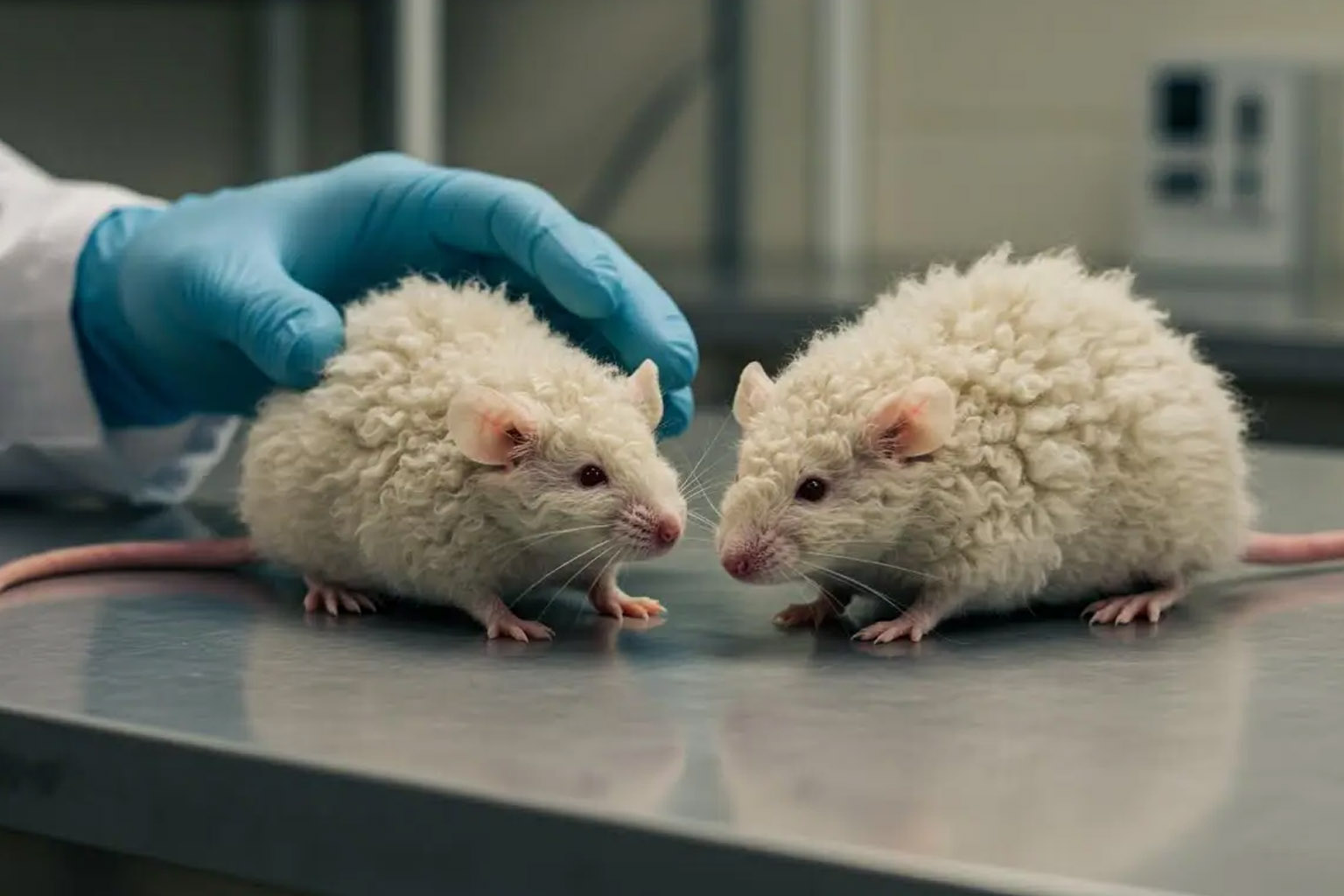
The revival of extinct species has moved from science fiction to laboratory reality. Colossal Biosciences recently unveiled genetically modified mice sporting thick, wavy fur resembling woolly mammoth coats—a tangible step toward their ambitious goal of bringing back these Ice Age giants by 2028. The achievement represents more than a quirky laboratory curiosity; it demonstrates that complex genetic modifications can successfully recreate prehistoric adaptations in living organisms, similar to how genetic research has revealed new crocodile species in unexpected locations.
These “woolly mice” emerged from targeted modifications of seven genes, six of which control fur characteristics. The research team blocked the FGF-5 gene responsible for regulating hair length, resulting in mice with fur three times longer than standard laboratory specimens. Additional alterations to TGF alpha and KRT27 genes—variants found in mammoths—produced the characteristic wavy, dense texture that helped these prehistoric creatures survive Arctic conditions.
The implications extend far beyond creating adorable laboratory animals. This proof-of-concept validates that multiple genetic mutations can be simultaneously introduced into a single organism to replicate ancient traits. Yet the path from woolly mice to mammoth calves remains fraught with technical and biological challenges that could reshape our understanding of genetic engineering limits.
The Strategic Logic Behind Mice as Test Subjects
The choice of mice as initial test subjects reflects pragmatic scientific reasoning rather than arbitrary selection. Their 20-day gestation period allows researchers to observe genetic modifications across multiple generations within months, contrasting sharply with elephants’ 22-month pregnancy cycles. This temporal efficiency enables rapid iteration and refinement of genetic editing techniques before attempting modifications on Asian elephants, the mammoth’s closest living relatives.
Research teams can now evaluate the effectiveness of various gene combinations, test cold tolerance capabilities, and identify unexpected complications in a controlled, accelerated timeframe. The mouse model provides a biological testing ground where scientists can perfect their approach without the enormous logistical and ethical complexities of working directly with endangered elephant populations. This methodical approach mirrors how researchers studying ancient Romanian defenses use advanced technology to uncover complex strategies from the past.
The Elephant Challenge: From Concept to Reality
Translating mouse success to elephant modification presents formidable obstacles that highlight the complexity of de-extinction science. Elephants naturally possess much sparser hair density compared to mice or mammoths, meaning identical genetic modifications might produce inadequate insulation for Arctic survival. Even successfully edited elephant embryos could lack the thick, protective coat essential for mammoth-like environmental adaptation.
The reproductive challenges multiply exponentially when moving from mice to elephants. Advanced reproductive technologies, lengthy gestation periods, and the need for surrogate mothers create logistical hurdles that dwarf the mouse experiments. Each elephant modification attempt represents years of investment with uncertain outcomes, making the rapid-fire testing possible with mice impossible to replicate.
Ethical considerations surrounding genetic modifications of endangered species add another layer of complexity. Asian elephants face their own conservation challenges, raising questions about whether de-extinction efforts should prioritize existing species protection over resurrection projects. The discovery of extinct species in Cuban caves demonstrates how much we still don’t know about prehistoric life and the complexity of species revival.
The Ecological Gamble: Mammoth Reintroduction
Beyond the technical achievement lies Colossal’s broader environmental hypothesis: that reintroduced mammoths could help restore Arctic grassland ecosystems and combat climate change by preventing permafrost thaw. This theory suggests large herbivores could trample snow, exposing ground to freezing air and maintaining permafrost stability. The ecological engineering potential transforms mammoth revival from scientific spectacle to climate intervention strategy.
The approach assumes that recreated mammoth-elephant hybrids would exhibit the same ecological behaviors as their extinct predecessors. Wild elephants display complex social structures and learned behaviors passed down through generations—knowledge that disappeared with the last mammoths. Whether laboratory-created hybrids could fulfill the same environmental role remains speculative.
Current climate change acceleration might outpace de-extinction timelines. By 2028, when Colossal aims to produce its first mammoth hybrid calves, Arctic conditions may have shifted beyond the point where mammoth reintroduction could meaningfully impact permafrost preservation.
The Uncharted Territory of Hybrid Biology
The woolly mice experiment reveals fundamental questions about genetic identity and species boundaries that extend beyond mammoth revival. These modified creatures represent something entirely new—neither fully mouse nor mammoth, but a hybrid creation with characteristics from both lineages. The long-term biological consequences of such extensive genetic modification remain unknown.
Studies of the woolly mice’s cold tolerance capabilities will provide crucial data about whether genetic modifications translate into functional environmental adaptations. Success could validate the theoretical framework underlying de-extinction science, while failure might expose fundamental limitations in current genetic engineering approaches. Understanding extinct species through ancient rock art provides valuable context for how these creatures once lived and adapted to their environments.
The broader implications touch on how we define species identity in an era of genetic malleability. If successful, mammoth-elephant hybrids would represent a new category of organism—genetically engineered creatures designed to fulfill ecological roles of extinct species while carrying the biological framework of living ones.
The woolly mice scurrying around Colossal’s laboratories embody both the promise and uncertainty of de-extinction science. Their existence proves that genetic time travel is possible, yet the gap between laboratory success and ecological restoration remains vast. Whether these small, furry pioneers ultimately lead to thundering herds across Arctic tundra or remain fascinating biological footnotes depends on solving challenges that push the boundaries of current scientific capability.