


The question of Earth’s largest flying bird sparks more debate than most people realize. While children might imagine eagles or hawks as nature’s aerial giants, the reality involves creatures with wingspans that dwarf most small aircraft. These magnificent birds challenge our understanding of flight physics, demonstrating that size doesn’t always limit mobility when evolution provides the right adaptations.
The distinction between largest by weight, wingspan, or historical significance creates fascinating complexity. Modern giants like the wandering albatross and Andean condor represent different evolutionary strategies for conquering the skies, while prehistoric species once achieved dimensions that seem almost impossible today. Understanding these differences reveals how birds have continuously pushed the boundaries of what’s achievable in powered flight, much like how prehistoric ecosystems once supported megafauna that dwarf their modern counterparts.
The Wandering Albatross: Master of Ocean Winds
The wandering albatross holds the undisputed record for wingspan among living birds, with measurements reaching 3.5 meters across. This seabird has essentially solved the problem of perpetual motion, gliding across Southern Ocean waters for days without a single wing beat. Research indicates that these birds can cover thousands of kilometers using nothing but wind currents and thermal updrafts.
What makes this species particularly remarkable is its energy efficiency. Weighing around 12 kilograms, the wandering albatross employs a technique called dynamic soaring, where it exploits wind speed differences at various altitudes. This allows the bird to maintain flight for weeks at a time, returning to land only for breeding purposes.
The albatross represents a masterclass in aerodynamic design. Its long, narrow wings create minimal drag while maximizing lift from ocean winds. Scientists studying these birds have discovered that they spend up to 85 percent of their flight time in gliding mode, making them perhaps the most efficient flying machines in nature.
The Andean Condor: Heavyweight Champion of the Skies
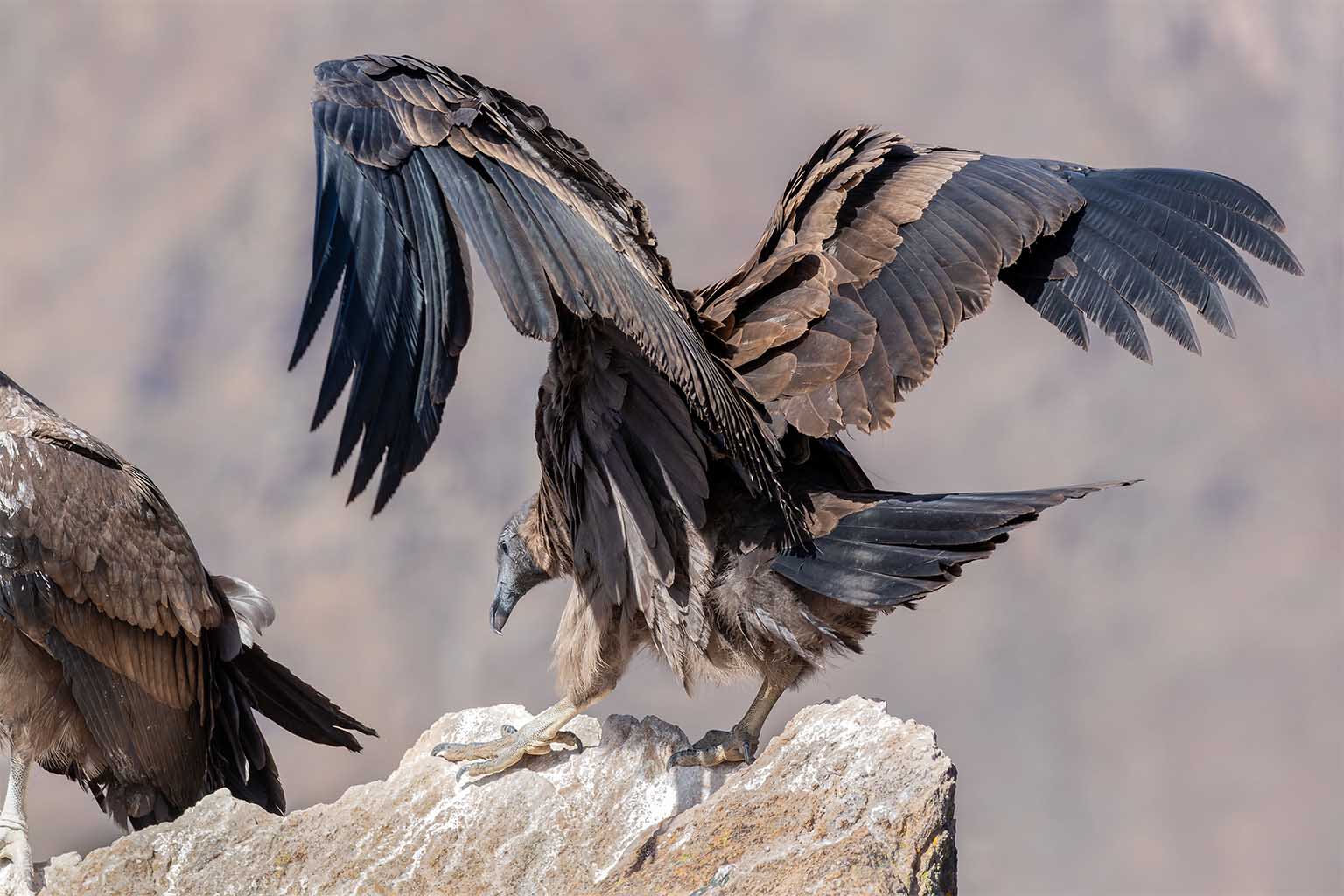
While the wandering albatross wins on wingspan, the Andean condor claims the title of heaviest flying bird capable of sustained flight. Males can reach 15 kilograms with wingspans approaching 3.3 meters. These magnificent scavengers patrol the Andes Mountains, riding thermal currents with an almost supernatural grace.
The condor’s flight strategy differs significantly from the albatross. Rather than exploiting ocean winds, condors rely on rising warm air columns created by mountain terrain. They can soar for hours without flapping, covering vast territories while searching for carrion. This energy conservation is crucial given their substantial body weight.
Conservation efforts have brought condors back from near extinction, but their status remains precarious. The species faces ongoing challenges from habitat loss and lead poisoning from ammunition in carcasses. Their slow reproduction rate makes population recovery particularly challenging, requiring decades of sustained protection efforts. Archaeological discoveries, such as the 5,000-year-old fortification revealed through LiDAR technology, demonstrate how ancient civilizations coexisted with these magnificent birds across different continents.
Prehistoric Giants: When Size Knew No Limits
Argentavis magnificens dwarfs all modern flying birds, representing the absolute pinnacle of avian flight capability. Living six million years ago, this prehistoric giant achieved a wingspan of 7 meters and weighed approximately 70 kilograms. Research published in PMC confirms that with an estimated mass of 70–72 kg and a wingspan of approximately 7 meters, it was the world’s largest known flying bird, about the size of a Cessna 152 light aircraft.
“With an estimated mass of 70–72 kg and a wingspan of ≈7 m, it was the world’s largest known flying bird, about the size of a Cessna 152 light aircraft” – PMC Research
Scientists studying Argentavis fossils believe it employed similar thermal soaring techniques to modern condors, but on a dramatically larger scale. The bird likely required specific wind conditions and thermal patterns to achieve takeoff, possibly launching from elevated positions to gain initial altitude. Its massive size would have allowed it to dominate prehistoric South American ecosystems as an apex scavenger, similar to how ancient European societies established dominance through strategic positioning and resource control.
The extinction of such massive flying birds raises questions about environmental changes and resource availability. Climate shifts, prey distribution changes, and atmospheric density variations may have contributed to the disappearance of these aerial titans, leaving modern birds as relatively modest survivors.
The Engineering Challenges Behind Gigantic Flight
Understanding why birds can’t grow infinitely large reveals fascinating biomechanical constraints. Studies on flight biomechanics demonstrate that as body mass increases, wing loading becomes problematic, requiring exponentially more muscle power for sustained flight. The square-cube law means that doubling a bird’s dimensions increases its weight eightfold while wing area only quadruples.
“The aerodynamics of large flying birds reveal complex biomechanical constraints that limit maximum achievable size in modern atmospheric conditions” – Biomechanics Research
Modern giant birds have evolved specific adaptations to overcome these challenges. Extended wings reduce wing loading, while specialized flight muscles and hollow bones minimize unnecessary weight. The wandering albatross and Andean condor represent near-optimal solutions to the size-versus-flight equation under current atmospheric conditions.
Research suggests that atmospheric density and oxygen levels may have been different during prehistoric periods, potentially enabling larger flying creatures. Higher air density would provide greater lift, while increased oxygen concentrations could support the metabolic demands of massive flight muscles. These factors might explain why Argentavis could achieve sizes impossible for modern birds, much like how ancient civilizations developed ceremonial centers that required sophisticated understanding of environmental conditions.
The story of Earth’s largest flying birds illuminates the delicate balance between ambition and physics in evolutionary design. While we may never again see creatures matching Argentavis in scale, the wandering albatross and Andean condor continue pushing the boundaries of what’s possible in powered flight. Their survival depends not just on their remarkable adaptations, but on our commitment to preserving the environments that make their aerial mastery possible. Whether future evolutionary pressures might produce new giants remains an open question, one that will unfold across timescales far beyond human observation.