


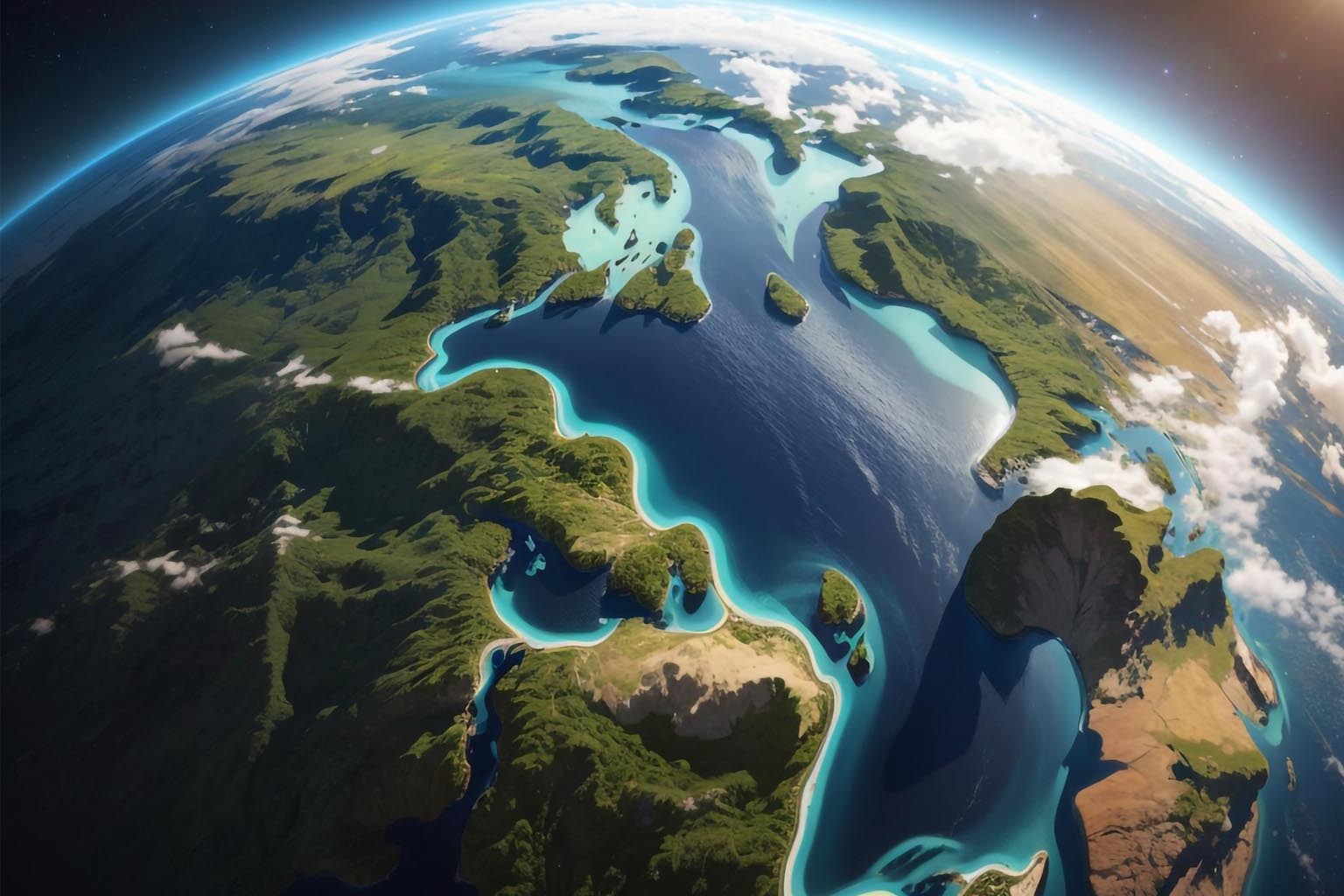
Earth’s continents have been on a wild ride for billions of years, constantly shifting, splitting, and merging. But what if we told you that in about 250 million years, the world as we know it will look totally different—locked into a massive supercontinent that could change everything about life on Earth? This predicted future isn’t just a sci-fi dream; it’s a fascinating glimpse into the planet’s long-term geological destiny.
The unstoppable cycle of supercontinents
Our planet’s surface is a patchwork of tectonic plates—giant slabs of rock that slowly drift atop the molten mantle beneath. This movement has been shaping the globe for over 1.5 billion years, stitching together and then ripping apart supercontinents in a dramatic geological cycle.
Ancient landmasses like Columbia, Rodinia, and the famous Pangaea—last unified around 300 million years ago—show us how continents constantly reunite and dissolve. Scientists studying tectonic motions now predict this cycle is far from finished. In the next 250 million years or so, a new supercontinent will form, transforming Earth’s geography yet again.
The four contenders for Earth’s future
A 2020 study published in Nature models four striking possibilities for how our continents might come together:
– Novapangea: All continents drift toward the Pacific, closing it off.
– Aurica: India anchors a massive new landmass.
– Amasia: North America and Asia collide near the North Pole.
– Pangea Ultima: The most likely scenario, where Africa, Eurasia, and the Americas merge, closing the Atlantic but expanding the Pacific.
Among these, Pangea Ultima captures imaginations with its resemblance to the ancient Pangaea, yet with a distinct layout. Australia and Antarctica would also shift toward this supercontinent, completing the new giant landmass.
How this supercontinent could reshape life on Earth
Pangea Ultima’s formation would mean radical changes, especially for climate and ecosystems. According to experts from Scientific American, the interior of this massive landmass might turn harshly hot and dry. Rainfall would struggle to penetrate far inland, creating a stark contrast with the more temperate coasts.
This would challenge plants and animals in drastic ways. Some species could face extinction, unable to adapt to the new extreme climates, while others might evolve unique survival strategies. Ocean currents—a key player in Earth’s weather systems—would also shift alongside the continents, potentially triggering new global climate patterns.
What lies ahead for humanity on the new supercontinent?
Suppose human descendants exist far into the future. In that case, they might find life on Pangea Ultima quite different from today. Humans would likely gravitate toward the coastal regions where conditions remain livable. But here’s the paradox: the vast, connected landmass could foster unprecedented cultural exchange and interaction.
Without wide oceans dividing people, trade routes would expand over land, ideas and innovations could spread faster, and perhaps unity among populations could increase. Still, thriving in such a changed world wouldn’t come easy—it would require advanced technologies to manage the challenging environment.
What fascinates most is how Earth’s restless shifting keeps rewriting the story of life, climate, and human existence. The formation of Pangea Ultima might feel like a distant, almost unimaginable future. Yet, it’s a powerful reminder of our planet’s ever-changing nature, stretching far beyond human timescales.
Got thoughts on what a united supercontinent means for our planet’s future? Drop a comment below and share your vision of what life might be like when the world’s continents collide once more.