


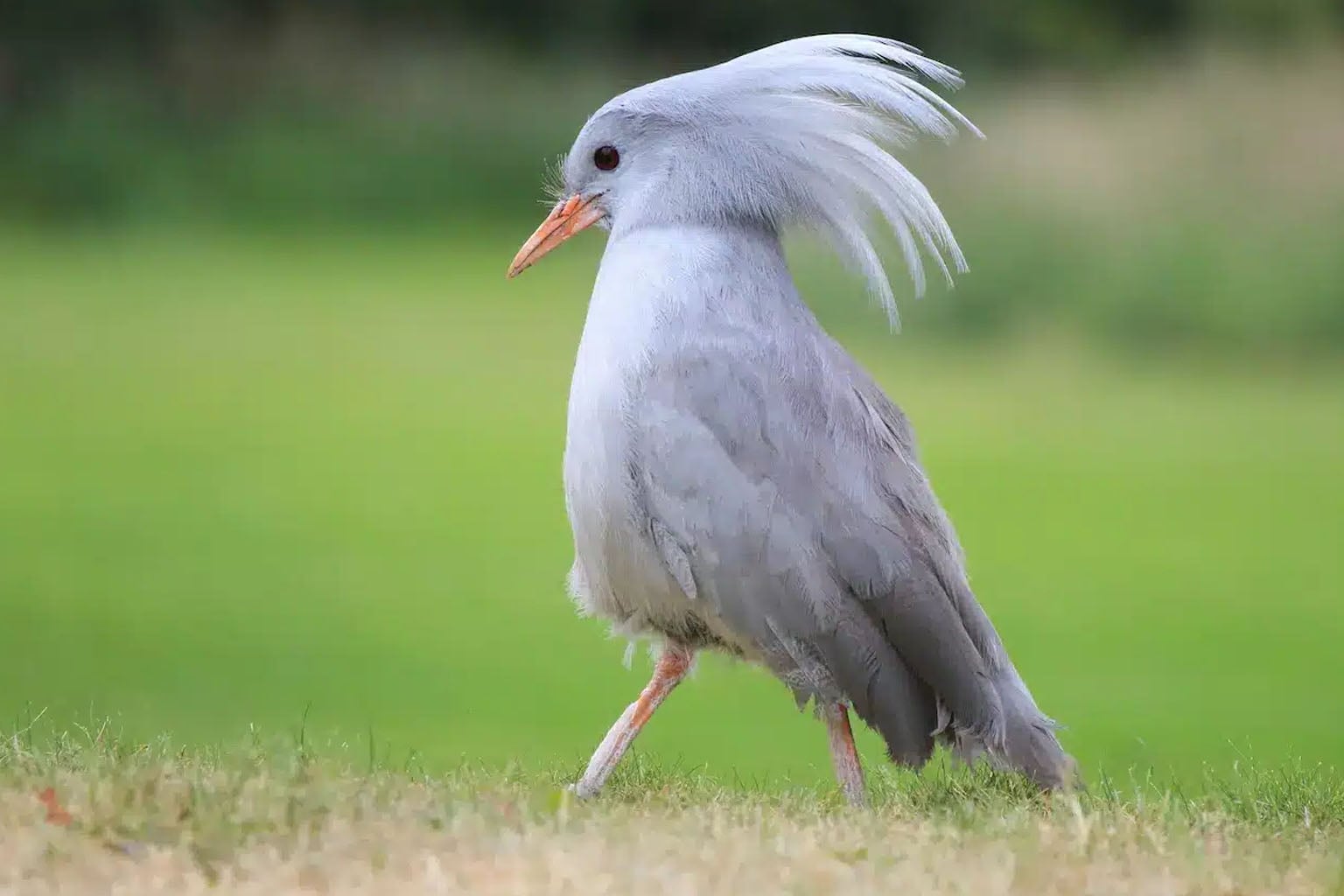
The kagu, a flightless bird native to the mist-shrouded forests of New Caledonia, remains an enigma wrapped in striking feathers. This remarkable creature not only captures the attention of locals and tourists but also raises an eyebrow or two among biologists and conservationists. And why wouldn’t it? It boasts an indescribably unique feature—and we’ll get to that mind-boggling detail in just a moment.
The Elusive Ghost of the Forest
Known ambivalently as the “ghost of the forest,” the kagu is a bird you might just miss while meandering through the thick vegetation. Painted in shades of silvery-grey and flaunting long legs, it can be quite elusive. According to a report from The Guardian, its camouflaged existence is both a gift for survival and a curse for those hoping to catch a glimpse. But, just when you think it’s another ordinary bird, it raises its crest—a spectacular show to deter predators, or so it hopes.
This dramatic display has turned the kagu into a cultural icon in New Caledonia, with its image gracing stamps and even currency. Despite this fame, the kagu faces existential threats that are tough to ignore.
A Unique One-of-a-Kind Adaptation
Let’s talk about what truly sets the kagu apart: its nasal corns. These peculiar structures are like tiny shields of skin that guard its nostrils. Ingenious, right? As it forages across the forest floor, these natural barriers are crucial for protecting against dirt and debris—given the bird’s penchant for sniffing out insects, snails, and small lizards nestled in leaf litter.
The kagu’s survival is intricately tied to these adaptations, an evolutionary quirk that supports its unconventional lifestyle in New Caledonia’s dense forests. It’s a fascinating reminder of how species evolve to fit their environments.
A Fragile Future Amidst Mounting Threats
Kagus have seen some dark days. In the late 1800s, a fad for exotic plumage nearly wiped them out. Their crests were highly sought after—imagine that—and though the demand eventually faded, predators introduced by humans remained a threat. Stray dogs, pigs, and cats, oblivious to the kagu’s uniqueness, prey on them and raid their nests, putting this flightless bird in constant peril.
If that’s not enough, habitat loss looms large, further pressing the kagu into a corner. A survey estimates that only between 600 and 2,000 of these ghostly figures remain hidden in the wild. You don’t need to be a conservationist to know those numbers are uncomfortably small.
However, glimmers of hope shine through.
Conservation Turnaround: A Ray of Hope
In recent decades, targeted conservation efforts have crafted a story of resilience and recovery for these birds. Rivière Bleue Provincial Park stands as a monument to these efforts. Park manager Jean-Marc Meriot, whose dedication spans over 25 years, has nurtured the kagu population, witnessing it grow from a mere 60 to over 1,000 by 2024.
This is no small feat. The success hinges on meticulous breeding programs, restoration of habitats, and stringent management of predators. Programs aimed at removing stray dogs and pigs have played a crucial role in alleviating pressures on these ground-dwelling marvels.
Continuous monitoring, like the use of transmitters to track movements and study behavior, has also bolstered conservation outcomes, providing insights that reach right into the heart of the kagu’s living quarters.
You can almost imagine the relief—a positive prognosis that bodes well for the future. And it also sparks a fresh perspective on biodiversity and the significance of protecting what we might easily lose.
So, the next time you’re enchanted by tales of unique flora and fauna, remember the kagu and its peculiar nasal corns—a perfect example of evolution’s endless experimentation. Whether you’re a seasoned birder or just starting your journey with New Caledonia’s wildlife, the kagu story is one to follow with curiosity and compassion.
How about taking a peek into the life of the kagu through a rich media lens? Here’s more from a recent dive into its world:
Join the movement and keep exploring tales of life and survival in every corner of our beautiful world. Let’s celebrate nature’s wonders and learn how we can be part of their stories, today and beyond.