


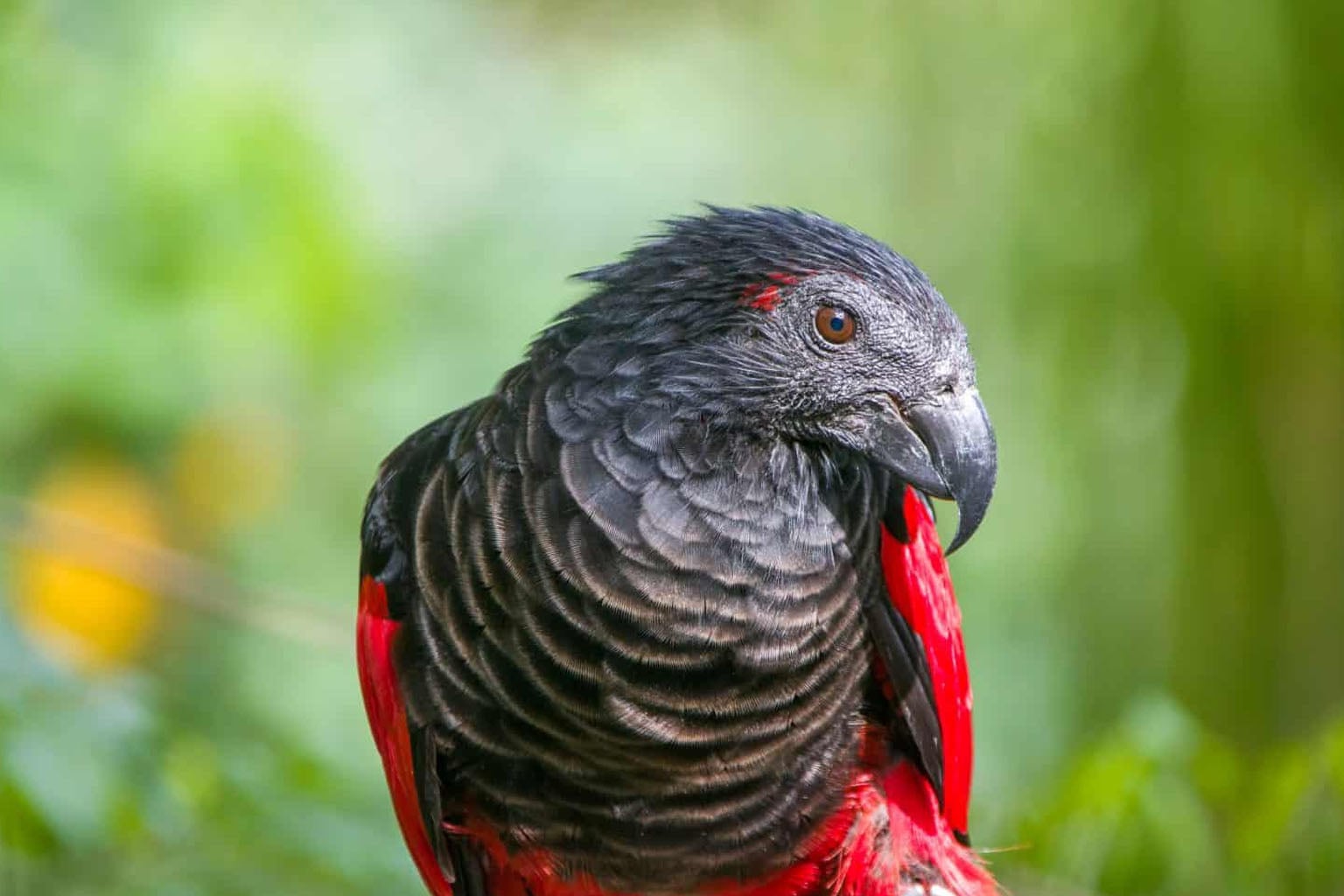
There’s something haunting about the cries that pierce the dense rainforest of New Guinea. It’s the call of the Dracula parrot, an evocative name that suits its dramatic, almost theatrical features — a jet-black plumage with a blood-red vest and a haunting scream that one might expect to hear in a horror film. The mysterious charm of this bird, officially known as Pesquet’s parrot, fascinates both biologists and birdwatchers alike.
The Elusive Dracula Parrot: A True Spectacle
Deep in the montane rainforests of New Guinea, the Dracula parrot has claimed its fame. It stands out with an appearance that flirts with the gothic, embodying a fantasy creature rather than a bird. Its scientific name, **Psittrichas fulgidus**, might not roll off the tongue easily, yet the bird’s distinct image is effortlessly memorable. With feathers as dark as midnight, a vulture-like bald head, and fearsome facial features, this parrot looks like it flew straight out of a fable.
Despite what its nickname might suggest, this parrot isn’t on a bloodthirsty quest. Contrary to its fearsome look, it’s a fruit enthusiast — specifically fond of figs, nectar, and particular tropical flowers. Its head, though ominously bald, plays a practical role: it helps prevent messy pulp from adhering to its feathers. Intrigued? You might want to listen to its chilling call that resounds in dense jungles. (Seriously, you should give it a listen and picture the mist rising around.)
A Singular Sight and Sound in the Canopy
The voice of the Dracula parrot is perhaps its most unsettling trait. Its scream, much like an abrasive growl, shatters the forest’s tranquil atmosphere. These cries are rare amongst their noisy parrot relatives and its ability to project this sound across long stretches helps maintain contact within the flock—sometimes up to 20 strong. It also appears to serve a territorial purpose, making its presence unmistakable in the vast, leafy expanse.
Unlike many parrot species that rely on branch-hopping and climbing, the Dracula parrot navigates its territory with a different style. It moves with short glides interspersed with *rapid wing beats* — a dance of ghostly grace emerging sharply against the blurred canopy.
A Diet Steeped in Mystery and Adaptation
Evolution has given the Dracula parrot another distinct trait: a highly specialized diet. Living on the sticky fruits of the wild fig, this restricts their feeding more than one would expect for a bird in such abundant territory.
Their featherless heads, which seemed menacing at first, turn out to be nature’s way of avoiding the mess from their juicy meals. While these parrots might turn to nectar or other flowers on occasion, figs are clearly their favorite by a mile. As noted by Live Science, their unique dietary needs seem to have dictated aspects of their development, both aesthetically and behaviorally.
Did you know birds like these even care about how they look and eat? It’s a fascinating dance between form and function, with the Dracula parrot being a clear testament to the complexity of ecological evolution.
Vulnerabilities and Conservation Woes
Despite their striking presence, the longevity of this bird’s haunting beauty is threatened. The Dracula parrot faces mounting challenges, from deforestation and habitat fragmentation to the pressures of the exotic pet trade. The beautiful black *wings and feathers* are, unfortunately, also desirable commodities. This has led to increased pressure on their survival, as discussed by conservation experts.
Regrettably, the secretive nature of these birds extends to their breeding habits, about which we know very little. The speculation remains that they lay just one or two eggs annually — a cycle that naturally limits recovery, especially in dwindling populations.
Few zoos globally have had the privilege of housing these unique parrots, let alone breeding them successfully. In the ongoing fight for survival, the Dracula parrot stands as a testament to the whimsical quirks of evolution, a prized survivor of a lineage that defies easy understanding.
The Awakening Call
Protecting the Dracula parrot requires more than just admiration from afar. Conservationists urge action to prevent these enigmatic birds from vanishing into stories. The realization that such a remarkable creature might one day only haunt the pages of old field guides and videos is a somber possibility. It underscores the urgency of preserving not just this single species but the dense, intricate ecosystems they call home.
Are you ready to join the conservation conversation and ensure this fascinating gothic wonder continues to thrive in its natural viels of shadow? Let’s make sure this isn’t the last scream echoing through those ancient forests.