


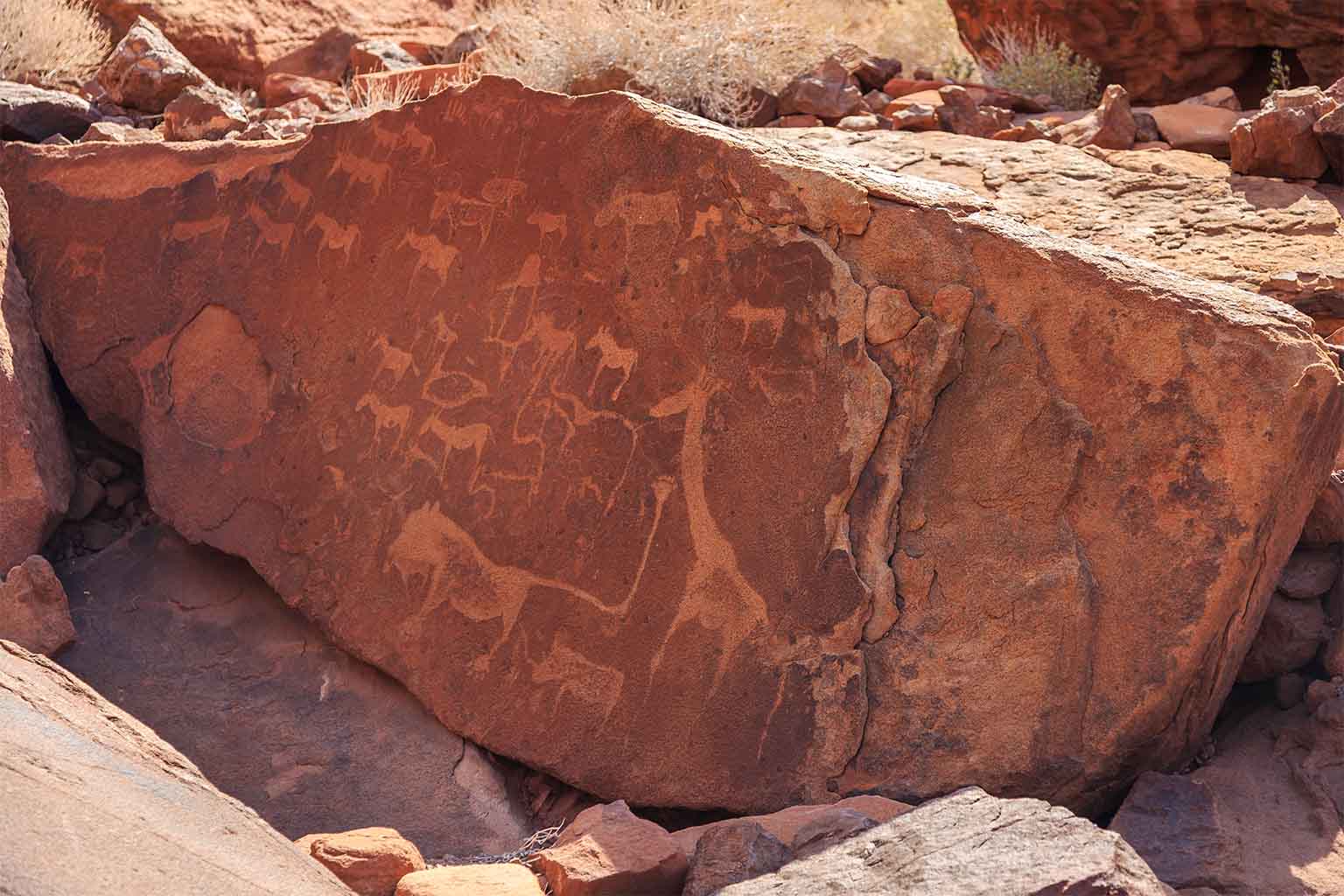
The discovery of a new chapter in humanity’s past can often stir our curiosity. And when you stumble upon a seemingly ordinary rock painting that might just rewrite the history of human-animal interactions, it’s hard to look away. Welcome to the story of the ‘Horned Serpent panel’—an ancient piece of art that could be our link to creatures long believed to be extinct. Created by the San people, it may hold a secret that reshapes our understanding of history.
An Unforeseen Discovery in the Karoo Basin
Hidden away in South Africa’s vast Karoo Basin, this rock art has come under the spotlight for its depiction of what some speculate could be a 200-million-year-old creature. A groundbreaking study published in PLOS ONE delves into this enigma, suggesting that the ancient art might actually portray a dicynodont. These were strange, tusked herbivores that roamed the Earth well before humans. But how could the San have known about these elusive creatures?
Benoit Julien from the Evolutionary Studies Institute at the University of the Witwatersrand has an intriguing theory. He suggests that the San, famed for their deep connection with their land, might have encountered dicynodont fossils. Imagine stumbling upon the bones of a creature, a relic from a time of giants. That moment—where the past meets the present—offers a tantalizing prospect of ancient human-paleontologist interactions.
The Enigmatic Horned Serpent
The painting, named the ‘Horned Serpent panel,’ vividly illustrates a long-bodied creature with tusks pointing earthward. And here’s where it gets fascinating: Although it bears a passing resemblance to the marine walrus, its location tells a different story. The Karoo Basin, teeming with fossils but far from the ocean, seems an improbable home for walruses. Was this art an early attempt to document the dicynodont?
Julien argues that it very well could be. He draws parallels between this tusked animal and fossilized remains of a Lystrosaurus, a member of the dicynodont family. This extinct creature’s remains have lent themselves to a theory challenging our conventional understanding of ancient indigenous knowledge systems.
Fossils, Culture, and Ceremonies
This isn’t just a matter of history or science; it’s a story of culture bridging chasms in time. The San were more than observers of their environment—they were interpreters, using art as a medium to merge the tangible world with their spiritual beliefs. Benoit proposes that these paintings possibly played roles in sacred ceremonies.
Imagine a scene where the San enter trance-like states, performing rain-making rituals. In this altered consciousness, they could have perceived these ancient creatures as possessing mystical authority over rain. The decision to depict the extinct dicynodont? That could symbolize the ultimate power to connect two realms—the living and the dead.
Mysteries Yet To Be Fully Solved
Each brushstroke of this artwork raises questions and opens discussions. Did the San know of these creatures through found fossils? If they did, how did they interpret this knowledge? A quote from Benoit’s study reflects this ongoing mystery: “Of course at this point it is speculative, but the tusked animal on the Horned Serpent panel was likely painted as a rain-animal, which means it was probably involved in rain-making ceremonies.”
The story around this ancient artwork is not only about art or science; it’s about the intricate dance between human experiences and nature’s history. As more discoveries like this surface, we are reminded that the written record of the past might just be the beginning of deeper human narratives hidden in art and tradition.
In the meantime, while we grapple with these questions, there’s something enchanting about knowing that a simple piece of art could open debates and bridge connections across centuries. If you ever find yourself in the Karoo Basin, take a moment to imagine what those early artists might have felt as they painted, bringing past worlds to life once more. And who knows? Our next great discovery may just be waiting on the winds of history, ready to be uncovered.
Feeling inspired by these incredible discoveries? Share this story with friends and spark a conversation about the endless wonders of our past and the mysteries that still lie ahead.