


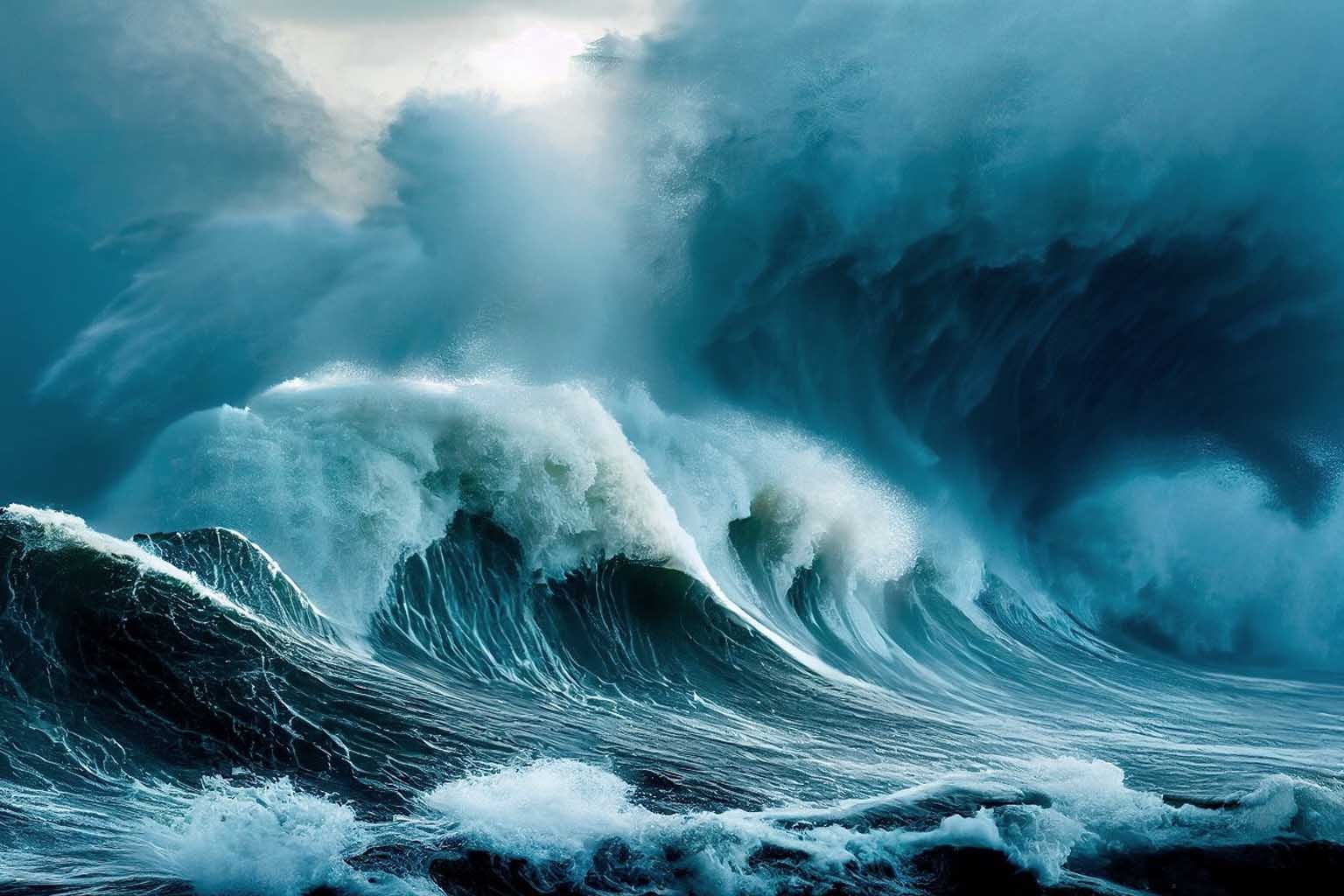
Tiny chunks of ancient Japanese amber have unveiled a colossal secret from 115 million years ago—a massive tsunami that swept across the region during the Early Cretaceous period. This astonishing discovery not only challenges how scientists detect ancient geological events but also introduces a revolutionary way of reading Earth’s prehistoric history.
Amber: A Surprising Time Capsule of Ancient Tsunamis
Amber, widely known as fossilized tree resin capturing prehistoric insects and plants, is now gaining attention for an unexpected reason. Researchers have discovered that amber can preserve physical evidence of geological upheavals like tsunamis. The 115-million-year-old amber found in Hokkaido, northern Japan, contains distinctive “flame structures”—unique sedimentary formations created by the rapid deposition of soft material that later hardened.
These patterns tell a dramatic story: the resin was uprooted from ancient forests, swept into the ocean by fierce waves, and buried quickly under the seafloor without air exposure. This process, rarely captured in the fossil record, opens a new field dubbed “amber sedimentology,” which studies both the biological and geological context of amber.
Aya Kubota, a paleontologist at Chuo University and co-author of the study published in Scientific Reports, remarked, “Resin offers a rare, time-sensitive snapshot of depositional processes.” This insight suggests amber can serve as a powerful tool to decode past catastrophic events that traditional sediment analysis might miss.
How Scientists Decipher a Tsunami from Storm Evidence
One of the biggest challenges in ancient geology is distinguishing tsunami deposits from those left by violent storms. Both produce similar coastal sediment patterns, which often causes confusion. Kubota explains, “Identifying tsunamis is generally challenging,” emphasizing that the amber evidence alone did not make the origin clear immediately.
To overcome this, the research team combined extensive field observations with a microscope-level analysis of amber’s internal structures. The identification of abrupt sediment deformation paired with landslide indicators, large mud fragments, and uprooted tree trunks strengthened their case. These findings were inconsistent with storm-driven waves but aligned well with earthquake-triggered tsunamis disturbing the seafloor suddenly.
This multidisciplinary approach underscores the importance of integrating geological and paleontological methods when investigating ancient natural disasters.
Exploring the Deep Ocean Floor to Understand Catastrophic Events
Unlike many studies that focus on coastal sediment layers, this research delved into the deep-sea geological record at the Shimonakagawa Quarry site. The amber deposits there document how plant debris and sediment were violently transported from land into the ocean basin in a geological instant.
Such findings broaden our understanding of tsunami dynamics, demonstrating that these massive waves impact not just shorelines but also deeper oceanic environments. This comprehensive perspective offers valuable clues about the broader environmental and geological consequences of tsunamis.
Kubota highlighted the promise of this fresh approach: “The emerging concept of ‘amber sedimentology’ holds exciting potential to provide unique insights into sedimentological processes.” By examining fossils locked within amber alongside ocean floor sediments, scientists can better pinpoint when ancient tsunamis struck, distinguishing them from less destructive storms.
Scientific Evidence and Future Implications
The discovery relies on a sophisticated blend of geological detective work and cutting-edge scientific analysis. According to the study published in Scientific Reports, the presence of distinct structural markers within amber combined with external geological clues offers a reliable way to identify tsunami deposits that persisted for millions of years.
This method could rewrite parts of Earth’s geological narrative by uncovering hidden tsunamis in other amber-rich regions worldwide. Furthermore, it provides critical insights relevant to modern coastal hazard assessments, reminding us that ancient natural disasters have shaped—and continue to shape—the environment in unexpected ways.
What do you think about this groundbreaking research revealing dinosaur-age tsunamis through tiny amber? Have you encountered other surprising ways ancient events are recorded in nature? Share your thoughts, questions, or experiences in the comments below—let’s explore Earth’s incredible history together!