


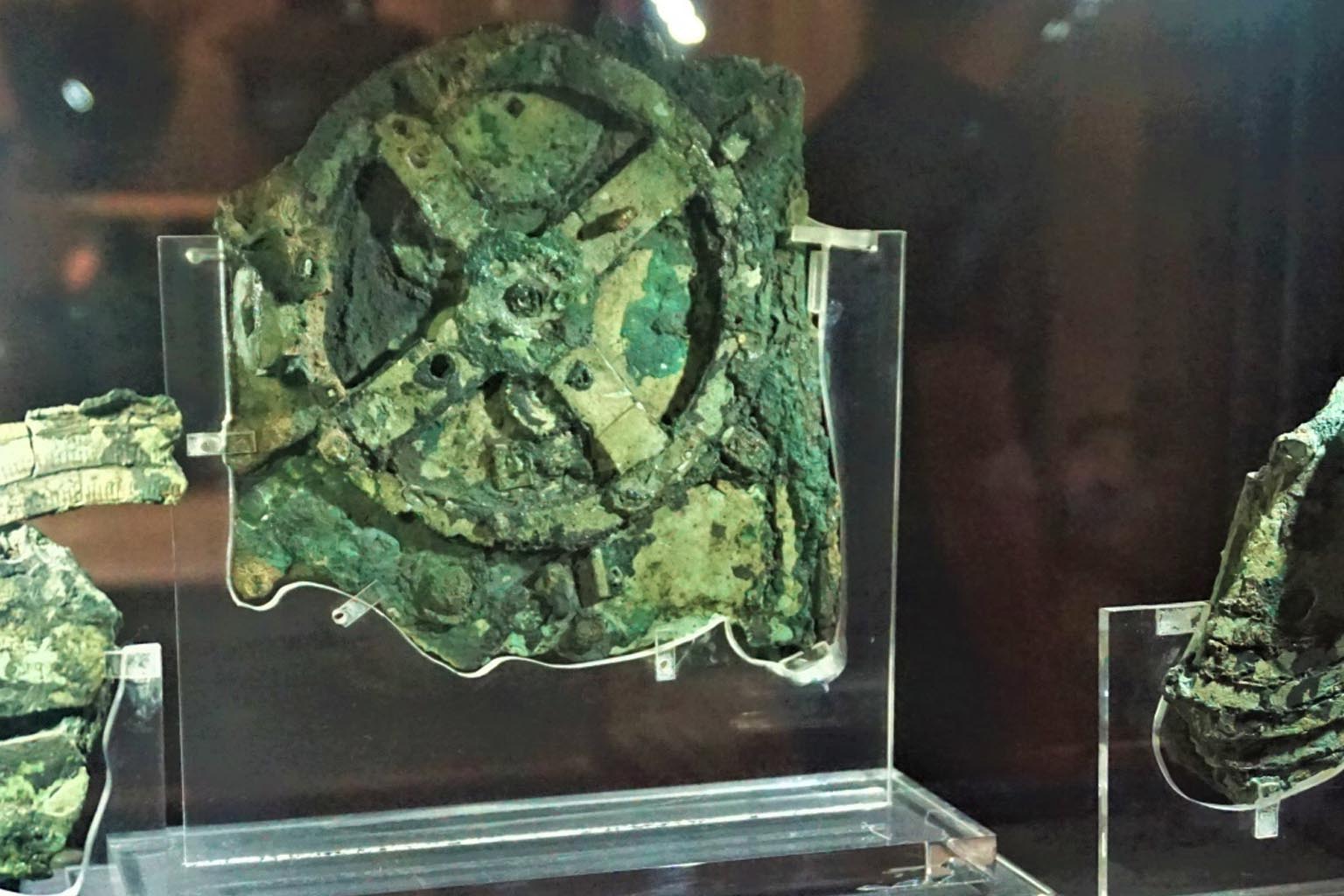
It was once displayed proudly as the world’s first computer—a beacon of ancient ingenuity—but now, new research is spinning the narrative of the Antikythera Mechanism on its head. Was this ancient Greek device, discovered over a century ago from the depths off Antikythera’s coast, truly a revolutionary computational tool for celestial events? Or could it have been a misfiring prototype, more prone to jamming than illuminating the skies? Fascinating questions, and the latest findings suggest it might have been more the latter.
The Intriguing Gears of the Antikythera Mechanism
Researchers have been captivated for decades by the intricate workings of the Antikythera Mechanism, its gears a wonder of ancient engineering. But here’s where it gets intriguing: new studies have shown that these gears—triangular-toothed as they were—might have been more trouble than triumph. According to a recent study published on arXiv, these were not the perfectly meshed components we once imagined but troublesome pieces that often caused the device to seize up, almost like a stubborn printer keeping you from those urgent documents.
Dr. Mike Edmunds’ error model, integrated with Alan Thorndike’s analysis of non-uniform motion caused by these triangular teeth, indicated a tendency for serious operational snags. Instead of a seamless operation, the mechanism’s gears, thanks to manufacturing inaccuracies, frequently failed to mesh properly. The result? Frequent jams that likely exceeded any reasonable margin of error for an astronomical calculator. Imagine, if you will, trying to follow the night sky with a tool that paused after every couple turns.
Was It Really a Functioning Scientific Instrument?
With these findings stirring the pot, there’s a fresh debate buzzing: could the Antikythera Mechanism have been an educational model rather than a practical instrument? It’s an intriguing proposition. Some scholars suggest that while the ancient Greeks indeed had a nuanced understanding of mechanical engineering, the device might have been more of an ambitious demonstration rather than a utilitarian tool.
The over 30 interconnected gears imply genius—no doubt about it. Yet, if the device jammed as frequently as the research suggests, it might have seen more time in workshops than used in any practical sense. This perspective hints at a purpose less about calculating eclipses and more about showcasing what could be achieved—even imperfectly.
A New Lens on Ancient Technology
This new perspective leaves us with yet another tantalizing notion: was the so-called “first computer” more hype than help? It’s a question worth pondering, and it forces us to rethink our understanding of ancient technological prowess. While undeniably complex, the mechanism’s faults challenge centuries of historical assumptions and open doors to unexplored areas of ancient ingenuity.
To quote a recent article in Indian Defence Review, “the errors identified in the mechanism’s design are not merely flaws but are illustrative of the period’s technological limitations.” In essence, what this device signifies—our human propensity to reach for the stars, literally and metaphorically—remains a testament to our enduring spirit of innovation.
The Unwavering Legacy of Innovation
Despite its mechanical falterings, the Antikythera Mechanism’s place in history remains unparalleled. Since its discovery in 1901, the device has intrigued historians, engineers, and dreamers alike, offering a glimpse of ancient brilliance. It’s a piece not just of mystic antiquity but of our shared human heritage, symbolizing the persistent quest to understand our universe, however approximately.
As newer technologies inch closer to unveiling the device’s ultimate purpose, what remains clear is the undeniable craftsmanship and daring thought behind its creation. This is more than an object—it’s a narrative of aspiration, bound by the gears of possibilities and the limits that often accompany them. So as we continue the exploration, one wonders: How does the Antikythera inspire you? Perhaps it’s a gentle reminder that human curiosity, earnest in its mistakes, is an invaluable compass toward endless discoveries.