


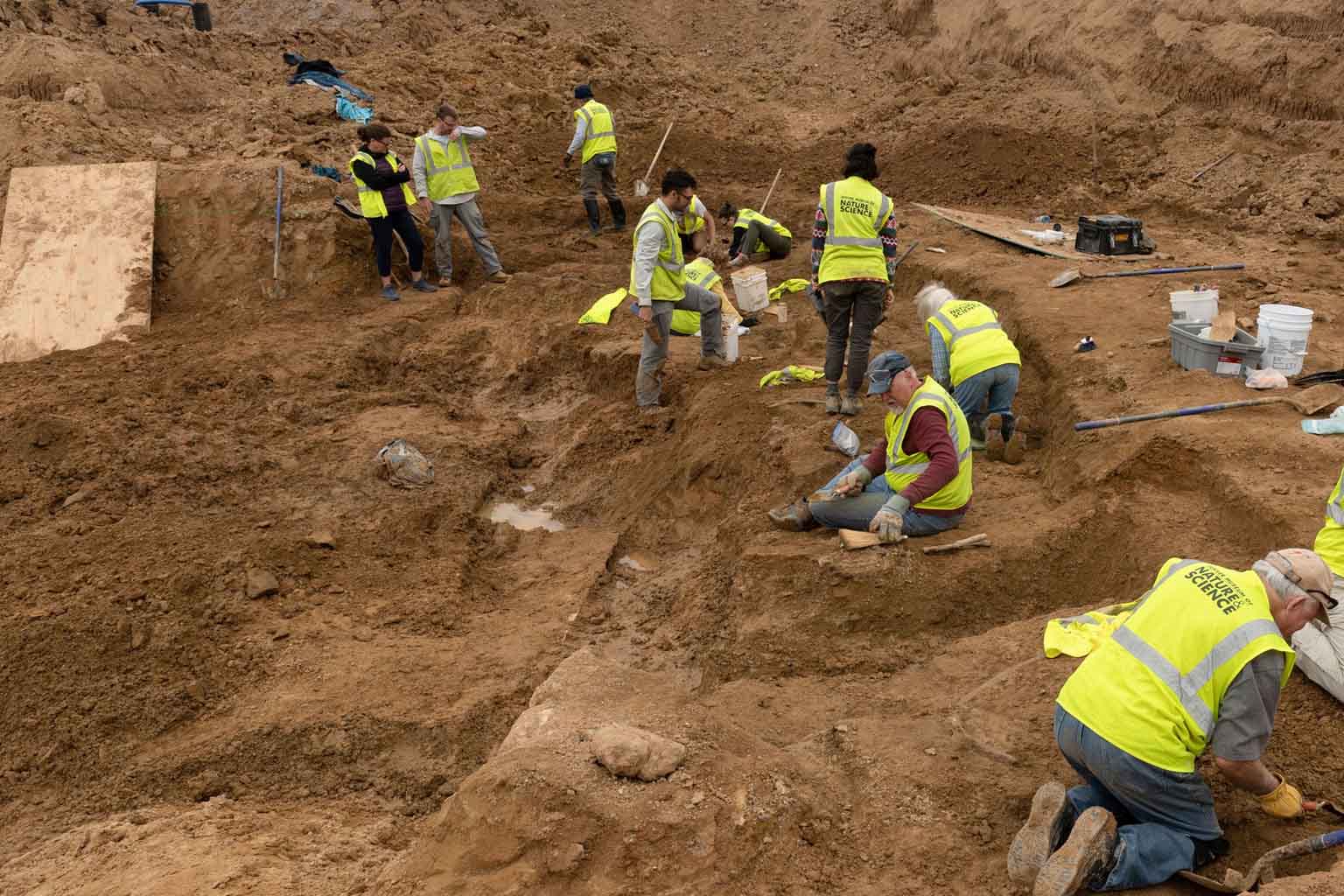
Construction workers unearthed an extraordinary window into the past beneath San Pedro High School—a treasure trove of fossils dating back millions of years. Imagine walking on a regular school ground and knowing that beneath your feet lies an ancient marine ecosystem frozen in time. This remarkable fossil discovery not only enriches our understanding of Southern California’s prehistoric environment but also opens new doors for scientific research and education.
A Hidden World Beneath a School
During routine construction activity at San Pedro High School in California, workers stumbled upon what turns out to be one of the largest depositions of marine fossils ever identified in the Los Angeles and Orange County region. Buried beneath the school is an immense collection of fossils from two distinct geological epochs: the Miocene era, approximately 8.7 million years ago, and a more recent Pleistocene layer from around 120,000 years ago.
The find includes an array of ancient marine life—dolphins, whales, sharks, and countless fish species—embedded in diatomite, a fossilized algae that hints at a nutrient-rich environment. Furthermore, fossils of shore creatures like sandpipers and remnants of driftwood reveal a complex coastal ecosystem long vanished. This diverse fossil bed offers a rare and vivid snapshot of prehistoric marine biodiversity that has long been hidden beneath the school’s foundations.
Decoding the Clues of an Extinct Island
One of the most intriguing aspects of this discovery is the theory proposed by Wayne Bischoff, director of cultural resources at Envicom Corp., who led the excavation. Bischoff believes that these fossils may have originated from a once-existing island off the coast during the Miocene period. The idea is that a powerful storm swept plant and animal debris from this extinct island into a nearby submarine canyon, where it was buried and preserved beneath thick layers of sediment for millions of years.
“This mix of shore and marine material sparked the idea of an extinct island presence offshore,” Bischoff shared. If confirmed, this would not only add a fascinating chapter to Southern California’s geological past but could also suggest prehistoric islands existed where we see open ocean today. Such pioneering hypotheses could reshape how researchers understand ancient coastal landscapes in the Channel Islands region.
From Classroom to Museum: Bringing History to Life
The impact of this discovery isn’t confined to academic circles. With construction finished, about 80% of the fossil blocks have been distributed to major institutions like the Natural History Museum of Los Angeles County, the Cabrillo Marine Aquarium, and even the Los Angeles Unified School District itself. These fossils are no longer just relics; they serve as dynamic educational tools.
Austin Hendy, an assistant curator at the Natural History Museum, has been deeply involved in sorting through thousands of fossilized shells and vertebrae. Hendy envisions partnering with San Pedro High School students to create displays showcasing these treasures, giving the community a chance to directly connect with their ancient natural heritage. This hands-on approach not only fuels curiosity but also nourishes the next generation of scientists, paleontologists, and environmentalists.
Unlocking Earth’s Ancient Secrets Through Fossils
Why does this matter to scientists and everyday people alike? Because fossils like those found here are far more than old bones. They serve as critical evidence that helps reconstruct Earth’s past climates, ecosystems, and geological forces that shaped the world we live in today. Richard Behl, a geologist at Long Beach State University, likens the work to detective work, piecing together ecological stories from millions of years ago.
According to a 2023 study published by the Society of Vertebrate Paleontology, fossil finds from coastal deposits like these are essential for understanding evolutionary transitions in marine mammals and changing ocean environments over time (Society of Vertebrate Paleontology report). The San Pedro fossils could therefore add invaluable data, refining how we view shifts in marine biodiversity and climate fluctuations through the Miocene and Pleistocene epochs.
This find demonstrates that new discoveries can literally be found in places we never expect—even right beneath a public high school. The slow erosion of these fossil blocks suggests that many more secrets are waiting to emerge over time. For a region as culturally and historically rich as Southern California, these fossils add a vibrant dimension of deep time amid the bustling modern landscape.
If you were walking on this school’s grounds, would you pause and wonder about the ancient oceans that once touched this spot? What other stories lie hidden beneath our feet? Share your thoughts below—let’s keep the conversation about our planet’s incredible past alive!