


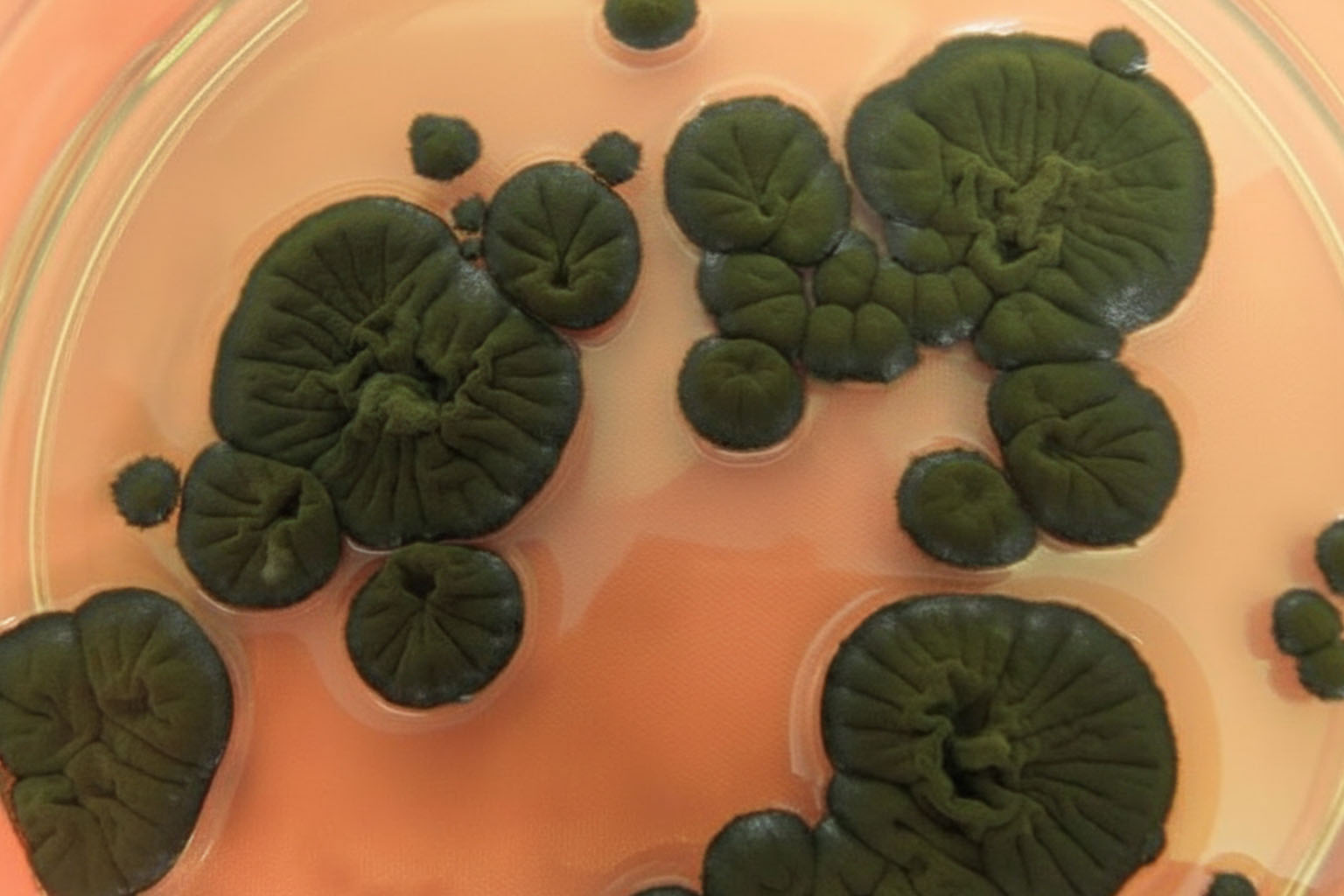
Have you ever stumbled upon a story so unbelievable that it shakes how you view life as we know it? That’s precisely the tale behind a peculiar black fungus thriving in the Chernobyl Exclusion Zone, right where many might think life would be impossible. Nearly four decades have passed since the fateful reactor explosion, and while humans are still largely barred from venturing into the heart of the disaster, life—especially the fungal type—has quietly crept back in. Beyond mere survival, it appears this fungus has turned a deadly threat into an unlikely ally.
Let’s unravel the curious case of Cladosporium sphaerospermum, a mushroom that, against all odds, seems to embrace and possibly even feed off radiation.
Discovery in the Danger Zone
Back in the late 1990s, a team of Ukrainian scientists embarked on a quest to explore which forms of life still clung to existence in the shadow of Chernobyl’s wreckage. Expecting perhaps a handful of resilient organisms, they documented no less than 37 distinct species of fungi trespassing within the most contaminated structures.
One species, Cladosporium sphaerospermum, stood out remarkably. Not only was it flourishing, but it also appeared to dominate, boldly anchoring itself to the reactor’s very walls, seemingly unfazed by radiation levels that would incapacitate most life forms.
What adds a wrinkle of intrigue is the observation that most of these fungi bore a dark hue, loaded with melanin—the same pigment that lends color to human skin and serves as a shield against UV rays. In fungi, though, melanin might be executing an even more astonishing function. According to a NASA study, these fungi’s adaptations could extend beyond mere survival.
The Melanin Mystery
Melanin is no stranger to biology. In people, it acts as a sunscreen, absorbing harmful UV rays. But within the fungi under Chernobyl’s specter, scientists speculate it could serve a more intriguing role.
The prevailing theory suggests that the melanin in C. sphaerospermum might be absorbing ionizing radiation much like chlorophyll in plants absorbs sunlight during photosynthesis. They’ve coined a new term for this—”radiosynthesis.” Imagine photosynthesis but fueled by radiation instead of light. This isn’t just theoretical musings; it’s backed by lab findings where the fungus not only tolerated but seemed to thrive when exposed to ionizing radiation. This goes beyond mere endurance—this hints at a potential appetite.
The Radiation Reality
Ionizing radiation? Nasty stuff, for sure. It tears apart DNA, damages cells, and in high doses, it’s lethal. Even though it’s famously robust enough to eradicate cancer cells, it’s just as hostile to healthy human tissue.
So, what are we to make of this fungus not only weathered in such an inhospitable realm but possibly exploiting it? When researchers beamed ionizing radiation at C. sphaerospermum, they noted changes in the behavior of melanin that mimicked energy-harvesting, sparking intrigue about “radiosynthesis”.
Could this fungus be adorned with a high-tech, radiation-resistant cape that also converts it for sustenance? A possibility… one that might redefine our understanding of radiation interaction with life.
The Unsolved Expanse of Space
Even though the signs are intriguing, radiosynthesis remains an unproven frontier of thought. Scientists have yet to demonstrate that the fungus converts radiation into usable energy akin to how plants transform light into sugars. The expected carbon fixation in plants, the process that converts carbon dioxide into glucose, hasn’t been naturally observed here. Yet, the behavior of C. sphaerospermum suggests something both peculiar and profound is underway.
Could it be feasting on radiation, or is it simply deftly deflecting it?
In 2022, scientists took an audacious leap by sending C. sphaerospermum to the ultimate place where radiation reigns—the cosmos. A sample of the fungus was dispatched to the International Space Station, tethered to its hull, exposed to cosmic radiation. The result? Less radiation pierced this fungal shield than a simple control. Is this serendipitous fungi as resilient as stainless steel? Just think—fungal walls might one day serve as protective radiation shields for future astronauts, a thought once unthinkable, but now seriously pondered.
Comparisons: A World of Fungal Curiosities
This fungal radiance isn’t exclusive to one species. Another fungus, Wangiella dermatitidis, also grows more robustly under radiation’s glow. And then there’s Cladosporium cladosporioides, which doesn’t grow faster but ramps up its melanin production when caressed by radiation.
Here’s a snapshot comparison:
– Fungus: C. sphaerospermum
– Radiation Growth Response: Enhanced
– Melanin Production: High
– Fungus: Wangiella dermatitidis
– Radiation Growth Response: Enhanced
– Melanin Production: Moderate
– Fungus: C. cladosporioides
– Radiation Growth Response: None
– Melanin Production: Enhanced
Clearly, not every fungus hails radiation as a feast. C. sphaerospermum’s unique take on radiation stands out in a world brimming with radiation-resilient fungi. It’s a trait less ubiquitous, more bespoke.
A New Understanding of Survival
So, what’s the big takeaway? While the complete puzzle is still unsolved, C. sphaerospermum might just be playing a game that defies conventional rules—a game where radiation either fuels it or further fortifies it.
In any case, it’s a wondrous reminder of life’s relentless adaptability. Right in the heart of nuclear desolation, Cladosporium sphaerospermum isn’t just surviving… it’s potentially rewriting the script own on one of Earth’s most perilous forces.
Could this mushroom, which challenges our very notions of life itself, hold insights for how we might one day thrive in more hazardous realms, perhaps even beyond our own planet?
To discover more about such fascinating instances of life stretching the limits, dive deeper into the world of ecology and mycology. Should you have thoughts or newfound insights, feel free to join the conversation. Every insight matters!