


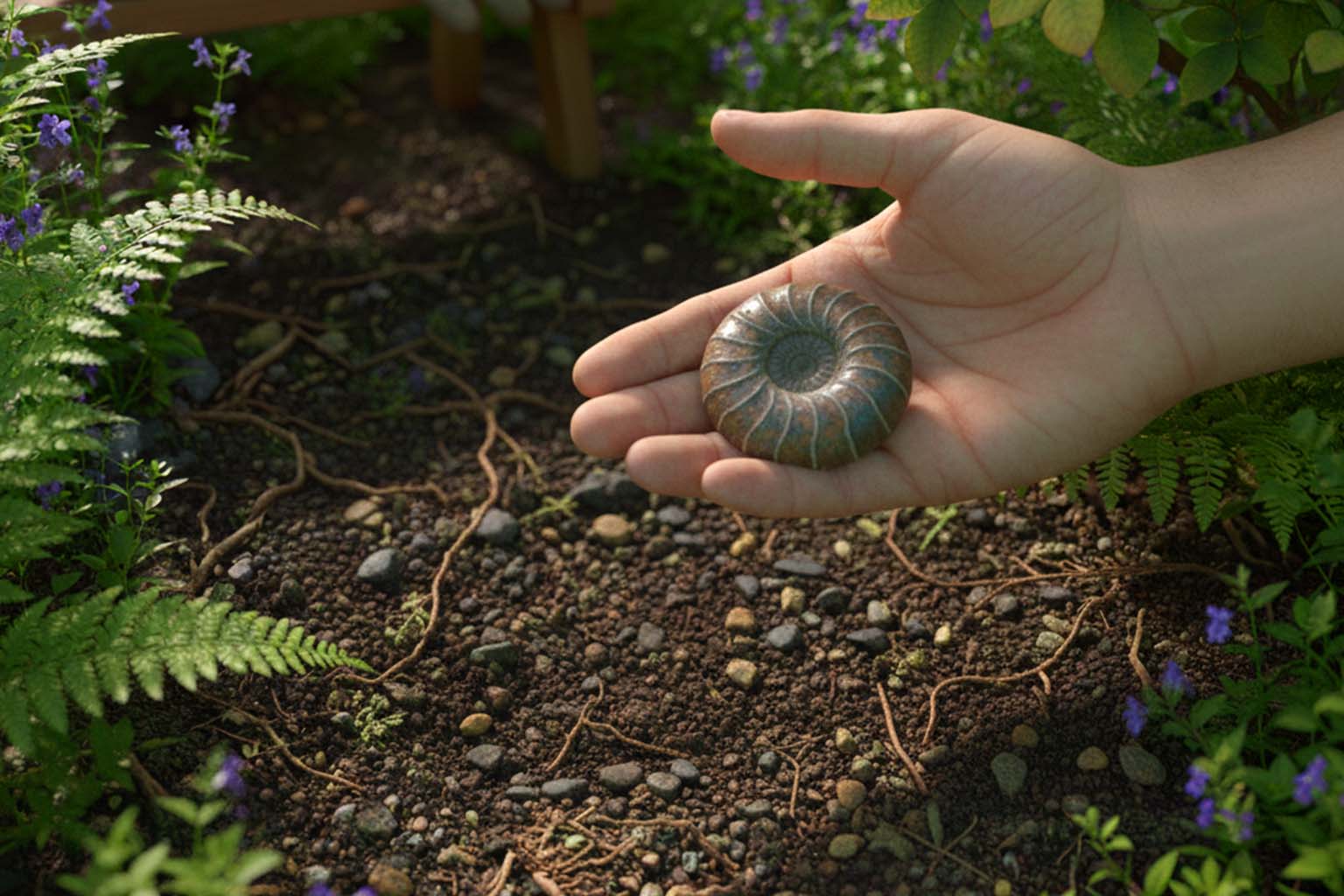
A seven-year-old boy’s backyard turned into a portal to the Jurassic era after he uncovered fossils dating back 140 million years. Imagine digging around your garden one afternoon and stumbling on ancient creatures that lived when dinosaurs roamed the Earth. That’s exactly what happened to Elliott, a young fossil enthusiast from Derbyshire, whose discovery has not only thrilled his family but also drawn the attention of scientists.
Unearthing Jurassic Treasures in an Everyday Garden
While helping with some gardening in his front yard, Elliott’s curiosity led him to break open limestone rocks, revealing a surprising sight: perfectly preserved ammonites, those iconic spiral-shelled marine creatures from the Jurassic period. These fossils offer a rare window into prehistoric marine ecosystems, alive around 140 to 180 million years ago.
Elliott’s excitement is infectious. “I love fossils. It made me really happy we just found it,” he shared, eyes gleaming with pride. His mother, Gemma, laughs at the unexpected garden disruption but acknowledges, “It’s very exciting what he’s finding.” What started as ordinary yard work evolved into a journey back in time, highlighting how even a simple backyard can hold extraordinary secrets.
How Did Jurassic Fossils End Up Here?
One might wonder: how did fossils typically found in coastal regions arrive in a Derbyshire garden? According to Dr. Susannah Lydon, a respected palaeontologist at the University of Nottingham, these ammonites likely didn’t originate locally. Instead, they were probably transported from places like Dorset, known for rich Jurassic fossil beds, by collectors or during construction activities.
Dr. Lydon explains, “Matlock lies on rocks formed from an ancient reef with its own fossils, but these ammonites were probably moved here.” This transportation of fossils isn’t unusual, reflecting how human activity can redistribute geological treasures far from their original sites. This story adds a fascinating twist to Elliott’s find, emphasizing how fossils can tell stories not just of ancient life but also of modern human influence on the landscape.
The Excitement of Fossil Hunting for Everyone
Elliott’s discovery underscores a bigger point: fossil hunting doesn’t require expertise or fancy tools, just curiosity and a bit of patience. Dr. Lydon encourages beginners, “The joy of fossil hunting is finding something that nothing else has laid eyes on for millions of years.” Her words remind us that fossil hunting connects us intimately with Earth’s deep past and can be accessible to anyone willing to explore.
For those interested in starting out, she recommends guided fossil walks, especially after storms that expose new rocks, as the best way to learn where fossils hide. Elliott’s story, as reported by the BBC, offers inspiration for budding paleontologists and everyday explorers alike, reinforcing that discovery is a universal adventure.
Inspiring a Young Paleontologist’s Dream
For Elliott, who already dreams of becoming a palaeontologist, this backyard discovery is more than just a lucky find — it’s a spark lighting the path to a future in science. It’s a reminder that the past is never as far away as it seems; sometimes it’s just under our feet, waiting to be uncovered.
This remarkable tale encourages us all to look more closely at the world around us. Who knows what wonders might be hiding in your own garden? Sharing stories like Elliott’s not only celebrates youthful curiosity but also educates and connects readers with the fascinating field of paleontology.
“The joy of fossil hunting is finding something nothing else has seen for millions of years,” says Dr. Susannah Lydon, University of Nottingham.
According to a BBC report, Elliott’s fossils have captivated both local communities and scientific experts. These finds enrich our understanding of prehistoric marine life and the dynamic geological history of the UK.
If you’ve ever uncovered something surprising in your own backyard or are itching to start fossil hunting, why not share your stories or questions below? Let’s celebrate the thrill of discovery together and inspire the next generation of explorers.