


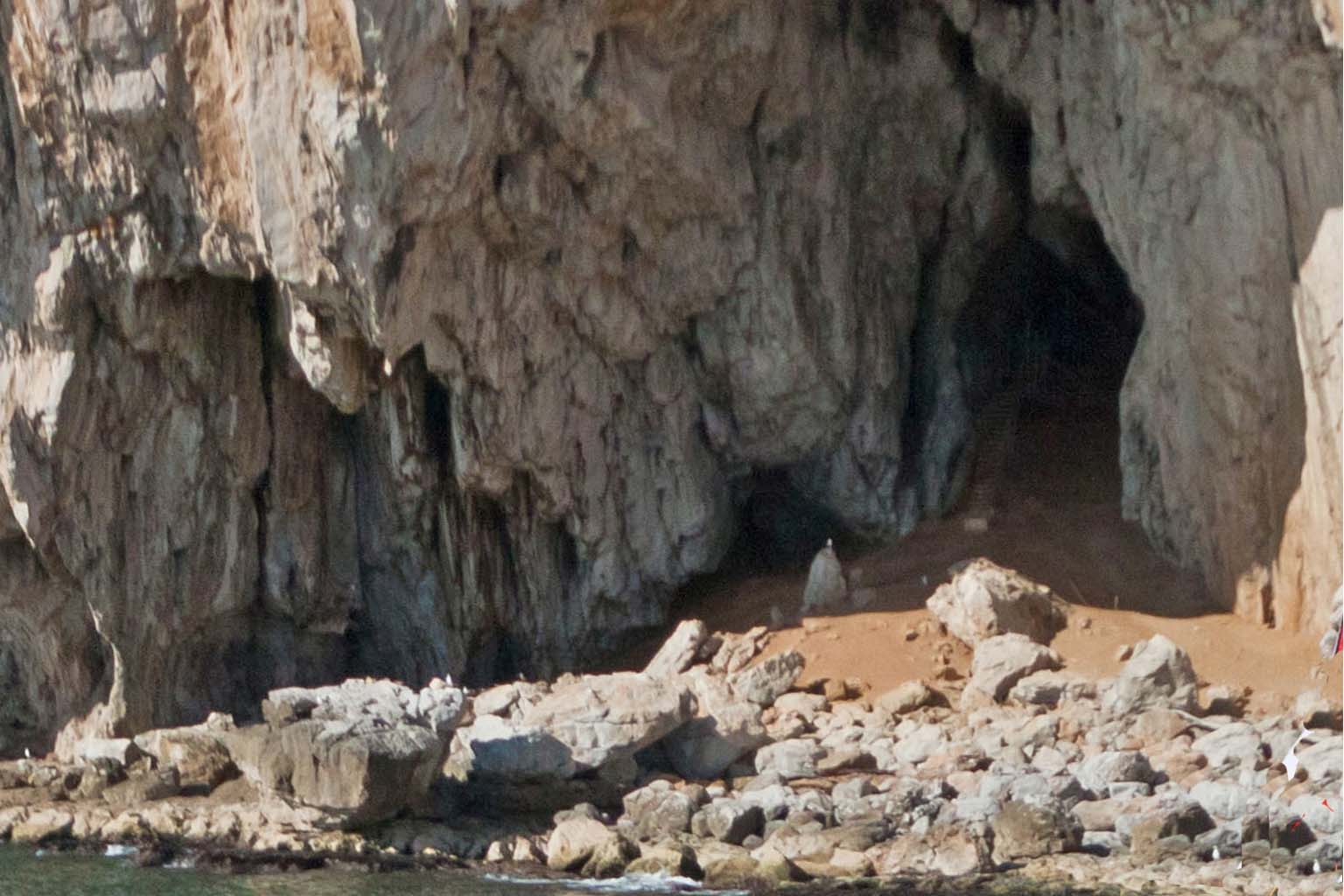
Deep beneath the Rock of Gibraltar, archaeologists have uncovered something extraordinary. A hidden chamber in Vanguard Cave, sealed by sand and sediment for approximately 40,000 years, has revealed its secrets to modern science. What emerged from this ancient time capsule challenges our understanding of Neanderthal intelligence and their final chapters on Earth.
The discovery represents far more than another archaeological find. It offers a direct window into the daily lives of Europe’s last Neanderthal populations, preserved in conditions so pristine that researchers can examine their choices, their diet, and their survival strategies with unprecedented clarity. The timing alone makes this chamber remarkable – sealed at the precise moment when these ancient humans faced their greatest existential challenge. Rather than complete extinction, recent research suggests that Neanderthals weren’t wiped out but live on in modern human DNA, fundamentally changing our understanding of their fate.
The Last Sanctuary of an Ancient Species
When researchers from the Gibraltar National Museum breached the sealed chamber, they entered what effectively serves as a Neanderthal time capsule. The 40,000-year-old sand barrier that protected this space coincides almost exactly with the period traditionally associated with Neanderthal extinction across most of Europe.
The chamber’s contents paint a picture of resourceful survivors. Among the carefully preserved remains, scientists found evidence of sophisticated food procurement strategies. A large whelk shell, transported considerable distances from the Mediterranean waters, demonstrates that these Neanderthals maintained complex supply chains even during their most challenging period. This discovery echoes findings from other archaeological sites, such as the hidden chamber in Mexican cave where similar evidence of ancient resource management has been uncovered.
The diversity of animal remains tells an equally compelling story. Lynx, hyenas, and vultures – species that represent different hunting and scavenging opportunities – suggest that the cave’s occupants had developed nuanced relationships with their ecosystem. This wasn’t random accumulation but deliberate selection and transport of resources.
Intelligence Written in Stone and Bone
The sealed chamber adds crucial context to previous discoveries throughout the Gorham’s Cave complex. The cross-hatched markings found on cave floors, once dismissed as coincidental scratches, now appear within a broader framework of Neanderthal cognitive sophistication.
Tool evidence from the chamber reinforces this picture of advanced thinking. Stone implements designed for specific butchering and processing tasks reveal planning that extended beyond immediate needs. The presence of birch tar – a complex substance requiring multi-step production processes – demonstrates knowledge transmission across generations. Research from the University of Colorado Boulder supports these findings, challenging long-held assumptions about Neanderthal capabilities.
“The past misrepresentation of Neanderthals’ cognitive ability may be linked to the tendency of researchers to compare them unfavorably to modern humans” – University of Colorado Boulder study
These findings collectively suggest that Neanderthals possessed what researchers term “executive function” – the ability to plan, organize, and execute complex sequences of actions. Such capabilities require not just individual intelligence but cultural systems for preserving and transmitting knowledge. Like the 5,000-year-old fortification revealed by LiDAR, these discoveries demonstrate how ancient peoples developed sophisticated strategies for survival and defense.
Rewriting the Timeline of Human Transition
The Gibraltar discoveries force reconsideration of Neanderthal extinction narratives. Rather than a sudden replacement by modern humans, the evidence suggests a more gradual transition with significant temporal and geographical variations.
Recent studies indicate that some Neanderthal populations may have persisted in isolated refuges like Gibraltar until 24,000 years ago – nearly 15,000 years longer than previously established. This extended timeline creates new possibilities for interaction, competition, and cultural exchange between Neanderthals and early modern humans.
The implications extend beyond academic interest. Understanding how two human species coexisted, competed, and potentially collaborated offers insights into migration patterns, technological transfer, and the complex dynamics of human evolution during this crucial period. Studies published in cognitive archaeology research continue to reveal evidence supporting Neanderthal symbolic capacity and advanced cognitive abilities.
“Despite the evidence supporting Neanderthal’s symbolic capacity, cave art remains mainly ascribed to modern humans, highlighting ongoing research challenges” – Cognitive archaeology research
The Environmental Pressures Nobody Discusses
What conventional analyses often overlook is the extraordinary environmental context surrounding these final Neanderthal populations. The period between 45,000 and 35,000 years ago coincided with dramatic climate fluctuations that would have severely tested any human population’s adaptability.
Gibraltar’s unique position as a climatic refuge becomes crucial to understanding Neanderthal survival strategies. While ice sheets expanded across northern Europe, this Mediterranean peninsula maintained relatively stable temperatures and diverse ecosystems. The sealed chamber reveals how Neanderthals exploited this stability, developing localized knowledge systems perfectly adapted to their specific environment.
The psychological pressures facing these populations remain largely unexplored in archaeological discourse. Living as possibly the last members of their species, maintaining cultural practices and knowledge systems that were disappearing elsewhere, would have created unprecedented social and cognitive challenges that traditional archaeological methods struggle to address. Similar complex cultural dynamics have been observed at sites like the Tikal archaeological site, where evidence reveals intricate relationships between competing civilizations.
As researchers continue analyzing material from Vanguard Cave, each artifact adds complexity to our understanding of what it meant to be human 40,000 years ago. The sealed chamber doesn’t just preserve bones and tools – it preserves moments of decision-making, adaptation, and survival that bridge the vast temporal distance between their world and ours. How many other such time capsules remain sealed, waiting to reshape our understanding of humanity’s most crucial transitions?