


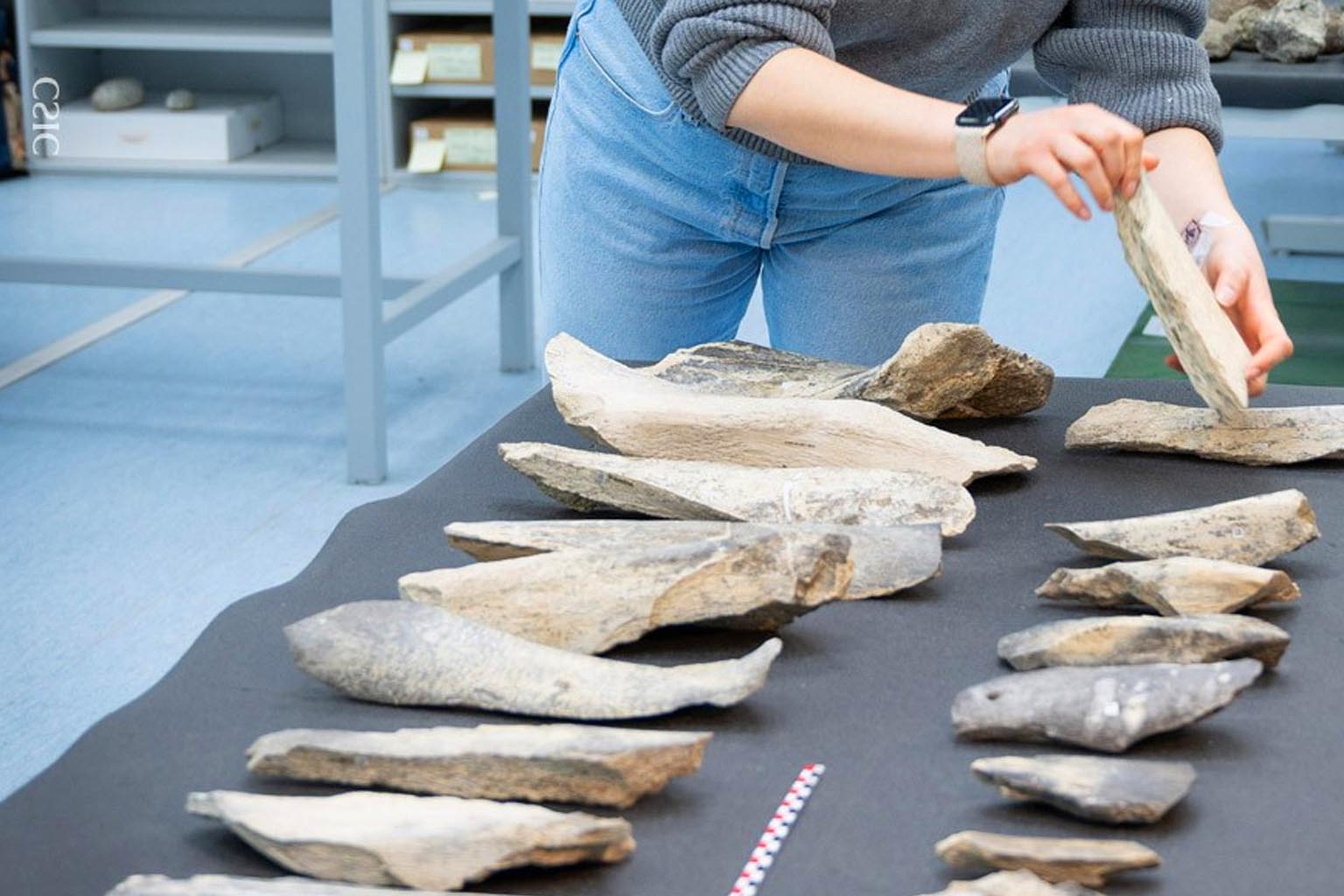
The discovery of 1.5-million-year-old bone tools in Tanzania’s Olduvai Gorge has fundamentally challenged our understanding of early human cognitive development. Until now, archaeologists primarily relied on stone artifacts to trace the evolution of tool-making capabilities, creating a somewhat narrow view of our ancestors’ technical abilities. This latest finding suggests that early hominins possessed far greater material sophistication than previously imagined, demonstrating an ability to adapt stone-working techniques to entirely different materials. Similar to how LiDAR technology has revealed complex strategies in ancient Romanian defenses, modern archaeological methods continue to unveil the sophisticated capabilities of our ancestors.
The implications extend beyond simple tool-making. These ancient craftspeople had to understand the unique properties of bone—its flexibility, durability, and workability—compared to stone. They had to modify their techniques accordingly, suggesting a level of cognitive flexibility that pushes back the timeline of complex human thought by nearly a million years. The discovery forces us to reconsider not just when humans became sophisticated tool users, but how quickly they developed the mental capacity to innovate across different materials.
The Technical Mastery Behind Ancient Bone Working
According to research published in Nature, the 27 bone fragments discovered by researchers from the Spanish National Research Council show clear evidence of intentional knapping—the same technique used to create sharp edges in stone tools. The bones, primarily from hippos and elephants, were carefully selected for their size and durability. Some tools measured up to 15 inches in length, indicating they were designed for heavy-duty processing of large animal carcasses.
“The systematic production of bone tools at 1.5 million years ago demonstrates unprecedented cognitive sophistication in early hominin technology” – Nature research study
What makes this discovery particularly remarkable is the precision required to work with bone compared to stone. While stone fractures predictably along certain planes, bone requires understanding of its fibrous structure, grain direction, and varying density. The fact that these early hominins successfully transferred their stone-working knowledge to bone suggests they possessed advanced spatial reasoning and problem-solving abilities.
The preservation of these tools was itself fortunate. Bone typically decays far more rapidly than stone, which explains why so few examples have survived from this period. These particular specimens were quickly buried in sediment, protecting them from the elements and scavengers that would normally destroy organic materials over such vast timescales. Just as archaeological discoveries in cave environments can preserve materials for centuries, the specific conditions at Olduvai Gorge allowed these ancient tools to survive.
Multiple Species, Shared Intelligence
One of the most intriguing aspects of this discovery is the uncertainty about which hominin species created these tools. During this period, Olduvai Gorge hosted multiple human ancestors, including Homo erectus and Paranthropus boisei. Both species had the physical and potentially cognitive capabilities to craft such implements, challenging long-held assumptions about which lineages possessed advanced tool-making abilities.
This ambiguity actually strengthens the significance of the find. Rather than representing an isolated breakthrough by a single species, the bone tools may indicate that complex cognition was more widespread among early hominins than previously believed. The parallel development of sophisticated tool-making across multiple species suggests that environmental pressures were driving similar evolutionary adaptations in cognitive capacity. This challenges traditional assumptions about gender roles and capabilities in ancient societies, much like how the Hårby Valkyrie discovery has reshaped our understanding of Viking women’s roles.
Research indicates that both species would have encountered similar challenges in processing large animal remains, accessing bone marrow, and preparing materials for various uses. The convergent development of bone-working techniques across different hominin lines points to the fundamental importance of tool innovation in early human survival and success.
Beyond Stone: The Advantages of Bone Technology
The shift from exclusively stone tools to bone implements represents more than just material diversification—it demonstrates strategic resource management. Bone offered several advantages over stone: it was lighter for transport, could be shaped into longer implements, and provided different cutting characteristics suitable for specific tasks like hide scraping or marrow extraction.
The selection of elephant and hippo bones was likely deliberate. These massive animals provided long bones with thick walls, ideal for creating durable tools that could withstand repeated use on tough materials. The choice suggests that early hominins had developed sophisticated understanding of material properties and their applications to different tasks.
Studies suggest that bone tools would have been particularly valuable for food processing activities that stone tools couldn’t accomplish effectively. The flexibility of bone allowed for scraping motions and precision work that rigid stone implements made difficult or impossible.
The Cognitive Revolution Nobody Expected
Most discussions of early human cognitive development focus on brain size increases or the appearance of symbolic behavior. This discovery reveals a different dimension of intelligence evolution—the capacity for cross-material innovation. The ability to recognize that techniques successful with one material could be adapted for another represents abstract thinking that researchers didn’t expect to find this early in the archaeological record.
The implications for understanding early hominin social organization are equally profound. Creating effective bone tools required not just individual skill but likely some form of knowledge transmission between group members. Someone had to first experiment with applying stone-knapping techniques to bone, then successfully teach others the modified approach. This level of planning and construction sophistication mirrors what we see in other ancient civilizations, such as the circular structure discovered on Crete that demonstrates advanced Minoan building techniques.
This suggests that 1.5 million years ago, hominin groups possessed more sophisticated learning and teaching mechanisms than previously recognized. The consistency of tool-making techniques across multiple specimens indicates that these weren’t random experiments but systematic approaches passed down within communities.
These ancient bone tools remind us that human innovation has deep roots, extending far beyond our own species into the broader hominin family tree. They suggest that the drive to experiment, adapt, and improve upon existing technologies may be one of the most fundamental characteristics that separate our lineage from other primates. The question now becomes: what other sophisticated behaviors were our early ancestors practicing that have left no trace in the archaeological record?