


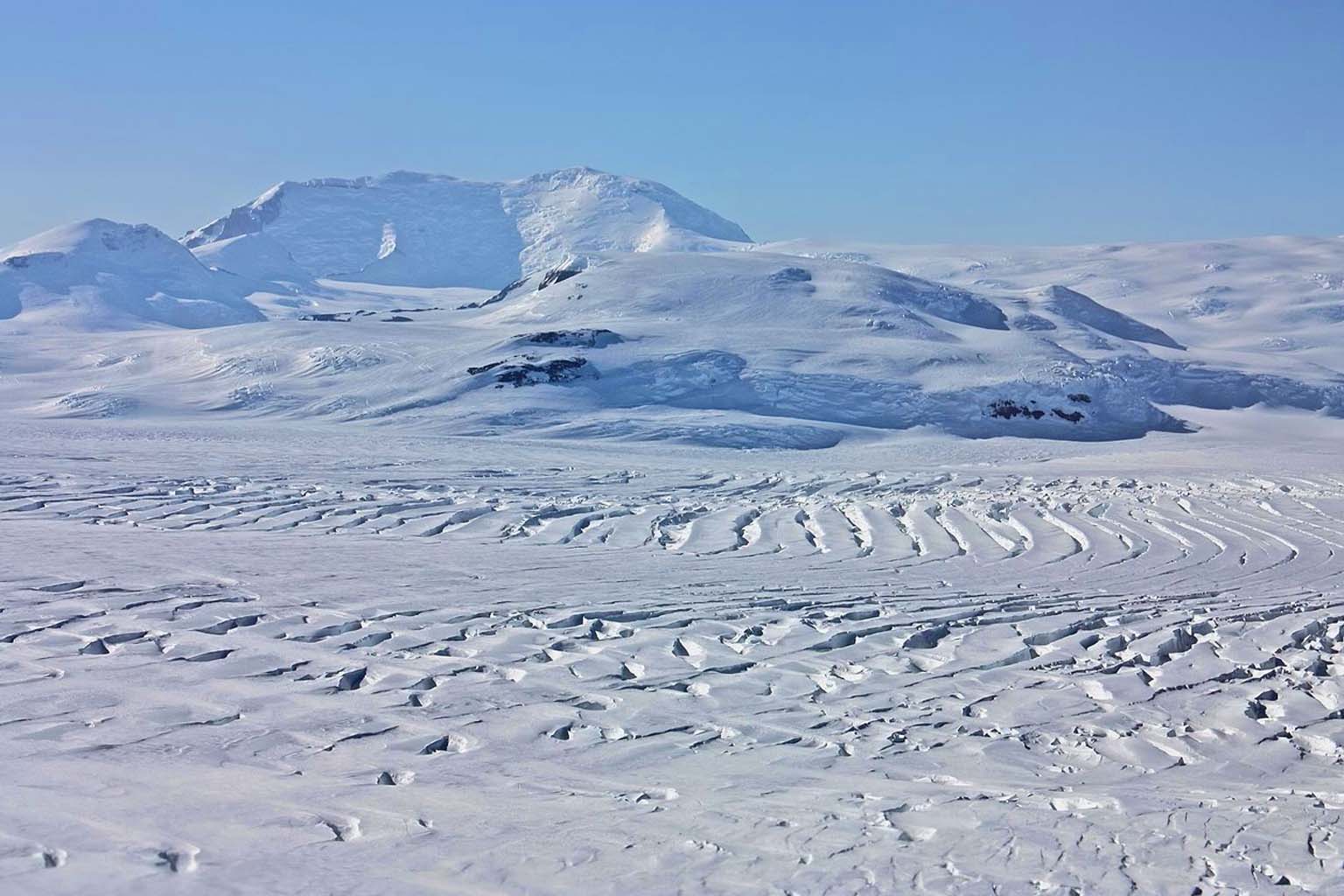
Antarctica’s frozen landscape conceals one of Earth’s most extraordinary secrets. Deep beneath miles of ice lies Lake Vostok, a pristine aquatic world that has remained completely isolated for an estimated 15 to 20 million years. This subglacial lake represents more than just a geographical curiosity – it’s a living laboratory where life has evolved under conditions so extreme they mirror what we might expect to find on distant worlds.
The lake’s discovery fundamentally changed our understanding of life’s resilience. When satellite radar technology first revealed its existence in 1993, scientists realized they had found an environment that challenges everything we thought we knew about the limits of biological survival. Similar to how LiDAR technology has revolutionized archaeological discoveries by revealing hidden structures, advanced radar systems unveiled this hidden aquatic world. The 2012 breakthrough, when researchers finally penetrated through more than two miles of ice to reach the lake’s waters, opened a window into an ecosystem that predates human evolution by millions of years.
What makes Lake Vostok truly remarkable isn’t just its age or isolation – it’s the implications of what thrives there. In a world without sunlight, where traditional food chains cannot exist, life has found ways to persist that could reshape our search for extraterrestrial organisms.
An Ecosystem Born from Isolation
Lake Vostok exists in conditions that would seem impossible for life. The water temperature hovers around 27°F (-3°C), remaining liquid only because of the immense pressure from the overlying ice sheet. Without access to sunlight for photosynthesis, organisms in this environment have had to develop entirely different survival strategies.
Research indicates that the lake’s inhabitants rely on chemosynthesis – a process where microorganisms derive energy from chemical reactions involving minerals and compounds in the surrounding bedrock. This process mirrors what scientists observe around deep-sea hydrothermal vents, but Lake Vostok’s organisms have had millions more years to adapt and specialize.
According to research published in PLOS ONE, the lake has been continuously buried by glacial ice for 15 million years, making it one of the most isolated ecosystems on Earth. The 2013 analysis of accretion ice above the lake revealed DNA from over 3,500 different organisms, including bacteria and fungi typically found in marine environments. This discovery suggests the lake once connected to ancient oceans before becoming sealed beneath the growing ice sheet, preserving a snapshot of life from a completely different geological era.
“Lake Vostok represents the largest of nearly 400 subglacial Antarctic lakes, maintaining liquid water beneath kilometers of ice through geothermal heating and pressure dynamics” – Subglacial lake research
The Technical Challenge of Pristine Exploration
Accessing Lake Vostok required solving unprecedented technical challenges. Scientists had to drill through ice while maintaining absolute sterility – any contamination would destroy the scientific value of samples from this pristine environment. The drilling process took years of careful planning, with researchers developing new techniques to prevent introducing surface microorganisms into the lake’s ecosystem.
The pressure dynamics alone presented enormous difficulties. As drilling approached the lake, the pressure differential threatened to either contaminate the water or cause dangerous blowouts. Engineers developed specialized drilling fluids and containment systems that could handle these extreme conditions while preserving the integrity of both the research and the environment.
This technical achievement opened possibilities for exploring other subglacial environments, but it also highlighted how challenging it will be to study similar environments on other planets. The lessons learned from Lake Vostok exploration directly inform mission planning for future robotic missions to Europa and Enceladus, moons that likely harbor similar subglacial oceans.
Climate Archives Frozen in Time
Lake Vostok functions as an extraordinary climate archive, preserving environmental conditions from when Antarctica was much warmer. The lake’s sediments and water chemistry provide direct evidence of atmospheric conditions, temperature ranges, and ecosystem dynamics from millions of years ago.
Studies of the lake’s composition reveal mineral signatures that indicate the region’s geological history. The water contains elevated levels of nitrogen and oxygen, suggesting complex interactions between the lake, the ice, and the underlying bedrock over geological timescales. These chemical signatures help scientists understand how Earth’s climate system operated during periods of dramatic environmental change.
The implications extend beyond historical curiosity. Understanding how life persisted through such dramatic environmental transitions – from surface lake to subglacial isolation – provides insights into how ecosystems might survive future climate disruptions. Just as researchers studying genetic diversity in ancient populations reveal survival strategies during environmental stress, the organisms in Lake Vostok represent evolutionary solutions to environmental challenges that could inform conservation strategies for endangered ecosystems worldwide.
The Astrobiology Connection Few Consider
While most discussions focus on Lake Vostok’s potential as an analog for life on Europa or Enceladus, the deeper astrobiological significance lies in what it reveals about life’s fundamental requirements. The lake’s ecosystem operates on principles that don’t require many conditions scientists previously considered essential for complex life.
The extremophile communities in Lake Vostok have developed metabolic pathways that could function in environments throughout the solar system. Their ability to derive energy from mineral interactions suggests that subsurface oceans on distant worlds might support not just simple microorganisms, but potentially complex ecological networks. Similar to how ancient civilizations like those at Tikal archaeological sites adapted to challenging environments through innovative strategies, these microorganisms have evolved remarkable survival mechanisms.
Research suggests these organisms have maintained genetic diversity despite millions of years of isolation, indicating robust evolutionary mechanisms that could sustain life across astronomical timescales. This has profound implications for understanding how life might persist on planets with unstable surface conditions, where subsurface refuges could harbor continuous biological activity across geological eras. The discovery parallels how ancient ceremonial centers preserved cultural knowledge across millennia, demonstrating life’s remarkable ability to maintain continuity in isolated environments.
The ongoing study of Lake Vostok continues to challenge our assumptions about life’s boundaries and requirements. Each new discovery from this frozen world doesn’t just expand our understanding of Earth’s hidden ecosystems – it reshapes our expectations for finding life in the universe’s most unexpected places. The question isn’t whether similar environments exist elsewhere, but whether we’re prepared to recognize the forms of life they might contain.