


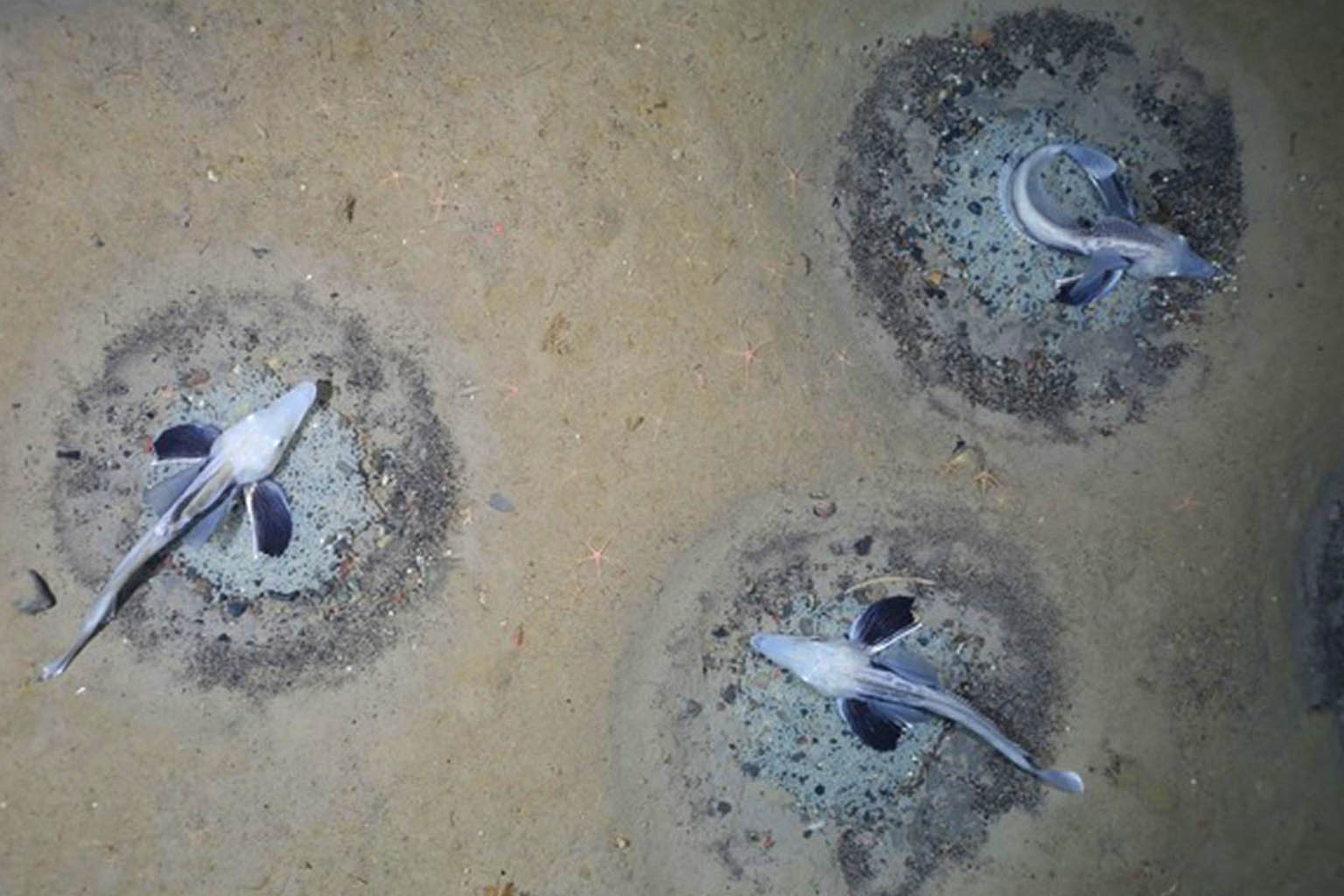
The Antarctic ice sheet has long been considered one of Earth’s most barren frontiers, where life struggles to maintain even the most basic foothold. This perception took a dramatic turn when researchers accidentally stumbled upon one of the most remarkable marine discoveries of recent years. While searching for a century-old shipwreck beneath the frozen waters of the Weddell Sea, scientists discovered thousands of carefully constructed fish nests scattered across the seafloor in geometric patterns that defied everything we thought we knew about Antarctic marine ecosystems. Such unexpected discoveries beneath ice sheets mirror other surprising findings in remote marine ecosystems around the world.
The discovery emerged from an unexpected opportunity. When the massive A68 iceberg broke away from the Larsen C ice shelf in 2017, it exposed a previously inaccessible underwater region spanning 5,800 square kilometers. This natural event created a rare window for scientific exploration in waters that had remained sealed beneath ice for potentially thousands of years.
When Shipwreck Hunting Reveals Hidden Ecosystems
The 2019 Weddell Sea Expedition launched with a specific mission: locate the Endurance, Ernest Shackleton’s ship lost to the ice in 1915. The remotely operated underwater vehicle Lassie was methodically scanning the seafloor when its cameras captured something entirely unexpected. Instead of ship debris, the footage revealed an intricate network of circular depressions carved into the sediment, each one meticulously maintained and actively inhabited.
These weren’t random formations. Research published in Science has shown that the Lindbergichthys nudifrons, small rock fish adapted to extreme cold, had engineered this underwater neighborhood with remarkable precision. Each parent fish excavates, cleans, and guards its nest to protect developing eggs from predators and harsh currents. The scale of the discovery stunned researchers: over a thousand individual nests spread across the seafloor in patterns that suggested complex biological interactions.
“This represents the world’s largest fish breeding colony ever discovered, with an estimated 60 million active nests covering an area larger than Malta” – Marine biology research
The Architecture of Antarctic Fish Communities
The nests themselves display fascinating variety in their organization. Scientists documented six distinct architectural patterns: isolated single nests, tightly packed clusters, crescent-shaped arrangements, and linear formations that stretch across the seafloor like underwater suburbs. This geometric regularity indicates sophisticated territorial behavior and social organization previously unknown in Antarctic fish populations. The precision of these patterns recalls the remarkable spatial organization found in prehistoric cave etchings that reveal ancient understanding of territorial mapping.
Each nest represents weeks of careful excavation work in temperatures that hover near freezing. The fish must continuously defend their territory while maintaining optimal conditions for egg development. Studies published in Current Biology suggest these nesting behaviors evolved as responses to the unique challenges of Antarctic waters, where food sources are scarce and breeding windows are extremely narrow.
The Overlooked Thermal Dynamics
What conventional coverage of this discovery often misses is the remarkable thermal engineering these fish employ. The circular nest design isn’t merely aesthetic – it creates specific microcurrents that regulate temperature and oxygen flow around developing eggs. In an environment where water temperatures rarely rise above zero degrees Celsius, even minute thermal variations can mean the difference between successful reproduction and complete reproductive failure.
The positioning of these nests also reveals sophisticated understanding of underwater topography. Research indicates the fish select locations where geothermal activity from the seafloor provides slightly warmer conditions. This thermal mapping behavior suggests generational knowledge transfer that challenges our assumptions about fish intelligence and social learning in extreme environments. Such strategic positioning demonstrates the same kind of complex strategies seen in ancient human settlements that maximized environmental advantages.
Conservation Implications in a Changing Climate
This discovery arrives at a critical moment for Antarctic conservation policy. The intact ecosystem documented by the expedition meets several criteria for designation as a marine protected area. The delicate balance between ice coverage, plankton distribution, and seafloor communities represents a key link in the Antarctic food chain that extends far beyond these nesting grounds.
Climate change poses immediate threats to this newly discovered ecosystem. As ice shelves continue to retreat and ocean temperatures rise, the precise environmental conditions that enable this nesting behavior may disappear within decades. The geometric organization of these fish communities also makes them particularly vulnerable to disruption – damage to one section could cascade through the entire network. Similar environmental upheaval has been observed with iceberg A23a near South Georgia, demonstrating how rapidly changing ice conditions can impact marine ecosystems.
“The breeding colony’s location beneath former ice shelves suggests these fish may play a crucial role as a food source for marine mammals throughout the Weddell Sea ecosystem” – Antarctic marine research
The accidental nature of this discovery raises profound questions about how much Antarctic marine life remains hidden beneath the ice. If a single expedition searching for a historical shipwreck could uncover an ecosystem of this complexity, what other biological treasures lie waiting in the planet’s most remote waters? The geometric precision of these fish communities suggests evolutionary adaptations refined over millennia, reminding us that life finds ways to flourish even in Earth’s most seemingly impossible places.