


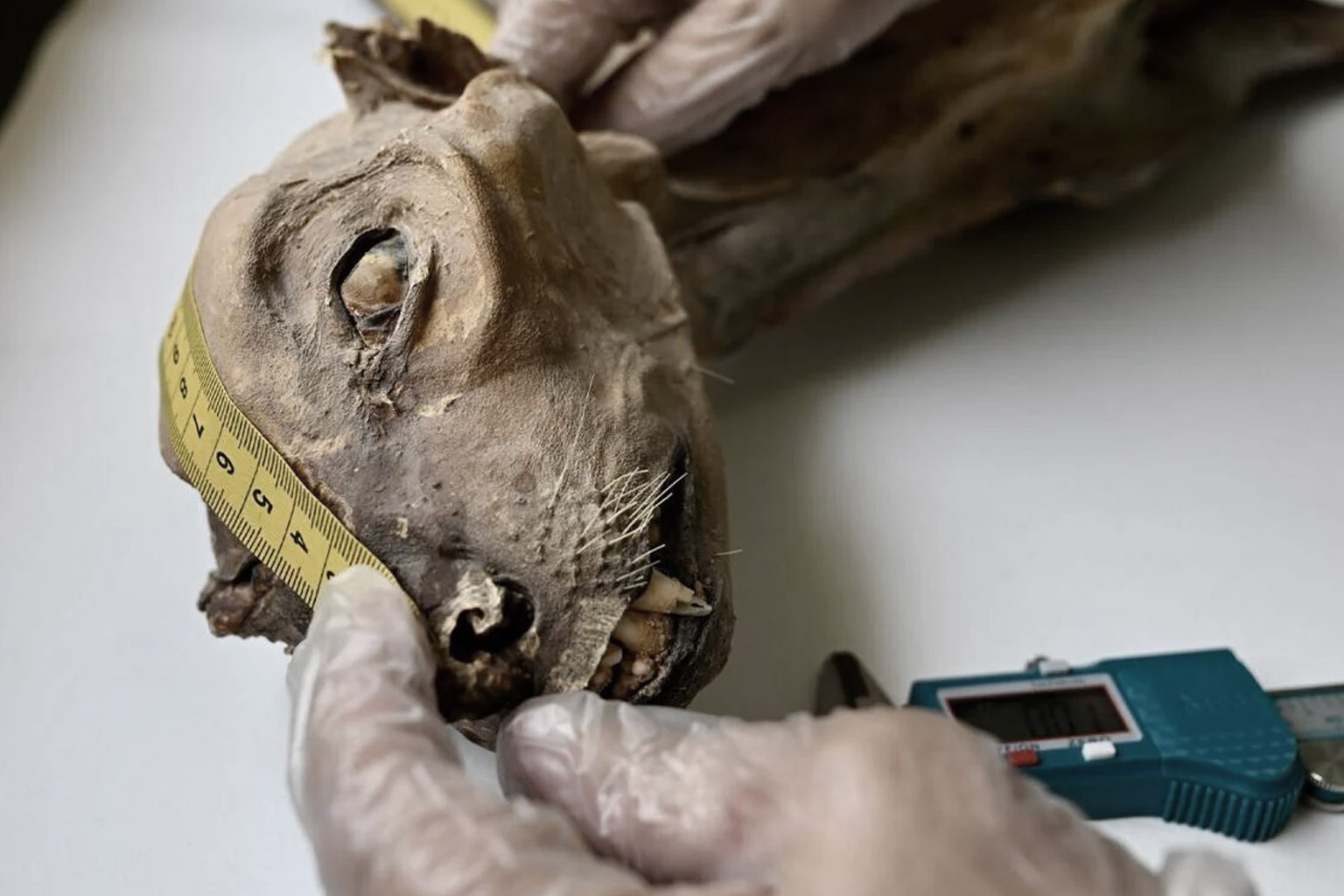
The discovery of seven naturally mummified cheetahs in a Saudi Arabian cave system represents far more than an archaeological curiosity. These ancient predators, preserved for up to 4,200 years in the stable conditions of the Lauga cave network, challenge everything we thought we knew about cheetah distribution and survival in one of Earth’s most unforgiving environments.
What makes this finding particularly striking is the temporal span it reveals. The specimens range from 127 to over 4,000 years old, suggesting that cheetahs maintained a continuous presence in the Arabian Peninsula across millennia. This wasn’t a brief evolutionary experiment or a marginal population clinging to survival – it was a thriving ecosystem where these big cats played a central role for thousands of years. Unlike the sharp genetic bottleneck that led to Neanderthal extinction, these cheetah populations maintained genetic diversity across millennia.
The implications extend far beyond paleontology. With fewer than 70 Asiatic cheetahs remaining in Iran and the species facing imminent extinction, these mummified remains offer something conservation biology desperately needs: a roadmap back to viable populations in landscapes where cheetahs once flourished.
Two Ancient Lineages Emerge From The Desert
Advanced genomic analysis of the mummified remains revealed something unexpected: two distinct cheetah lineages had coexisted in this region. One group showed genetic ties to modern Asiatic cheetahs, while another connected to Northwest African populations. This genetic diversity demonstrates that Saudi Arabia once functioned as a biological crossroads, facilitating gene flow between African and Asian cheetah populations.
The cave’s unique preservation conditions – constant temperature and low humidity – created a natural laboratory where researchers could extract viable DNA from specimens spanning millennia. Research published in Nature Communications indicates that the stable environment effectively froze these animals in time, maintaining genetic material that would normally degrade within decades in surface conditions.
“The functioning of natural cave environments in semi-arid regions creates exceptional preservation conditions that can maintain organic material for millennia” – Nature Communications research
This genetic evidence fundamentally reshapes our understanding of cheetah evolutionary history. Rather than viewing the Arabian Peninsula as peripheral habitat, scientists now recognize it as a critical corridor that maintained genetic connectivity across vast distances. The discovery suggests that historical cheetah populations were far more genetically robust than their modern descendants.
The Ecosystem They Left Behind
The radiocarbon dating tells a story of remarkable ecological persistence. These cheetahs survived dramatic climate shifts, from periods of increased rainfall to the harsh aridification that characterizes the region today. Their continuous presence over four millennia indicates that Arabian desert ecosystems once supported a complex predator-prey network that has since collapsed.
Evidence suggests that the northern Saudi landscape provided sufficient prey density to sustain multiple cheetah lineages simultaneously. This challenges conventional wisdom about carrying capacity in arid environments and raises questions about what ecological factors ultimately led to their regional extinction in the late 20th century. Similar to how 20,000-year-old cave etchings in France reveal complex prehistoric landscapes, these cave systems preserve evidence of rich ecosystems that once thrived in now-barren regions.
The cave system itself provides clues about cheetah behavior and habitat use. The accumulation of remains suggests these sites served as natural shelters or denning areas, offering refuge from extreme temperatures. Studies on cave site formation processes show that the preservation of 61 individual cheetah remains in a single location indicates this was prime habitat rather than marginal survival territory.
Conservation Genetics Meets Ancient DNA
Modern conservation efforts face a critical challenge: genetic bottlenecks have severely reduced diversity in surviving cheetah populations. The Iranian Asiatic cheetah population, numbering fewer than 70 individuals, suffers from inbreeding depression and limited adaptive potential. The Saudi specimens offer a potential solution through genetic rescue strategies.
Studies have shown that ancient DNA can inform breeding programs and population management by revealing historical levels of genetic diversity. The Saudi cheetahs carried genetic variants that may have been lost in modern populations, potentially providing blueprints for enhancing current conservation efforts. Just as archaeological discoveries at Tikal reveal complex cultural interactions across ancient Mesoamerica, these genetic findings illuminate the interconnected nature of historical cheetah populations.
The two distinct lineages found in Saudi Arabia represent evolutionary solutions to desert survival that took thousands of years to develop. This genetic legacy could prove invaluable as conservationists work to establish new populations or strengthen existing ones through assisted gene flow techniques.
The Ecological Engineering Challenge
Rewilding efforts face a fundamental question: can modern landscapes support species that thrived there historically? The Saudi cheetah discovery provides compelling evidence that the answer is yes, but with important caveats. The ecosystem that supported these predators included prey species, vegetation communities, and water sources that may no longer exist at sufficient scales.
Research demonstrates that successful cheetah reintroduction requires careful attention to prey density, human-wildlife conflict mitigation, and habitat connectivity. The historical presence of multiple lineages suggests that northern Saudi Arabia once provided all these elements, but restoration would require significant ecological engineering.
Current rewilding initiatives in other regions show mixed results, with success often depending on local support, adequate funding, and long-term commitment. The genetic roadmap provided by the mummified specimens offers scientific backing for such efforts, but implementation remains complex and politically challenging.
The Rarely Discussed Archaeological Implications
This discovery reveals something often overlooked in conservation discussions: the deep time perspective necessary for understanding species resilience and ecosystem function. The 4,000-year timeline of cheetah presence coincides with significant human cultural developments in the Arabian Peninsula, including the rise of pastoral societies and early urbanization.
Archaeological evidence from the region suggests that human-cheetah coexistence was possible for millennia, only breaking down in recent decades as development intensified and traditional land management practices disappeared. This historical context challenges assumptions about inevitable conflict between large predators and human activities. The power of ancient DNA research in revealing past civilizations extends beyond human societies to illuminate the complex relationships between species and their environments.
The cave preservation also raises questions about how many similar discoveries remain hidden in arid environments worldwide. The specific conditions that enabled natural mummification may exist in other cave systems, potentially harboring additional insights into species that vanished before adequate documentation of their ecological roles and genetic diversity.
As conservation biology grapples with unprecedented extinction rates and climate change impacts, these ancient cheetahs remind us that successful species often had far broader distributions and greater genetic diversity than current populations suggest. The challenge lies in translating these historical insights into actionable conservation strategies that can operate within the constraints of modern landscapes and political realities.