


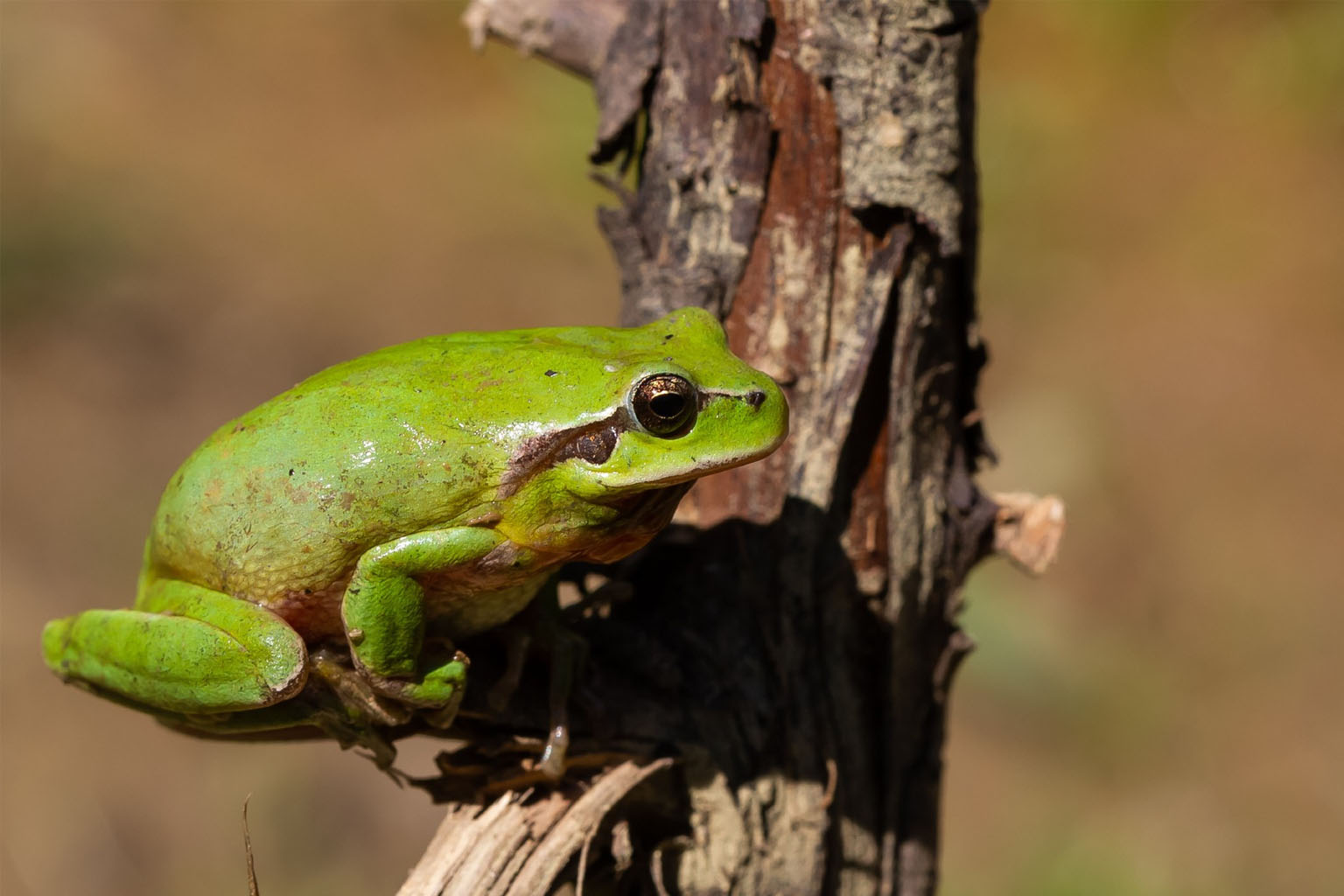
Ancient frog fossil shatters timeline of Australia’s tree frog evolution
Imagine rewinding the clock 55 million years—long before modern Australia took shape—when a tiny frog hopped through lush forest corridors connecting ancient continents. Today, this long-lost creature, Litoria tylerantiqua, emerges from the fossil record to rewrite the evolutionary story of Australian tree frogs and challenge previous timelines that scientists accepted for decades.
This remarkable find reveals that tree frog evolution in Australia began at least 22 million years earlier than believed, reshaping our understanding of how these amphibians adapted and dispersed across the ancient supercontinent Gondwana. Dr. Roy Farman, lead researcher and paleontologist at UNSW Sydney, describes this discovery as a transformative moment for herpetology and evolutionary biology.
Pushing back the divergence of Australian and South American frogs
Until now, scientists thought that Australian and South American tree frogs diverged about 33 million years ago, long after the continents began drifting apart. This theory was based largely on molecular clock analyses estimating genetic differences over time. However, Dr. Farman’s team uncovered fossil evidence at Murgon in southeastern Queensland that dramatically predates this estimate.
The newly described species, Litoria tylerantiqua, is dated to 55 million years ago—placing it in the early Paleogene period when Australia, Antarctica, and South America still shared land connections. This warm, forested corridor provided a vital pathway for survival and dispersal, allowing frogs to thrive and diversify.
The implications are profound: the split between these tree frog groups likely began at least 22 million years earlier than molecular data alone suggested. As Dr. Farman explains, “Fossil evidence is crucial for calibrating molecular clocks and offering more accurate timelines for evolutionary divergence.”
For further insights, see the full SciTechDaily article exploring the significance of this discovery: Ancient tree frog fossil shakes up Australian frog history.
3D imaging reveals hidden clues in ancient frog bones
What sets this study apart is its innovative use of technology to peer inside fragile fossils without damaging them. The research team applied high-resolution CT scans and three-dimensional geometric morphometrics to examine delicate pelvic bones, called ilia, embedded within fossil specimens.
Typically, these bones are concealed in living frogs, making it difficult to study comparative anatomy. But by digitally reconstructing the fossils’ 3D structure, scientists could compare bone shapes with those of modern tree frogs, confirming close evolutionary ties to Australian pelodryadid frogs rather than their South American cousins.
Dr. Farman remarks, “These advanced imaging methods allowed us to unlock diagnostic features critical for identifying and classifying the species.” This approach represents a leap forward in paleontology, allowing subtle anatomical details to inform evolutionary relationships more accurately.
Frogs: resilient survivors through mass extinctions and climate shifts
Frogs have proven to be resilient survivors, weathering multiple mass extinction events over the last 250 million years—including the catastrophic impact 66 million years ago that wiped out non-avian dinosaurs. This newest fossil evidence deepens our understanding of how ancient frogs adapted to shifting environments and survived global upheavals.
Dr. Farman highlights the conservation relevance: “Despite their vulnerability, frogs’ history shows remarkable adaptability. Studying fossils like Litoria tylerantiqua can illuminate how amphibians overcame past challenges—information that might guide efforts to protect species now threatened by climate change and diseases such as chytrid fungus.”
According to a comprehensive IUCN report, amphibians today face the highest extinction risk among vertebrates worldwide. Fossil research could thus provide critical clues to shaping future conservation strategies.
A tribute to Michael Tyler and respect for traditional land custodians
The species name tylerantiqua honors Michael Tyler, a pioneering Australian herpetologist renowned for his foundational research on frogs and amphibian fossils. His legacy lives on through discoveries like this that continue to expand our knowledge of Australia’s unique fauna.
Notably, this fossil was found on the traditional lands of the Waka Waka people near Murgon, Queensland. Acknowledging the cultural significance of the area and its traditional custodians underlines the importance of integrating scientific advances with respect for Indigenous heritage.
This discovery fundamentally alters our picture of Australia’s evolutionary past and highlights the power of merging modern technology with deep scientific expertise. The journey of Litoria tylerantiqua from a 55-million-year-old frog fossil to a beacon of natural history will inspire ongoing exploration and discovery.
If this story about ancient frogs and evolutionary breakthroughs sparks your curiosity, share your thoughts below. How do you think such discoveries reshape our understanding of life’s complex history? Join the conversation and spread the marvel of paleontological science!