


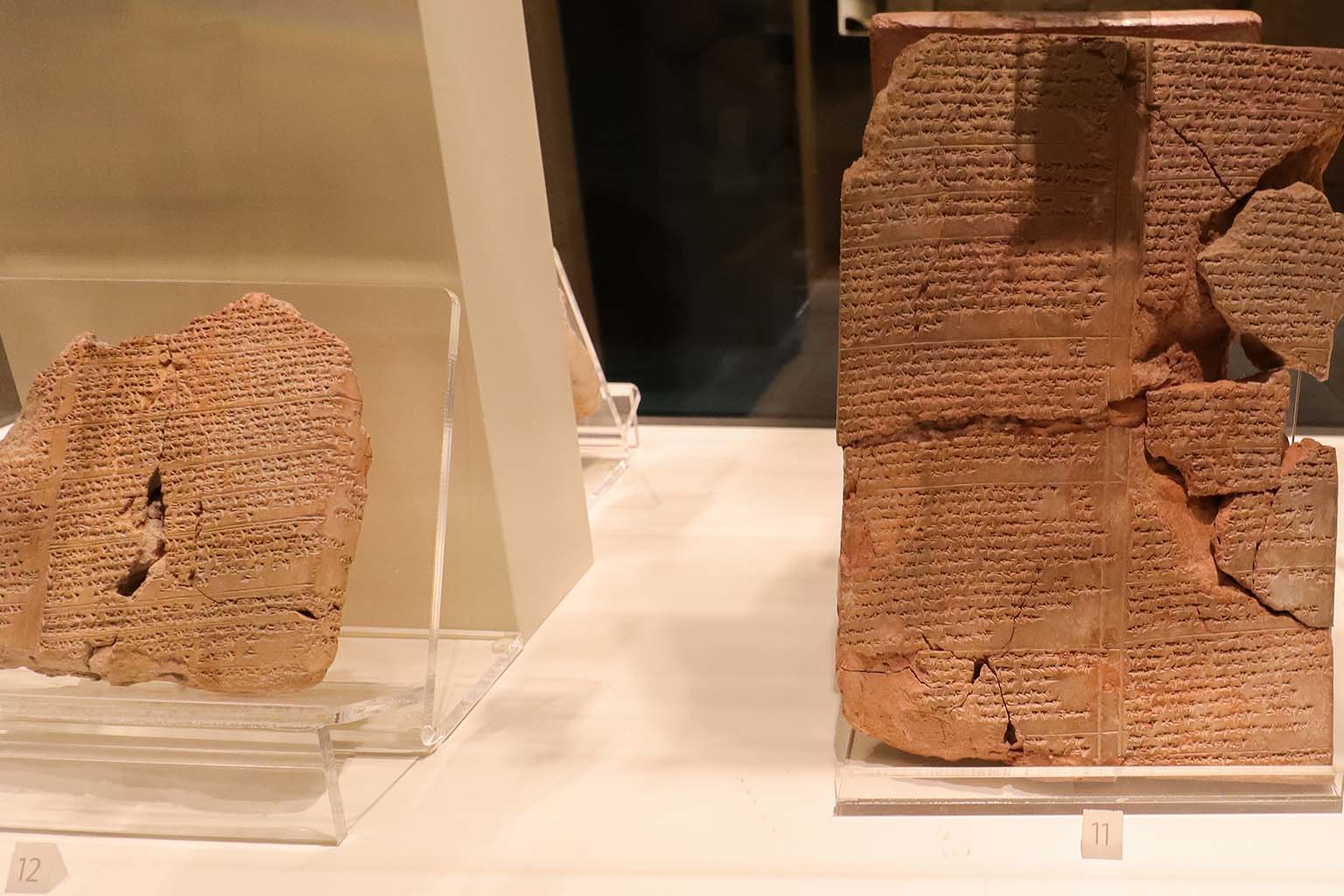
In the quiet corridors of ancient history, there’s something about a race against time that stirs the imagination. It’s that gripping tale — of fierce rivalry and relentless pursuit — that unfolds when scholars set their minds on cracking the code of the world’s oldest writing.
Discovered in Mesopotamia, the cuneiform script had kept its secrets for centuries. But the mid-19th century changed everything. Four remarkable scholars ignited a scholarly competition that would not only uncover long-lost secrets but pave the way for modern archaeology and linguistics. It was a journey fueled by ambition, intellectual curiosity, and, frankly, more than a touch of tension.
The Dawn of Cuneiform Discovery
It all kicked off with Austen Henry Layard, whose excavations in Nineveh, a jewel of the Assyrian Empire, brought cuneiform to light. It wasn’t just a few old tablets unearthed here; these were monumental discoveries, specimens of an ancient script that had long evaded understanding. Dip into one of these clay tablets, and you’d find the stories of military conquests and profound religious rituals — like flipping open a dusty novel of civilization.
Considering the scale of the discoveries, it’s no surprise that the British Museum soon filled its halls with these artifacts. Yet, the script remained an enigma, blurred in abstraction. Unlike the richly illustrative Egyptian hieroglyphs, cuneiform was all sharp angles and wedges, demanding a different kind of decipherer.
The Contest Heats Up: Rawlinson, Hincks, and Talbot Lead the Way
In this intellectual arena emerged three distinct figures: Henry Creswicke Rawlinson, the British officer who’d cut his teeth on Persian inscriptions; Edward Hincks, a diligent Irish scholar whose unlikely role in this story speaks volumes about persistence; and then there was William Henry Fox Talbot — an inventor by trade, a code-breaker by serendipity.
Rawlinson, known for his extensive work in Persia, had the advantage. His foundational study of Old Persian scripts gave him a leg up as he dove into Akkadian cuneiform. Hincks, however, wasn’t far behind. Without the same celebrity as Rawlinson, he toiled in relative obscurity, making significant revelations: the connection between Akkadian and Semitic languages, a breakthrough that would set the stage for future discoveries.
Meanwhile, Talbot brought a fresh pair of eyes to the scene. Although new to Assyrian languages, he wasn’t bound by conventional methods. His inquisitive approach was refreshing, akin to a scientific rebel shaking things up. Each scholar’s work acted like pieces of a puzzle, hinting at an approaching solution.
The Royal Asiatic Society Throws Down the Gauntlet
By 1856, a monumental challenge set the stage for a pivotal moment in this saga. The Royal Asiatic Society, stirred by Layard’s finds, presented an irresistible opportunity to settle the decipherment score. Scholars were tasked with translating the prism of Tiglath-Pileser I. Picture it: an Assyrian king’s annals, inscribed with Akkadian cuneiform, daring the scholars to decode the past.
The stakes were immense. Despite the individual accolades awaiting them, it was the prestige of successfully unlocking the script that propelled them onward. As each scholar submitted their translations, they grappled with the complex web of polyphonic signs — each symbol a key to myriad meanings.
A Collective Triumph: Breaking New Ground in Translation
May 1857 arrived with breathless anticipation, and the translations were in. They weren’t without rivalry and dissent; Rawlinson saw wild buffaloes where Hincks envisioned elephants. Talbot? He wrestled with interpretations, adding another layer to this intellectual drama.
Yet, in the eyes of the Royal Asiatic Society, their unity was impressive. The consensus among the interpretations — particularly of Tiglath-Pileser I’s royal campaigns — illuminated the path to understanding this ancient language. Rawlinson and Hincks were celebrated for their diligent strategies; Talbot and a quiet contender, Julius Oppert, lent vital perspectives.
Rawlinson’s team came out victorious, but it was the collective effort that truly triumphed. Their breakthroughs proved that cuneiform wasn’t an inscrutable relic of the past. The cuneiform code was cracked — a breakthrough breathing life back into those silent stones of Mesopotamia.
For a deeper exploration into this fascinating era of decipherment, watch this documentary clip:
Their rivalry, deeply human and undeniably intense, ultimately showcased the profound power of collaboration over competition. As we reflect on this historic achievement, it opens our eyes to the value of perseverance and unity, urging us to appreciate the myriad voices and choices that once again tell the story of our shared history.
Fascinated by this piece of history? Dive deeper into other thrilling archaeological tales, and let the ancient world remind us of its endless mysteries just waiting to be rediscovered.