


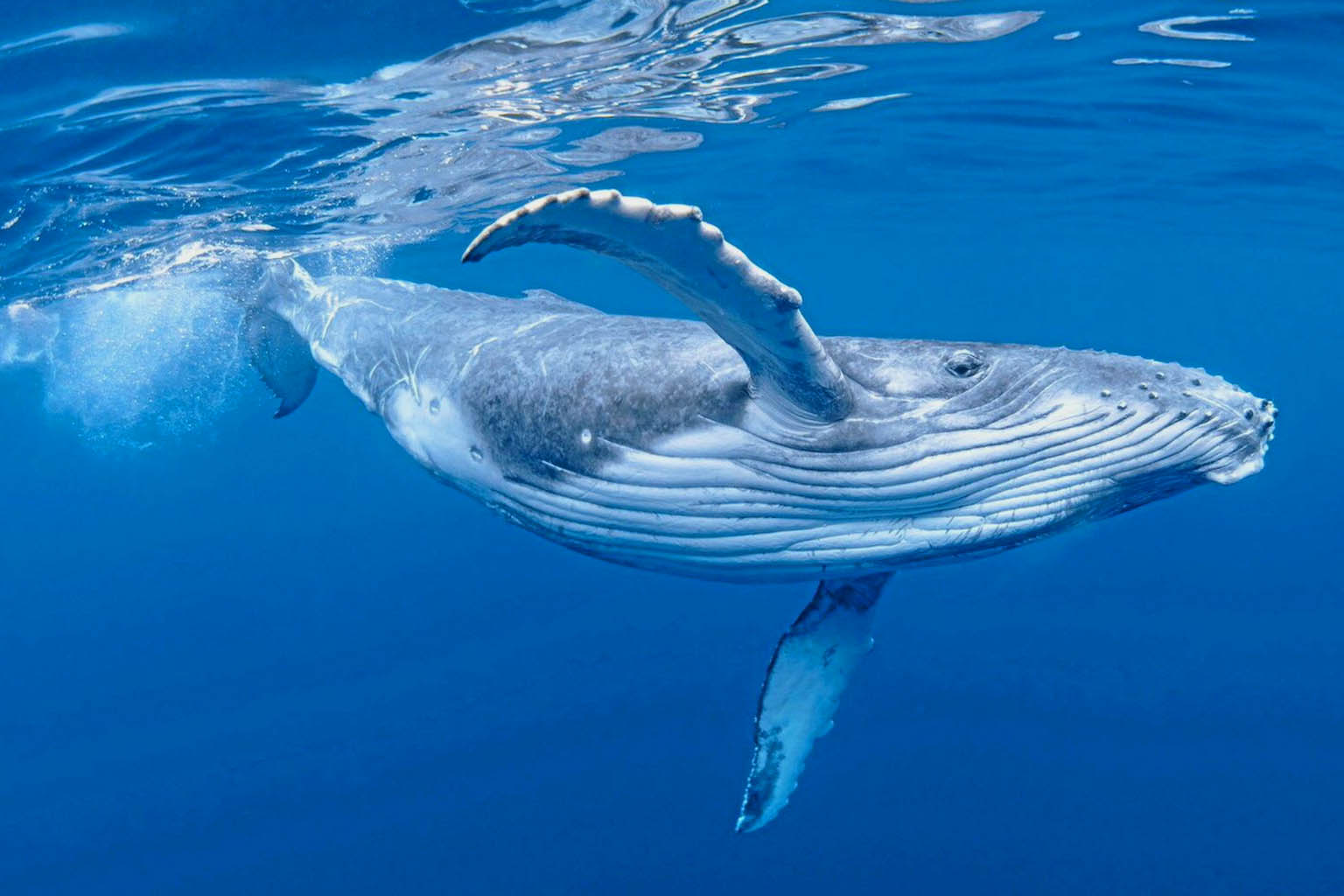
Deep in the Pacific Ocean, a whale has been singing the same song for over three decades. Its call resonates at 52 hertz, a frequency that no other whale species uses for communication. This acoustic signature has earned it the title of “the loneliest whale in the world,” though that designation may say more about our limitations in understanding marine communication than about the whale’s actual emotional state.
The mystery began during the Cold War, when Navy listening posts designed to track Soviet submarines picked up something unexpected among the underwater cacophony. What they heard wasn’t the familiar low-frequency calls of blue whales or fin whales, which typically communicate between 15 and 25 hertz. Instead, they detected a structured, whale-like song at a much higher pitch that seemed to travel alone across vast oceanic distances.
Scientists have been tracking this acoustic anomaly since the late 1980s, mapping its migrations and analyzing its vocal patterns. Yet despite decades of research and technological advances, no human has ever laid eyes on the creature producing these calls. The whale remains invisible, known only through its voice echoing through the deep. Just as LiDAR technology has revealed hidden archaeological structures that were previously invisible to researchers, advanced acoustic monitoring continues to unveil the hidden movements of this mysterious marine creature.
The Cold War Discovery That Changed Marine Science
The Sound Surveillance System (SOSUS) wasn’t designed for whale watching. This network of underwater listening posts stretched across the ocean floor, tuned to detect the mechanical hum of enemy submarines. But the sensitive hydrophones captured everything: shifting tectonic plates, distant storms, and the complex songs of marine life.
When Navy analysts first noticed the 52-hertz signature, they faced a puzzle. The call pattern resembled whale communication but at a frequency that didn’t match any known species. After the Cold War ended and some acoustic data became available to civilian researchers, William Watkins and his team at Woods Hole Oceanographic Institution began systematic analysis of these recordings.
Their findings revealed something remarkable. This wasn’t random ocean noise or equipment malfunction. The calls showed the structured patterns typical of whale songs, complete with seasonal variations and migration routes that paralleled those of other large whales. The creature producing these sounds was following predictable paths across the Pacific, suggesting it was indeed a whale operating within normal behavioral parameters—except for its unique vocal signature.
Scientific Theories and Biological Possibilities
The scientific community has proposed several explanations for this acoustic outlier. The most compelling theory suggests the whale might be a hybrid between two species, possibly a blue whale and fin whale cross. Such hybridization, while rare, has been documented in marine mammals and could result in vocal characteristics that fall between parental species.
Another hypothesis centers on a vocal anomaly or genetic mutation affecting the whale’s sound production. Just as humans can have unique vocal characteristics due to physical differences, this whale might possess anatomical features that alter its call frequency. Research published in Marine Pollution Bulletin indicates that whale vocalizations depend on complex interactions between body size, lung capacity, and specialized vocal organs.
“Communication masking in marine mammals represents a significant challenge to acoustic identification, with individual variations in calling behavior potentially affecting long-term species recognition” – Marine acoustic research
A third possibility challenges our understanding of marine biodiversity entirely. The whale might represent an undiscovered species or isolated population that we’ve simply never encountered before. Given that vast areas of the ocean remain unexplored and new species are discovered regularly, this scenario isn’t as far-fetched as it might seem. Archaeological discoveries like the 5,000-year-old fire altar that reshaped our understanding of ancient civilizations remind us that significant findings can fundamentally alter established scientific narratives.
The Growing Challenge of Ocean Noise Pollution
While scientists debate the whale’s identity, a more pressing concern has emerged. The ocean has become dramatically noisier since the 1980s, filled with shipping traffic, military sonar, seismic surveys, and industrial activity. This acoustic pollution creates a wall of sound that can interfere with whale communication across hundreds of miles.
Studies demonstrate that increased ocean noise affects whale behavior in measurable ways. Animals alter their calling patterns, change migration routes, and show elevated stress hormones when exposed to human-generated sounds. For a whale that may already struggle to communicate with others of its kind, this growing cacophony represents an additional barrier to connection.
The timing is particularly concerning. If the 52-hertz whale belongs to a species with typical large whale lifespans, it could live 70 to 90 years. Having been tracked since the late 1980s, this individual may be entering the later stages of its life cycle. The window for understanding its story—and potentially locating others like it—may be closing. This urgency mirrors how researchers studying ancient human migration patterns race against time to preserve and interpret archaeological evidence before it’s lost forever.
The Technical Barriers to Visual Confirmation
Despite sophisticated acoustic tracking capabilities, actually seeing the 52-hertz whale presents enormous challenges. The Pacific Ocean covers roughly 165 million square kilometers, and whales spend most of their time submerged and constantly moving. Even with precise acoustic coordinates, the logistics of deploying research vessels or underwater vehicles to specific locations remain daunting.
Modern technology offers some hope. Autonomous underwater vehicles equipped with advanced hydrophones can track acoustic signatures with greater precision than ever before. Satellite-linked buoys can provide real-time location data, potentially allowing researchers to respond quickly when the whale’s call is detected. Recent marine research has emphasized the importance of long-term acoustic tracking in understanding whale behavior patterns.
“Long-term tracking of unique acoustic signatures provides crucial insights into marine mammal behavior, even when visual confirmation remains elusive” – Marine biology research
But these technological solutions face practical limitations. Research funding for such expeditions remains limited, and the vast scale of the search area means that even well-equipped missions might miss their target. The whale’s unpredictable movement patterns add another layer of complexity to any visual confirmation attempt. Complex research challenges like these echo the methodical approaches required for understanding ancient Mesoamerica cultural connections, where researchers must piece together evidence from multiple sources to construct comprehensive narratives.
The story of the 52-hertz whale ultimately reflects broader questions about how much we still don’t understand about ocean life. In an age where we can map distant galaxies and track particles at the quantum level, a large mammal sharing our planet can remain completely invisible to human observation. Whether this whale is truly alone or simply speaking a language we haven’t learned to interpret, its continued presence in our acoustic records serves as a reminder that the ocean still holds mysteries that resist easy explanation.