


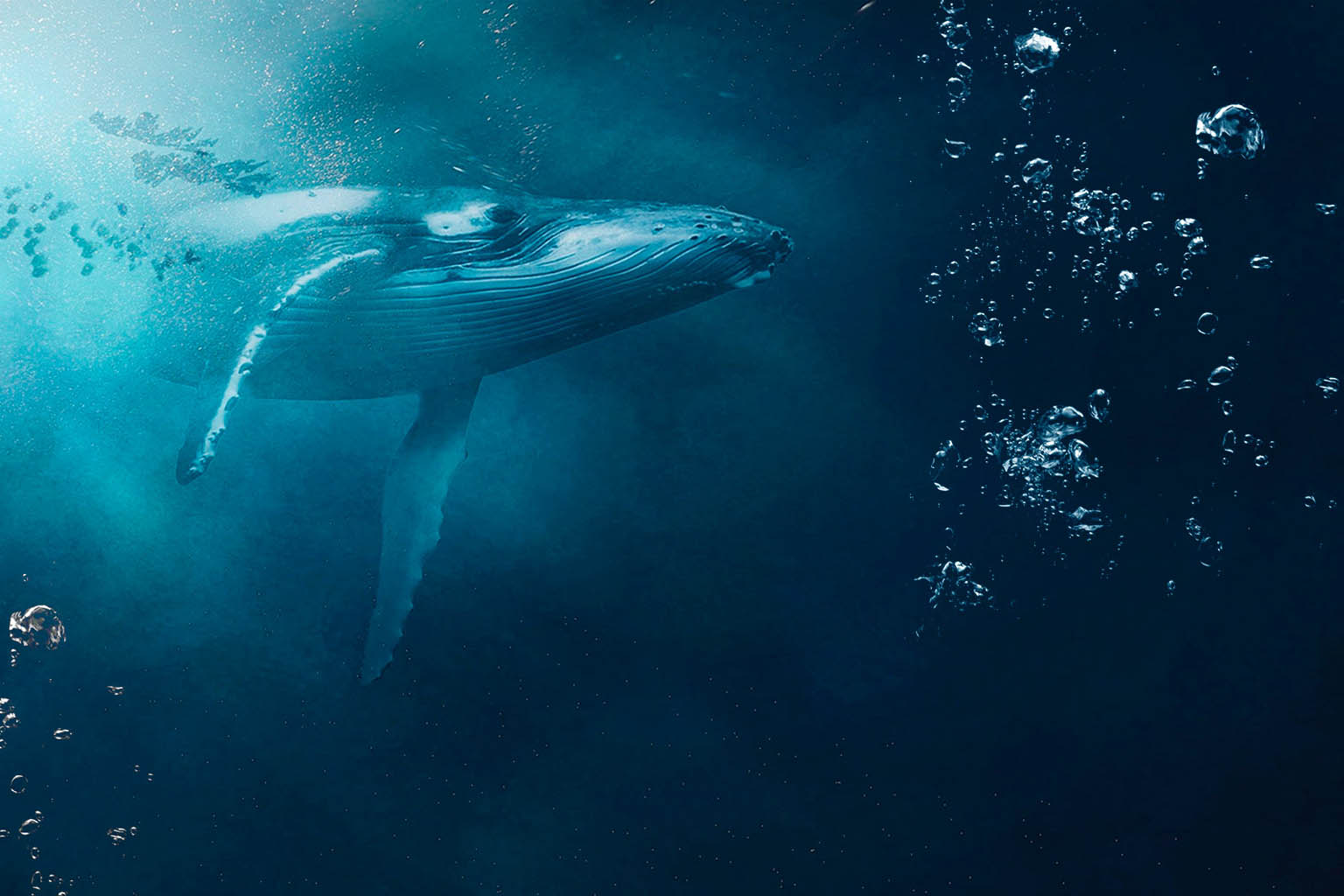
For more than three decades, somewhere in the Pacific Ocean’s immense darkness, a single whale has been singing a song no other whale seems to hear. The 52-hertz whale calls out at a frequency so unusual that scientists have never recorded another whale responding to it, earning it the haunting designation of “the loneliest whale in the world.”
This mysterious creature was first detected through military surveillance equipment in the late 1980s, hidden among classified recordings designed to track Soviet submarines during the Cold War. When some of this acoustic data was declassified, marine biologists discovered something extraordinary: a whale song unlike any previously documented, too high-pitched for blue whales or fin whales, yet too structured to be random ocean noise. Much like how LiDAR technology has revealed hidden archaeological structures, advanced acoustic detection methods continue to unveil secrets hidden in our world’s most remote places.
What makes this discovery particularly compelling is not just the whale’s unique vocal signature, but the complete absence of any response from other whales. In an ocean where whale communication forms the backbone of social interaction, mating, and survival, this apparent isolation raises profound questions about marine biology and the hidden complexities of ocean life.
A Cold War Legacy Reveals Ocean Secrets
The whale’s discovery emerged from the U.S. Navy’s Sound Surveillance System (SOSUS), a network of underwater listening devices originally designed to detect enemy submarines. Among the cacophony of ship engines, shifting tectonic plates, and known whale songs, Navy analysts identified something completely unprecedented: a whale calling at exactly 52 hertz.
Research conducted by William Watkins and his team at the Woods Hole Oceanographic Institution analyzed decades of these recordings, confirming that the calls originated from a single individual. Their findings, published in oceanographic research papers, established that this whale follows migration patterns similar to blue and fin whales, traveling thousands of miles across the Pacific each year.
“In 1989, a team of WHOI biologists first detected an unusual sound in the North Pacific Ocean, with its own, distinctive 52-hertz voice” – Woods Hole Oceanographic Institution
The consistent tracking over multiple decades proves this isn’t a recording error or temporary anomaly. The whale’s song has been documented year after year, creating one of the longest-running acoustic studies of a single marine animal in scientific history.
The Science Behind Whale Isolation
Most baleen whales communicate at frequencies between 15 and 25 hertz, well below human hearing range. These low-frequency calls can travel hundreds of miles underwater, allowing whales to maintain contact across vast distances. The 52-hertz frequency falls dramatically outside this range, potentially explaining why other whales don’t respond.
Scientists have proposed several explanations for this vocal anomaly. The whale might be a hybrid offspring of two different whale species, inheriting genetic traits that affect its vocalization. Hybridization between blue whales and fin whales has been documented, though rarely, and could result in offspring with intermediate characteristics including vocal frequency. This type of discovery parallels how archaeologists have found evidence of ancient ceremonial centers that challenge our understanding of early civilizations.
Another possibility involves a physiological mutation affecting the whale’s vocal apparatus. If anatomical differences prevent it from producing sounds in the normal frequency range, it would be essentially speaking a language no other whale understands, despite potentially being a member of a known species.
Technological Challenges and Ocean Realities
Despite advances in marine research technology, no one has ever visually confirmed the 52-hertz whale’s existence. This highlights a fundamental challenge in ocean research: the sea covers over 70% of Earth’s surface, and whales spend most of their lives submerged in depths where visibility is limited.
Studies on monitoring Pacific Ocean marine life demonstrate that current tracking relies entirely on acoustic detection, providing location data but no visual confirmation of species, size, or physical characteristics. The whale could be a massive blue whale, a smaller fin whale, or something entirely different. This acoustic-only evidence represents both the power and limitations of modern marine biology.
Recent developments in autonomous underwater vehicles equipped with advanced hydrophones offer new possibilities for locating and potentially observing this elusive creature. However, the ocean’s vastness means that even with precise acoustic coordinates, visual contact remains extraordinarily difficult to achieve. Similar challenges face researchers studying ancient Mesoamerica, where vast territories and dense vegetation can hide significant archaeological discoveries for centuries.
The overlooked impact of human ocean noise
While much attention focuses on whether the 52-hertz whale was always alone, less consideration has been given to how dramatically ocean acoustics have changed since the 1980s. Commercial shipping traffic has increased exponentially, filling the seas with low-frequency engine noise that directly interferes with whale communication.
This acoustic pollution affects all marine mammals, but for a whale already calling at an unusual frequency, the impact could be particularly severe. Research demonstrates that increased ocean noise forces whales to call louder and more frequently, expending additional energy and potentially affecting their ability to find food and mates.
The 52-hertz whale’s story might not just be about natural isolation, but about an increasingly noisy ocean environment that makes communication more difficult for all marine life. If this whale was already struggling to connect with others, decades of growing anthropogenic noise could have made its situation even more challenging. The military origins of this discovery echo other Cold War secrets that have only emerged decades after their initial classification.
“Monitoring Pacific Ocean marine life through autonomous hydrophone arrays reveals the complex acoustic environment that whales must navigate for survival” – Marine acoustic research
As scientists continue listening for this mysterious song, they face the sobering possibility that time may be running out. If the whale is nearing the end of its natural lifespan, we may never learn whether it was truly the loneliest creature in the ocean, or whether we simply never understood what it was trying to say. The answer to this decades-old mystery may lie not just in better technology, but in our willingness to protect the acoustic environment that makes ocean communication possible.