


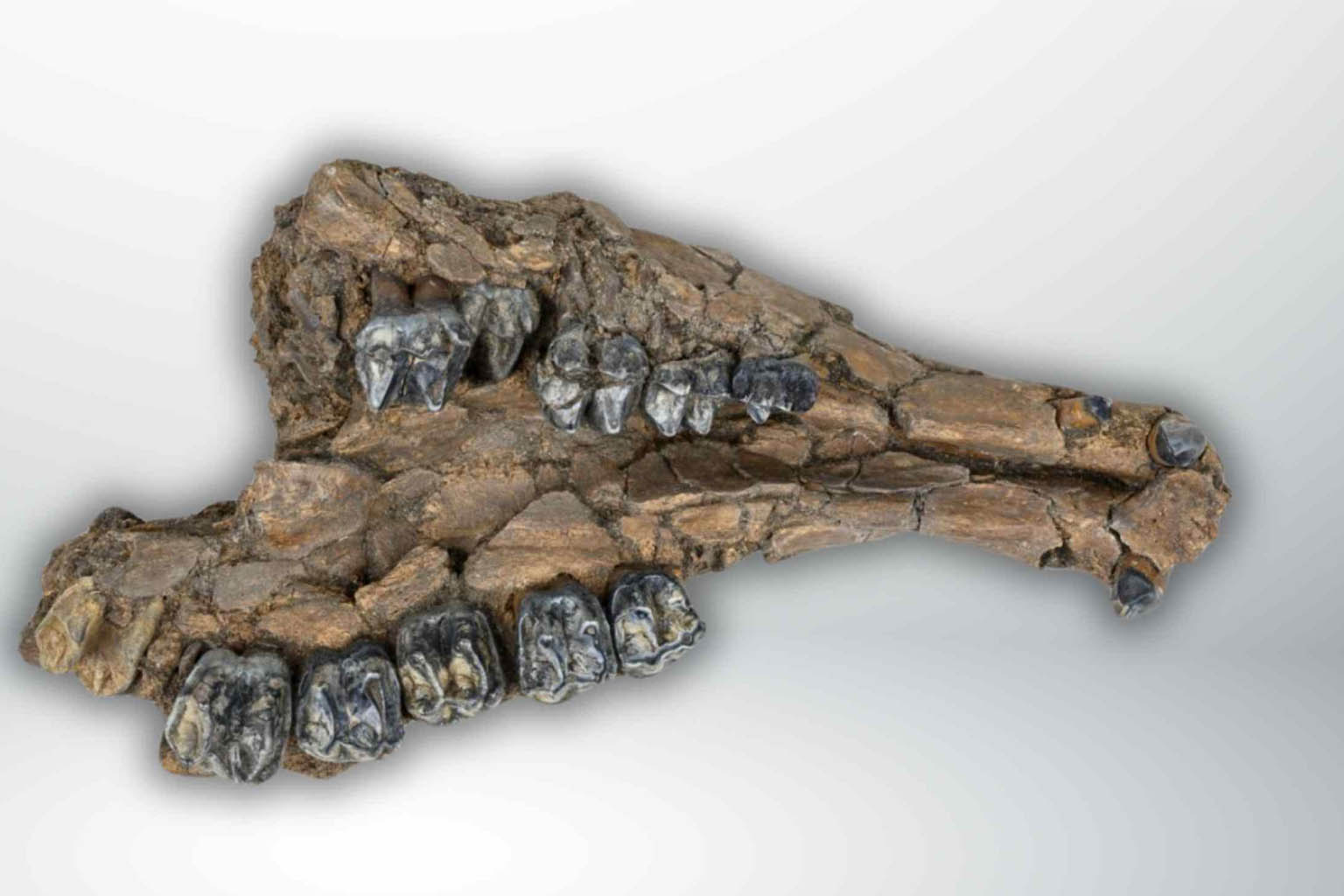
When divers Robert Sinibaldi and Joseph Branin descended into Florida’s Steinhatchee River in 2022, they expected another routine exploration. Instead, they stumbled upon what would become one of the most significant paleontological discoveries of recent years. What started as scattered teeth and bone fragments revealed itself as a 500,000-year-old fossil graveyard, preserved in pristine condition within an ancient sinkhole.
The site has yielded over 550 fossils from the Irvingtonian North American Land Mammal Age, a period spanning 1.6 million to 250,000 years ago when Ice Age megafauna roamed the continent. The discovery provides researchers with an unprecedented window into evolutionary transitions that occurred during one of the most poorly documented periods in North American paleontology. Similar to how LiDAR technology has revealed ancient Romanian defenses from thousands of years ago, this underwater excavation is uncovering secrets from a much more distant past. The Florida Museum of Natural History has taken charge of the excavation, recognizing the site’s potential to reshape our understanding of Ice Age ecosystems and species evolution.
The Sinkhole’s Role as a Natural Time Capsule
Prehistoric sinkholes functioned as natural death traps, capturing animals that fell into their depths and preserving them in oxygen-poor conditions ideal for fossilization. The Steinhatchee site demonstrates this phenomenon perfectly, having accumulated remains over thousands of years during the middle Pleistocene epoch.
The exceptional preservation quality sets this discovery apart from typical fossil sites. Complete skeletal elements remain intact, allowing paleontologists to examine not just individual bones but entire anatomical systems. This level of preservation is particularly rare for North American Ice Age deposits, where fragmented remains are more common.
According to research published in Quaternary Science Reviews, refined dating methods for Middle and Late Pleistocene fossil sites have significantly improved chronological accuracy for specimens of this age. Research indicates that Florida’s geology during this period created perfect conditions for fossil preservation. The state’s limestone bedrock and consistent water table helped maintain stable chemical conditions within the sinkhole, preventing the usual decay processes that destroy organic material over geological time scales.
“Improved radiocarbon dating methods have enhanced our ability to precisely date Middle Pleistocene fossil assemblages, providing crucial chronological frameworks for understanding evolutionary transitions” – Quaternary Science Reviews
Revolutionary Evidence of Evolutionary Scaling
Among the most scientifically significant finds are fossils from Holmesina, an extinct armadillo-like creature that underwent dramatic size changes during the Ice Age. The site contains specimens representing the evolutionary transition from the smaller Holmesina floridanus (150 pounds) to the massive Holmesina septentrionalis (475 pounds).
The ankle and foot bones recovered reveal something unexpected about evolutionary scaling. The animals increased in size before their skeletal architecture fully adapted to support the additional mass. This discovery challenges the conventional assumption that anatomical changes and body size evolution occur simultaneously. Like other Pleistocene megafauna discoveries, this finding demonstrates how Ice Age animals evolved remarkable adaptations to their changing environments.
Vertebrate paleontology collections manager Rachel Narducci explains that the bone structure changes lagged behind the size increase, providing rare evidence of how evolution proceeds in stages rather than as a coordinated transformation. This finding has implications for understanding scaling relationships in other extinct megafauna and modern species undergoing rapid evolutionary changes.
The Mysterious Tapir Skull
Perhaps the most intriguing discovery is a tapir skull exhibiting features never before documented in the fossil record. The pig-like mammal with its elephant-like trunk represents either a new species or an unusual variant of a known tapir lineage. The skull’s unique characteristics have captured researchers’ attention, though definitive classification requires additional skeletal material.
Lead researcher Richard Hulbert acknowledges the difficulty of species identification from limited remains. Scientific protocol demands comprehensive analysis before declaring new species, particularly when dealing with animals known for individual variation. The team continues excavating, hoping to uncover more tapir fossils that could resolve the classification question. This careful approach mirrors the methodical excavation techniques used to uncover other significant discoveries, such as the prehistoric bird fossils that have revealed extinct creatures of extraordinary proportions.
Studies of ancient tapir distributions suggest these animals were more diverse during the Pleistocene than previously understood. If confirmed as a new species, this discovery would expand our knowledge of tapir evolution and their ecological roles in Ice Age North America.
Reconstructing Ancient Florida’s Grassland Ecosystem
The fossil assemblage tells a story of a dramatically different Florida landscape. Approximately 75% of the recovered specimens belong to early caballine horses, ancestors of modern domestic breeds. This overwhelming prevalence of horse fossils suggests the region supported vast grasslands rather than today’s dense forests.
The exceptional preservation of horse dental material provides unprecedented opportunities to study Ice Age herbivore ecology. Complete tooth rows from individual animals allow researchers to analyze wear patterns and dietary preferences with remarkable precision. These insights help reconstruct the plant communities that supported large herbivore populations.
Climate reconstruction based on the fossil evidence indicates Florida’s Big Bend region experienced cooler, drier conditions during this period. The abundance of grazing animals suggests open savanna environments that supported megafaunal populations far exceeding anything in the modern landscape.
The Chronological Gaps This Discovery Fills
The Irvingtonian period represents one of the most poorly understood chapters in North American mammalian evolution. Fossil sites from this era are relatively rare, creating significant gaps in our understanding of how species transitioned between earlier Pliocene forms and later Pleistocene megafauna.
This discovery provides crucial chronological anchoring for evolutionary studies. The site’s middle Pleistocene age places it precisely within the transitional period when many modern mammalian lineages were establishing their characteristic forms. Researchers can now trace evolutionary pathways with greater precision.
The temporal positioning also helps clarify extinction patterns among Ice Age species. Many of the animals represented at the site would disappear entirely before the end-Pleistocene extinction event, providing insights into the prolonged environmental pressures that preceded the more famous megafaunal collapse 12,000 years ago. Studies from Argentine paleontological sites have demonstrated how archaeological excavation methods can reveal detailed mammal assemblages from interglacial periods, providing comparative data for understanding North American Pleistocene ecosystems.
“Last interglacial mammal assemblages excavated using archaeological methods provide crucial insights into Pleistocene biodiversity patterns and extinction dynamics” – Paleontological research
The discovery also connects to broader patterns of ancient human activity and environmental change. Just as archaeologists have uncovered evidence of sophisticated ancient societies, such as the 5,000-year-old fire altar in Peru’s Supe Valley, this fossil site reveals the complex ecosystems that existed long before human civilizations emerged in the Americas.
As excavation continues and analysis deepens, this underwater fossil site promises to illuminate one of the most dynamic periods in North American natural history. The question remains whether similar preservation sites exist in other Florida rivers, potentially holding even more secrets about our continent’s ancient inhabitants and the environmental forces that shaped their evolution.