


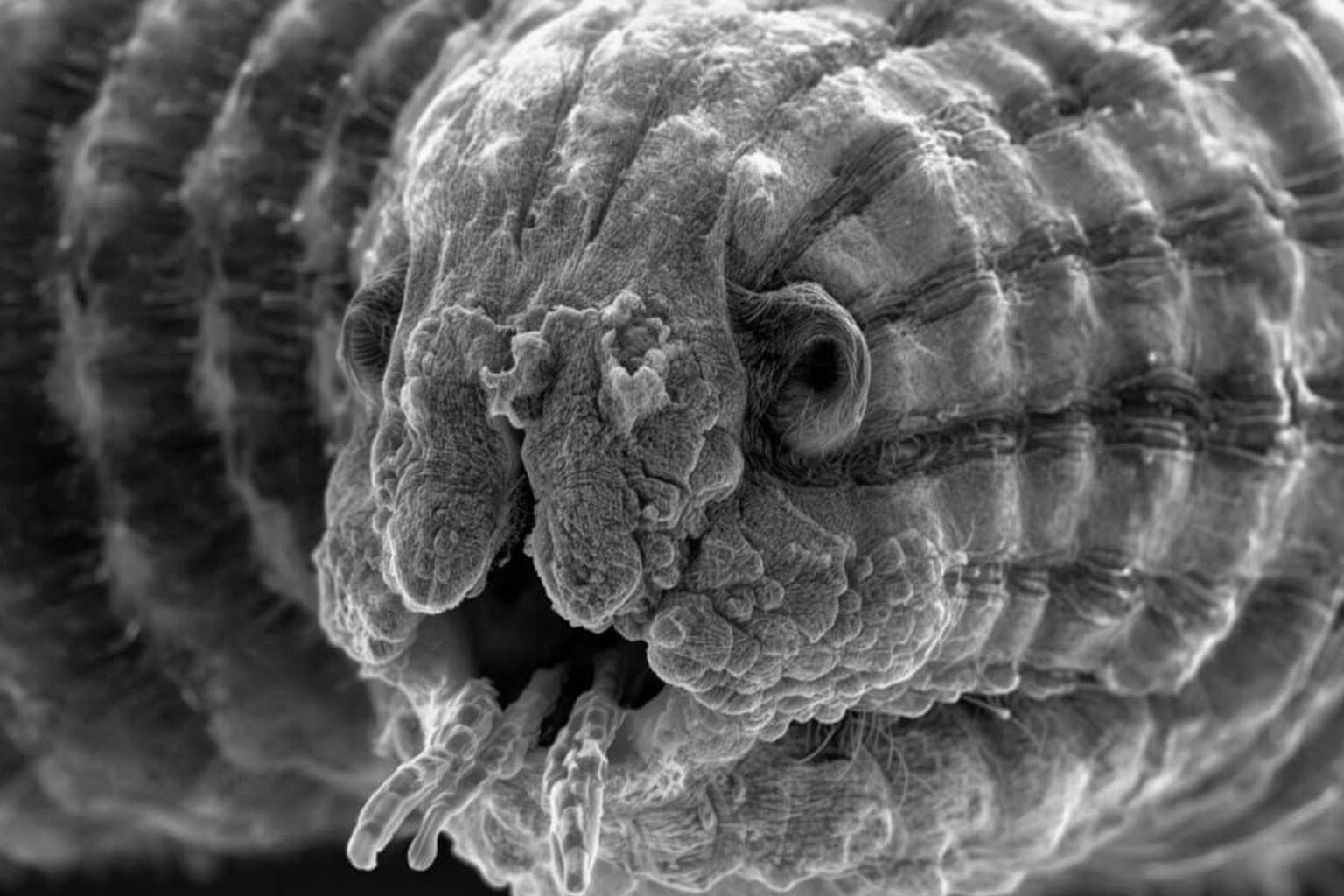
Deep beneath the Siberian tundra, trapped in permafrost that has remained undisturbed since the Ice Age, a microscopic nematode worm has achieved something that defies our understanding of biological limits. For 46,000 years, this creature existed in a state between life and death, its cellular machinery completely shut down, waiting. This remarkable timespan places it in the same era as other 44,000-year-old narrative artwork discovered in Indonesian caves, highlighting the incredible preservation potential of extreme environments.
When scientists from the University of Cologne successfully revived Panagrolaimus kolymaensis in their laboratory, they didn’t just witness the return of ancient life. They opened a window into survival mechanisms so extreme that they challenge everything we thought we knew about the boundaries of existence. The worm didn’t simply survive—it thrived, producing offspring and resuming normal biological functions as if those millennia of frozen suspension were merely a brief pause.
This discovery forces us to reconsider fundamental questions about life itself. If a complex multicellular organism can essentially stop time for tens of thousands of years, what does this mean for our understanding of aging, death, and the very nature of consciousness?
The Mechanics of Biological Time Travel
The process that allowed this ancient survivor to cheat death is called cryptobiosis, a state where all detectable metabolic processes cease. According to research published in PMC, this novel nematode species shares adaptive mechanisms for cryptobiotic survival with other well-studied organisms. Unlike hibernation or dormancy, cryptobiosis represents a complete halt to biological activity. The worm’s cells produce specialized proteins that act as biological antifreeze, preventing ice crystals from forming and destroying cellular structures.
“Entry into cryptobiosis involves sophisticated cellular mechanisms that can preserve biological structures for extraordinary periods of time” – Cryptobiosis research studies
Research indicates that these protective molecules work by replacing water in cells with sugar compounds, creating a glass-like state that preserves delicate biological machinery. The radiocarbon dating of surrounding sediment confirmed that this particular specimen had been frozen since approximately 44,000 BCE, during the height of the last glacial period when woolly mammoths roamed the earth.
What makes this discovery particularly remarkable is the depth at which the worm was found. Buried 40 yards underground, it remained protected from temperature fluctuations, radiation, and other environmental stresses that would have destroyed less resilient organisms. The Siberian permafrost acted as a natural laboratory, maintaining constant conditions for preservation.
Genetic Secrets of Extreme Longevity
Genetic sequencing revealed that this ancient nematode belongs to a previously unknown species, sharing characteristics with Caenorhabditis elegans, a model organism widely used in biological research. The differences, though, tell a fascinating story of evolutionary adaptation to extreme conditions, much like how genetic diversity played a crucial role in the survival of ancient human populations.
The worm’s genome contains unique sequences that code for proteins capable of protecting cellular structures during prolonged freezing. These cryoprotective molecules appear to be far more sophisticated than anything found in modern organisms, suggesting that some survival mechanisms may have been lost over evolutionary time rather than gained.
Studies published in Nature have shown that the revival process activated dormant genetic pathways that had remained unchanged for millennia. The fact that these ancient genetic programs could restart successfully indicates an extraordinary level of biological redundancy and error-correction built into the organism’s cellular machinery.
Medical Applications on the Horizon
The implications for human medicine are staggering. Current organ preservation techniques allow for storage of hours or days at most. Understanding how this nematode’s cells resist damage during extended freezing could revolutionize organ transplantation, potentially extending viable storage time from hours to years.
Researchers are particularly interested in the worm’s ability to prevent cellular damage during the freezing and thawing process, which typically destroys cell membranes and protein structures in other organisms. The protective mechanisms could lead to breakthroughs in treating degenerative diseases by essentially pausing cellular aging processes.
The potential applications extend to space exploration, where long-duration missions to Mars or beyond would benefit from suspended animation technology. If humans could enter a cryptobiotic state, interplanetary travel would become significantly more feasible from both resource and psychological perspectives.
The Overlooked Ecological Implications
While much attention focuses on medical and technological applications, this discovery reveals something profound about ecosystem resilience that rarely enters public discourse. Ancient microorganisms locked in permafrost represent vast reservoirs of genetic diversity that could become crucial as climate change accelerates. The growing demand for skilled technicians in climate-related fields reflects our increasing need to understand and adapt to these environmental changes.
As global temperatures rise, thawing permafrost may release not just carbon dioxide and methane, but entire communities of ancient organisms with survival traits that modern ecosystems have lost. These creatures could carry genetic solutions to environmental challenges we haven’t yet encountered, or conversely, present biological threats for which current ecosystems have no defenses.
The archaeological parallels are striking—just as LiDAR technology reveals ancient defensive strategies hidden beneath the earth’s surface, these preserved organisms represent complex survival strategies developed over millions of years of evolution.
“Organisms preserved in permafrost represent a genetic library of survival mechanisms that could prove invaluable as environmental conditions continue to change” – Permafrost research findings
The psychological dimension of this research also deserves consideration. Knowing that life can essentially be paused for tens of thousands of years fundamentally challenges our relationship with mortality and time. If consciousness could theoretically be preserved in a similar manner, what would that mean for human identity and continuity of experience across geological timescales?
This tiny worm’s remarkable journey through deep time raises questions that extend far beyond biology into philosophy, ethics, and our understanding of what it means to be alive. As research continues, we may find that the boundaries between life and death are far more fluid than we ever imagined, with implications that will ripple through science and society for generations to come.